Category

Sport

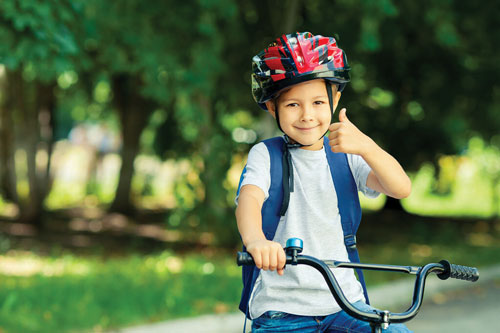
boy biking

New Active Challenge to help families set healthy habits in 2023

By children's health, fun for children, Health, Playing, Sport

Families wanting to be more active in 2023 are invited to sign up to a new physical activity challenge, which features fun fitness activities to be completed throughout the year. The Premier Active Challenge is centred around 52 exhilarating activities – one for every week of the year. Activities require minimal equipment, are accessible and can be modified to suit children and adults of all ages.

From balloon volleyball, to scavenger hunts and a World Book Day-inspired fitness challenge, the activities are themed to the seasons and intended to get the blood pumping.

The challenge has been devised by Premier Education, the leading provider of sports clubs, curricular PE and holiday camps to primary schools. Passionate about encouraging children to lead more physically active lives, they hope the challenge will entice more families to regularly participate in physical activity in a fun, inclusive and accessible way for all.

David Batch, chief executive at Premier Education, comments: “Our Premier Active Challenge is about setting healthy habits for the year ahead. It doesn’t matter if you’re five, 55 or 105 – there are ways to participate and keep the body moving! Obviously, each activity needs to be adapted to those taking part, but if families can make a concerted effort to spend time together in an active way, they will be making an important commitment to their physical and mental health. We can’t wait to hear about everyone’s progress – and above all it’s about giving it a go and having fun!”

Each month, Premier Education will reveal the latest batch of weekly challenges, which will be published in a downloadable and printable planner to stick on the fridge.

Each new weekly challenge will begin on a Monday and participants should aim to complete each one a minimum of three times per week, putting special focus on weekends when it’s the perfect time to encourage friends and family to join in!

Participants are invited to share progress on socials using #PremierActiveChallenge. A star participator will be selected every month, with prizes including home sports equipment such as a cricket set, rugby balls and tennis racquets.

For more information about the Premier Active Challenge or to take part, visit www.premier-education.com/news/ 2023-active-challenge or see Premier Education’s social channels for details.
sporty education

The importance of sport in junior schools

By Education, Sport
by Katie Atkinson-Hunt
Deputy Head of Sport at Chinthurst School

Sport teaches children life lessons that go far beyond the physical benefits of activity. There is a growing body of research that links physical activity to improvements in educational achievement. This is down to the fact that sport helps children to develop character and learn important social and brain skills such as problem solving, resilience, perseverance, confidence and team work. But these benefits do not just happen; they come from a well devised physical activity programme that is carefully planned and delivered at school. There are certain key principles on which this should be based.

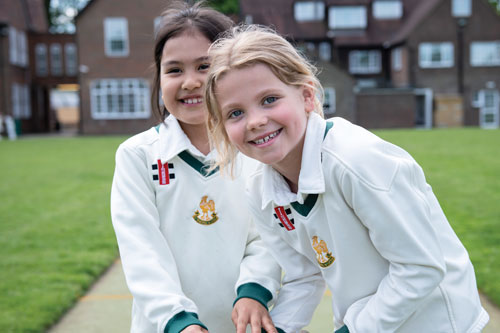
Inclusion and choice are extremely important. A school games programme should enable all children to learn new skills and techniques successfully and to choose the sport they want to play, without restriction. To truly deliver this, children’s choice should not be constrained in any way, least of all by their gender. Our games department facilitates boys and girls training alongside each other in rugby, football, netball and hockey and they play fixtures together in competitive teams. As a result of this approach, the children see themselves as equals on the pitch with no preconceived limitations and the encouragement and support they give one another on the games fields continues off it.

To help children make informed decisions about the team sport they want to play each term, taster sessions should be incorporated into several of the first sports lessons. These tasters showcase the variety of skills each sport develops and help the children to buy-in to their subsequent sports lessons. Choice is empowering. Giving children a voice and some control over their life helps to build self-esteem and confidence, both important attributes which certainly transfer to the classroom, and have an impact on their approach to life generally.

A good sports programme should foster healthy competition and teamwork. So much of what we do in life requires us to work collaboratively and for everyone to play their part no matter what their size, shape, ethnicity, or gender. This is the essence of team sports and playing in a team is empowering. Fixtures and competitions are important ways for the children to showcase their skills and are often their first real taste of competitiveness. Playing matches should not be the preserve of the gifted and talented but instead provide an opportunity for the children to have fun and build new friendships. Every fixture is an important experience for the players. Whether the team wins or loses, the children always gain something from it. They learn to play by the rules and to be the best they can be within the constraints of the game. Teamwork fosters self-belief, collective discipline and rewards hard work. A mistake or loss is often an excellent opportunity to learn and improve. The ability to be resilient and bounce back is really important in life.

Beyond the traditional school sports, there is so much more to games and PE lessons. There are a huge variety of different activities that children can become involved in. The key is to give them an opportunity to try these out. At our school we run a multi-Sport Week annually which is the highlight of the school calendar. Children have the opportunity to take part in many less well-known activities, from Ultimate Frisbee to archery and orienteering to Zumba. Inspirational speakers visit and fun challenges are set for the whole school. ‘Terrific Tuesdays’ and ‘Funky Fridays’ in the last week of each term continue the emphasis on variety giving the children a chance to play games like capture the flag, squares and a range of different dances. Some children go on to pursue these activities further in after-school clubs or outside school. All find it motivating and are excited to do more.

We must not forget that having fun is the most important thing about any successful sports programme. Through sport everyone can experience fantastic moments that they remember forever. There are huge psychological benefits to laughing and smiling so sport should be a positive experience for all the children. It’s a moment for them to be free of the classroom, express themselves in a new way and gain confidence in something that might normally really challenge them.

Within games and PE lessons it is important to create fun and challenging activities which stretch the more able but support the less confident. To achieve this, we now base every lesson around ‘game play’. This involves having a ‘game play’ area and a ‘skill zone’. The skill zone is a small, very structured place where we help develop specific skills or stretch children’s techniques and knowledge. Whilst some children are in a skill zone, the rest are continuing in the game play area, practising playing a game situation and creating rules, superpowers and learning how to play as a team. At the end of the lesson, the children will play a match where we encompass all the skills/game play activities into a real-life match using the exact rules of the specific sport.

Sports days, house competitions and fun swimming galas are great ways to give children the chance to have fun competing alongside different age groups for their house or to represent different groups in the school. They are also brilliant ways to foster community spirit, a sense of identity and feeling of belonging.


Katie Atkinson-Hunt is Deputy Head of Sport at Chinthurst School in Tadworth. The school have been named 2022 Independent School of the Year for Sporting Achievement in recognition of their pioneering sports programme. www.chinthurstschool.co.uk


swim safely

Water safety a little preparation can make a big difference

By Safety, Sport, swimming
by Tara Highway
Swimming Squidz

As summer arrives offering the chance for long lazy days on the beach or at the lido and with the possibility of paddling pools or swimming pools in the garden, not forgetting the flurry of ‘summer’s here’ excitement everywhere, we need to be sure we are not ‘throwing safety to the wind’.

Water safety needs to be at the forefront of our minds at all times, but especially over the summer months.

A recent survey carried out by the Drowning Prevention Charity, Royal Life Saving Society (RLSS) www.rlss.org.uk, showed that 1 in 10 people had almost drowned at some point in their lives and that 13% of people knew someone who had drowned.

During the period of May through to August, the number of drownings increase hugely, and between the UK and Ireland, there are on average 402 drownings a year. Children and young people aged under 19 accounted for 57 deaths – 19 were under 10 years old. Worldwide the (conservative) figure of deaths by drowning is estimated to be 235,000 every year!

The importance of water safety cannot be expressed strongly enough. It is one of the most imperative things for a child to learn and they should be taught as early as possible. They need to be aware of how to help themselves, be aware of the dangers around them and what they can do to help someone else in an emergency.

So, what can we do to help our children in and around water?
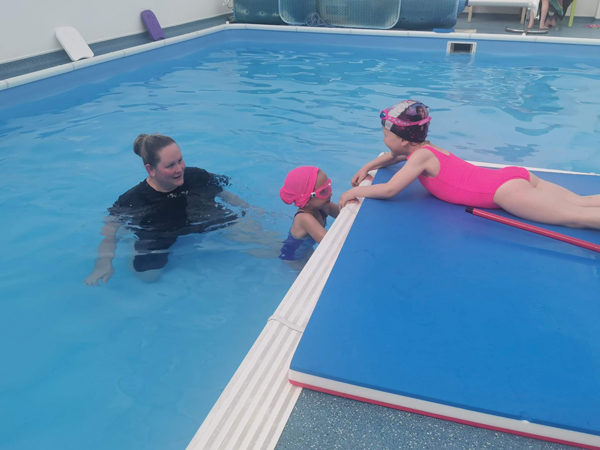
Swimming lessons from as early as possible is a great start. An early introduction to the water can teach them how to help themselves – from blowing bubbles and breathing to rolling onto their back so that they can breathe. We need to help them recognise dangers and how to stay safe by being able to climb in and out of the water safely on both a solid or potentially wobbly surface. We can teach them how to rescue another person by using equipment around them and checking for dangers nearby, and how to stay low themselves to pull someone out of water ensuring they are well grounded and less likely to be pulled in too!

Understanding survival techniques and knowing how to put them into practice is also an invaluable skill. For example, how to be able to control the situation if they were to fall into an icy lake and how to guide themselves out. This understanding is invaluable and could one day be the difference between life and death.

We also all need to know about the dangers of ‘Cold Water Shock’. CWS causes the blood vessels in the skin to close, creating a resistance in blood flow, causing the heart to work harder. Blood pressure increases and the potential for a heart attack increases too – even in the young and healthy. It is not that commonly known about although with the increase in open water swimming since the pandemic, it has become far more highlighted. These are just a few things we need to teach our children about how to be safe in and around water.

On your family fun days around the pool or at the beach there are simple things you can put in place and believe it or not, these can be as simple as the colour of your swimming costumes! For example, both blue and white swimming costumes become all but ‘invisible’ in the water, so if you are in trouble it is far more difficult for your rescuer to see you and help you. If you are in a brightly coloured swimming kit (neon orange and pink for example) you are instantly more noticeable. MAKE YOURSELF VISIBLE.

When setting up at the beach ensure you have plenty of shade and plenty of drinking water and try to be in sight of the lifeguards.

Observe any lifeguard flags that have been put in place and know what they mean.

Red = NO swimming, red and yellow = lifeguard on duty, swim between the flags, yellow = seek advice, green = safe to swim, black and white = surfing area, NO swimming and white and blue = diving in progress.

Be aware of the tides and learn about rip tides in the area. Rip tides are long narrow bands of water that flow quickly away from the shore and are extremely dangerous. The sea might seem a calm but rip tides, which form in waves, quickly pull a swimmer away from the shore.

Ask the lifeguards for waterproof wristbands which you can write your contact details on and place on the wrist of each of your children so that, if you become separated at the beach, you can be contacted.

Remember, at the beach we can call 999 for lifeboat and the Coastguard.

Throughout my teaching career, I’m aware of at least two situations where children who I teach have been out with their parents and they had known exactly what to do in a hazardous situation. Firstly, a little three year old boy went fishing with his father in October and he fell, fully clothed, into the river. He knew straight away to roll onto his back and float – he hated back floating in class and often refused to do it – but when it counted he knew what to do until his father got him to safety. Secondly, whilst on holiday a six year old girl saw her younger brother slip on the step of the pool and fall under the water but she managed to get him out safely without causing any danger to herself!

Keep yourself and your little ones safe and aware of all the dangers in and around the water – a little preparation can make a big difference. Hoping you have a fun summer and enjoy the water safely.

Swimming Squidz, is a family run business teaching babies and children up to the age of 11 to love the water while staying safe.
www.swimmingsquidz.co.uk

sun safety

Are children more susceptible to the sun in water?

By Playing, Safety, Sport, sun safety, swimming

How to keep them safe, according to an expert

As summer rolls around, parents love seeing their children soak up the sunshine; after all, it finally tears them away from their screens. Although, this does give rise to one prominent concern: sun safety. Children’s skin is notoriously susceptible to the sun and, according to experts, they’re even more vulnerable in the water – is this true and, most importantly, how can we keep them safe?

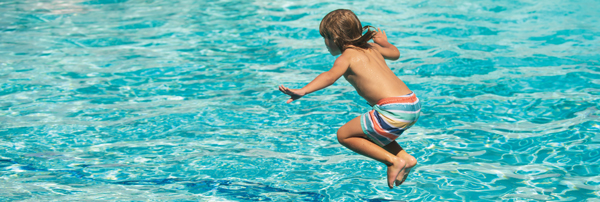
Children’s skin is more vulnerable because its natural defence mechanisms aren’t fully developed, meaning a staggering 80% of total lifetime sun exposure takes place before the age of 18. Ultimately, children are at a higher risk of sun and eye damage resulting from UV rays, whilst being in the water enhances these risks. Why? Firstly, water has an obvious cooling effect; as your children have fun in the sea or swimming pool, they won’t feel like they’re burning. Meanwhile, reflective surfaces (e.g., pool tiles, inflatables) can amplify UV rays. If your child is set to be in the water, you must understand how you can keep them safe.

Thankfully, we have an ideal expert on hand to help ensure that children stay safe in the sun – and water – this summer. Danny Anderson is the owner of Aqua Splash, a business comprising of two incredible, water-based assault courses in Essex. As Danny welcomes thousands of excited children to this water-based activity every year, he is uniquely familiar with the risks that sun exposure can pose, including the proactive steps we can take.

To help you stay on the right track, he’s sharing his top tips:

1. Always remember to ‘use an ounce before leaving the house’.
A helpful rule of thumb when it comes to using sun cream is ‘Use an ounce before leaving the house’. By using this quantity (roughly), and allowing it to soak in for 30 minutes before going outside, you’ll be laying the right foundations. Most people reportedly use less than half this amount, as they severely underestimate how much sun cream is needed; make sure your little one is thoroughly covered.

2. Re-apply every two hours (minimum).
Whilst your children might not be happy to leave the pool and reapply their sun cream, it’s incredibly important that they do. As a minimum, you should re-apply every two hours; if your child is climbing inflatables or going down flumes, re-applying even more regularly is ideal.

3. Never go below SPF 30.
Arguably the most important thing to get right when it comes to skin protection is the SPF factor behind the sun cream you’re using; if this isn’t sufficient, it simply won’t fulfil its purpose.

When choosing sun cream for your children, always opt for SPF 30+ at the very least; if you can find a higher SPF, do! The higher the factor, the better protection your cream will provide.

4. Don’t forget the cream’s UVA rating.
Although your sun cream’s SPF factor is vital, it’s not the only important thing you ought to consider. Beyond this, it’s also crucial that you evaluate its UVA rating; more specifically, that you ensure the cream’s UVA rating is 4 or 5 stars – any less and you simply can’t rely
on its resilience.

Thankfully, creams with strong UVA ratings aren’t difficult to find. Almost all of the biggest brands on today’s market, including Nivea for example, boast 5-star UVA-rated creams – if you do your homework, you can find the perfect cream for you.

5. Consider hats and T-shirts.
As children are particularly vulnerable to sun damage, consider having yours wear hats and t-shirts whilst they play in the water. This way, you won’t need to worry about them burning, especially in the areas which are most susceptible (their shoulders and hair line).

Enjoying the sun without encountering any damage is possible, even when you’re excitedly climbing water-based inflatables! You just need to understand how much sun cream you should be applying and how regularly you ought to be re-applying, whilst considering the components of the cream itself.

For more information about Aqua Splash, visit www.aqua-splash.co.uk


Sports is so much more than just sports

By Education, fun for children, Mental health, Playing, Sport
by Jenny Spires
Brighton Girls

As we emerge from the pandemic, the focus in schools is very much on providing children with as many opportunities to play the sports they have missed out on and rekindle social skills and friendships that may have waned during lockdown.

Sounds fun, right? Well, yes, but it’s so much more than that – encouraging pupils to participate in sport is now known to play a crucial role in building a child’s confidence and emboldening them to be risk-takers, which underpins all that they do now and in later life.

Many studies have shown solid links between sport participation and the development of strong self-esteem and self-belief. An analysis in The Sport Journal, a peer-reviewed title published by the US Sports Academy, showed that taking part in sport before university was directly related to higher self-esteem and these findings are echoed across the world in various research projects that show a relationship between sport and better wellbeing, happiness and lower anxiety levels.

So, let’s break that down. What is it about participation in both individual and team sports that fosters this personal development?

Handling mistakes
No one gets good at a skill or sport without making a lot of mistakes along the way. A child quickly learns that mis-steps and hurdles are a vital part of their journey to becoming a better footballer, tennis player, swimmer, runner, cyclist or anything else – and realises that nothing terrible happens when they make those mistakes. This flowering of a resilient attitude and an acceptance that mistakes don’t equal failure is a hugely important life skill which leads to bolder risk-taking (and potentially greater rewards) in life. Making mistakes and having the self-esteem to know that those mistakes are not a reflection on your ability but simply a necessary experience on your journey is a priceless attribute.

Dealing with stress Children have faced more stress than we could have ever imagined in the last year or so and have had to find ways of coping with it. We know that the demands of playing for a team or striving for personal success in an individual sport require channeling all your thoughts and energies into the moment which frees the mind temporarily from ongoing stress. To develop the ability to switch off daily concerns and focus on your sport teaches the mind that this is possible, that you can control your stress levels and put them aside.

Understanding the link between practise and success
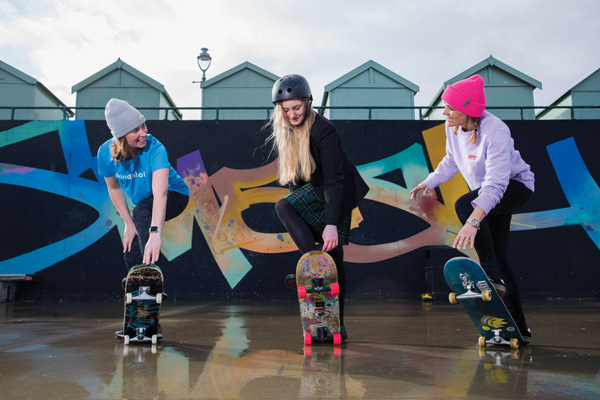
Children sometimes need reminding that success is, of course, related to effort and sports and skill-building are constant reminders of this. As children continue to commit to turning up for team practice, going out in the rain to try and beat their PB or heading off down the skatepark again to perfect that ollie, the realisation solidifies that they and they alone control their chances of success. When they see improvement, they know it was brought about by their own hard work. That knowledge brings confidence in their own ability every time they turn out to play.

This applies to the rest of their lives outside of sport. When you have self-confidence based on hard work, even when you don’t succeed, you can keep morale high. You understand the causal link between your ability to put work in and improve.

Friendships
Unlike a child’s handpicked friendships group, a sports team is made up of all sorts of different characters who your child may not have naturally befriended. Yet, sharing a common goal (to get better and win) unites those children and social skills are forged. This ability to rub along with everyone is a wonderful confidence builder (“if I can do it in sport, I can do it everywhere else in my life too.”)

Winning and losing and a healthy mindset
Great sportsmen and women have learnt how to avoid their self-esteem being dented by losing. It isn’t easy to do this as often confidence takes a knock after below-par performances. But being surrounded by like-minded players and coaches who offer continued support and encouragement really helps and drives players of all ages to improve and keep trying. They learn that losing is only a driver to keep going and strive for better – and what better life lesson could any child learn?

For more information, visit www.brightongirls.gdst.net

What makes a school a great school?

By children's health, Education, Relationships, Sport
by Dominic Mott, Head of Senior School, Hurst College

Well, many things – but, unsurprisingly for an industry dedicated to learning – academic achievement is frequently prized as the key factor. So how can this be measured? Results in public examinations are a reasonably good indicator of academic achievement, and although exam results do matter, clearly, they aren’t the sole metric of a great education.

How, then, might schools be compared against one another so that parents know which school achieves the highest grades? A league table that ranks each school by their GCSE and A-level results would seem to be a pretty sensible place to start. “So far, so good,” you might be thinking; or perhaps, “so what”? Please bear with me.

Value what you measure. Measure what you value.
What if academic ‘achievement’ isn’t actually what we want to be measuring at all? What if the real metric here is not the fixed notion of ‘achievement’, but instead the journey implied by ‘progress’? Isn’t that what learning is all about? Improving, growing, maturing, developing, and striving to do the very best that you are capable of, whatever that ‘best’ might be.

League tables have their place if you are the parent of a highly academic child, looking for them to be schooled amongst a selective cohort of similarly niche students, in an exams-focused environment, where the school has a vested interest in driving up its overall statistics – at any cost. For most parents this simply isn’t what they are signing up for.

For those parents who simply want their child “to do their best”, the only metric on which to judge schools is their ‘value added’ data. Put simply, it tells you how your child is likely to fare at one school compared to the grades they would achieve if they went to another school.

This data, which is generated by comparing GCSE and A-level results to standardised national baseline figures, is a far more accurate metric of the quality of teaching and learning in any given school. It cuts out ruthless academic selection, hot-housing, and questionable practices such as using different exam centre numbers to enter less-able pupils or those with special educational needs.It values the progress made by every single child, whatever the final outcome.

For the sceptics who (wrongly) suspect I may be attempting to distract from an unremarkable set of results at Hurst, you may wish to put our 2019 GCSE statistics (83% at grades 9 – 7) into The Times rankings of independent co-educational schools and you will see where we would have come. A gold star to anyone who emails me with the correct answer! We are even prouder of our ‘value added’ scores, which celebrate the outstanding achievements made by every single one of our pupils and puts us right at the top of the national rankings.

To return to the initial question, what makes a great school?
For sure, parents want their children to achieve the very best results of which they are capable at GCSE and A-level. However, they also want them to be healthy, happy, rounded, kind, confident, mature, independent young adults, ready to go out into the world to live successful lives and make a positive difference to those around them. That’s definitely not something you can measure by a league table!

The challenges of remote learning
What also makes a great school is one which can adapt swiftly, efficiently and effectively to unforeseen circumstances, such as switching to remote learning during the Covid-19 pandemic.

The government’s decision to close all schools from 20th March 2020 was less of a surprise than the bold announcement that there would be no public examinations this summer for GCSE and A-level students. Nevertheless, school leaders were left with precious little time to plan for the lockdown.

As with other independent schools, our priority was clear from the outset: to continue with, as far as was reasonably possible, the full provision of an outstanding all-round education for every child.

With days to spare before lockdown, one of the first priorities was to ensure that all staff and pupils had the equipment to teach or learn from home. An audit of digital devices redistributed laptops to those who needed them, and support staff were encouraged to take their office desktop computer home to enable remote working. Teachers were equipped with deskcams, whilst pupils’ devices were upgraded and checked to ensure that all were ready for a transition to the online world.

We were fortunate to be ahead of the game in the transition to a cloud-based network. Already 12 months into an 18 month project, it became clear that the final six months would need to be condensed into just a few weeks. All of our teaching and learning resources are stored in a bespoke SharePoint site which allowed teachers and pupils to access PowerPoints, worksheets, exam papers, mark schemes, online video tutorials, tests and revision materials from any device, anywhere in the world. In addition, by centralising the delivery of lessons through Microsoft Teams, with easy access to applications such as OneNote, it was made as straightforward as possible to deliver live lessons whilst giving teachers freedom over how to teach.

One of the most interesting challenges was to redesign the school day to adapt to the new way of working. Slightly shorter lessons and longer gaps between helped to reduce screen time; synchronising Prep School and Senior School timetables allowed families with siblings in two different parts of the college to take lunch together; regular short tutorial slots allowed tutors time to offer one-on-one support to pupils; and some creative timetabling allowed for an earlier finish each day without losing any of the co-curricular provision. This last point proved critical: by continuing to offer a programme of assemblies, sports sessions, choir and orchestra practices, musical rehearsals and activities sessions the regular rhythms of school life continued – pupils remained fit, healthy and active.

Hurst College is a thriving independent school for children aged between 4 and 18 with an overarching aim to provide an excellent all round education with a strong academic core and ideally located between Brighton and Haywards Heath. www.hppc.co.uk

Road Safety wek

By Education, environment, family, fun for children, Health, Safety, Sport, Uncategorized

The theme for UK Road Safety Week 2020 has been announced as ‘No need to speed’, following findings that just a quarter of people think vehicles travel at a safe speed on the street where they live. A free Road Safety Week action pack is available to download at www.roadsafetyweek.org.uk for people wanting to take part.

Taking place between 16th-22nd November and co-ordinated by road safety charity Brake, Road Safety Week 2020 will encourage everyone to learn the what, the why, and the where of speed and will highlight that whether someone is walking to school, cycling into town or driving for work, the speed of traffic matters to their safety.

‘No need to speed’ has been chosen as the theme for Road Safety Week 2020 following the findings of the ‘How safe are the streets where you live?’ survey, conducted online by Brake over the past year. The survey of over 1,700 members of the UK public, found that just a quarter believe that vehicles travel at a safe speed on the street where they live. Brake also found that six in 10 people feel that the speed of traffic on their street negatively affects their wellbeing and two-thirds identify motorised traffic as the biggest threat to their health and safety on their street.

The week long Road Safety Week campaign is supported by funding from the Department for Transport and headline sponsors DHL and Specsavers and will use the collective voice of members of the public, schools, communities, organisations and the emergency services to make clear that there is ‘No Need to Speed’ on the road.

To participate in Road Safety Week, people are invited to register for a free action pack at www.roadsafetyweek.org.uk

Everyone, no matter what you do, can take part in Road Safety Week:
• Individuals can learn what a safe speed is, speak with families and friends who may travel too fast and choose technologies,
or modes, which help keep people safe.
• Schools can help young people learn how the streets around their homes and schools can have safer speeds and shout out for change.
• Organisations can step up their policies and procedures to ensure that their employees travel at safe speeds and understand why this is so important.
• Emergency service professionals can enforce speed limits and share their experiences of the impact of travelling too fast.
• Decision-makers can consider what changes can be made to our road environment to encourage safe speeds and healthy streets.

Joshua Harris, director of campaigns for Brake, the road safety charity, said: “Road Safety Week provides a unique opportunity, every year, to focus attention on how the safety of our roads impacts all our daily lives. Speed plays a part in every crash and just 1mph can mean the difference between life and death on the roads. This Road Safety Week we want to help everyone understand why speed matters
and to join together to say there is ‘No need to speed’ on our roads.”

Brake is a national road safety and sustainable transport charity, founded in 1995, that exists to stop the needless deaths, serious injuries and pollution occurring on our roads every day.
We work to make streets and communities safer for everyone, and care for families bereaved and injured in road crashes. Brake’s vision is a world where there are zero road deaths and injuries, and people can get around in ways that are safe, sustainable, healthy and fair. We do this by pushing for legislative change through national campaigns, community education, services for road safety professionals and employers, and by coordinating the UK’s flagship road safety event every November, Road Safety Week. Brake is a national, government-funded provider of support to families and individuals devastated by road death and serious injury, including through a helpline and support packs.

kids in a line

The importance of problem solving and taking risk in the early years

By Education, environment, Safety, Sport, Sprintime
by Hannah Simpson, Footsteps Day Nurseries

Problem solving is an integral part of the Early Years Foundation Stage (EYFS) and is embedded throughout the environment. The children are encouraged to engage in activities that involve them extending and developing their knowledge and understanding.

Children start to problem solve from birth through learning to communicate and learning to move. They use trial and error to explore new concepts and develop their knowledge of existing ones. For example, learning how to crawl they may move backwards at first but this learning informs them on what to do next time. The continual process helps the children explore and be able to achieve their goal. As children grow they problem solve a wide range of things, at our nursery we encourage all children to problem solve by encouraging activities which allow children to develop and explore different ideas. For example, setting out drain pipes for the children to work together to create a course for water to flow through. During this activity the children have to problem solve how to make the water flow to the end. It is interesting to see how the children decide on different strategies to try and whether they can or can’t work. They strategically work through their ideas, successfully finding a way of making the water flow. The activity has many benefits for the children; they develop their teamwork skills, find a solution to a problem and learn through trial and error.

During activities that the children engage in within the nursery environment there is an element of risk. It is important for children to be able to take risk but the risks have to be managed to ensure the children are not put in serious harm. Children taking a risk and having a bump or bruise is part of the growing process and how they learn to manage in different situations and learn what they are able and unable to do. It allows children to recognise their own abilities and be able to develop and learn new strategies to tackle risk. For example, encouraging the children to use a climbing frame in different ways allows them to try and explore it in different ways. They may not be able to climb efficiently the first time they try but continuing to try and develop different strategies will enhance their learning, enabling them to achieve what they wanted to do. Encouraging children to take risk will enhance their confidence that they are able to try and find new ways to complete tasks. The confidence will also allow them to tackle challenges and overcome fears, learning what their body is able and unable to do. This provides them with essential knowledge about their own abilities as they grow. The children learn about their own ability to learn and how they can manage risk to develop and extend their existing abilities. It is important for adults around the children to support this process of allowing the children to manage their own risk and allowing them to challenge their own ability and prior learning.

At our nursery we recognise the importance of encouraging children to problem solve and take risk and this is integrated into everyday activities that the children explore. It creates confident and happy children who have a willingness to learn.

Footsteps now have three day nurseries across the city offering flexible hours and funding for two, three and four year olds. Go to www.footstepsdaynursery.com to find out more.

Encouraging independence

By Education, Playing, Relationships, Sport, Uncategorized
by Sam Selkirk
Head of Lower School at Reigate St Mary’s

Once asked by a university lecturer, what was my most enduring childhood memory, it didn’t take long to remember. Of course it was the hours I spent outside, playing with my siblings, my friends, no constraints and – most importantly – no adults looming. Our parents gave us clear instructions on where we could and couldn’t go, and what time we needed to return home; but freedom and the room to be independent was afforded to us. The expectation was that we made our own fun. I wonder if the same could be said now?

What do we mean by independence? The Cambridge dictionary definition is: ‘the ability to live your life without being helped or influenced by other people’. For young children it is about becoming an independent person which incorporates self-esteem and relationships with others; being independent with life skills and becoming an independent learner – finding things you need, asking questions, solving problems, thinking critically and for yourself, for example.

Where does it start? More recently, I was shown a YouTube clip – Ruby reaches for a toy https://www.youtube.com/watch?v=5Q2cL-WteZk: The clip was about three minutes long and showed six month old Ruby’s determination to reach a toy. I have since used this at a parent information evening and also during an assembly to four to seven year olds – their response was magical, they got it, this little baby could overcome barriers and reach the toy for herself. An extrinsic reward did not need to be dangled to entice Ruby, her satisfaction was evident when she began to play with the toy; it was intrinsic. During the video I was overcome by two thoughts, the first being: just help her get the toy – which I quickly dismissed – and secondly, how this short clip summed up so much of what I believe in. In allowing children to do things for themselves, they will undoubtedly develop the essential life skill of independence.

So how do we develop this? Evidence suggests that the ability to think and behave independently is possessed from a very early age. As such we need to nurture it in babies and young children. Reflecting on our behaviour is perhaps a good place to start: what have I done today for a child, which they could have done for themselves? As Lella Gandini of Reggio Emilia states: “children are strong, rich and capable. All children have preparedness, potential, curiosity and interest in constructing their learning, negotiating with everything their environment brings to them.”

So how do we help a child become that independent person? As adults we need to find a balance between not overprotecting our children, or pressurising them to run before they can walk; our expectations need to be realistic, and we must bear in mind that children will always develop at very different rates. The ‘Early Years Development Matters’ takes us through a child’s Personal, Social and Emotional Development and exemplifies the ‘Characteristics of Effective Learning’ from birth to five years old; some good ideas and guidance may be found in the DfE document ‘What to expect, when?’ which has been developed for parents and carers. Furthermore, it is important that we encourage healthy risk taking, through climbing trees or doing something new, and the opportunity to embrace mistakes. In the words of Carol Dweck: “What we do not want is to encourage a fixed mind set where a child feels they are unable to do something for themselves so they will not try, we want a child who is comfortable trying for themselves and develops a growth mind set – they will experience the feeling that before success comes failure after failure. But that hard work and persistence works.”


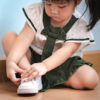
In many ways it is easier to identify the opportunities we can give our children to be independent when developing life skills, such as encouraging them to get dressed in the morning, cutting their own food, opening packets and having a go at pouring a drink, tidying up their toys, being provided with a cloth to mop up spills, to name but a few. Furthermore, many of these activities help a child’s physical development, therefore, providing a sound foundation for writing and drawing – a win win situation!

We also need to enhance a child’s innate desire to learn and explore. To do this we must ensure the home environment is ordered (a little like an Early Years classroom) and children know where to find things. Offering a couple of choices – such as what to eat at snack time or wear, (it is important not to ignore a child’s choice, as this will undermine their self-assurance) – and making decisions will enable them to develop their own thoughts, views and critical thinking. Allowing children to pursue their own plans, giving them the opportunity to choose what to play with and then leaving them for uninterrupted learning for increasing lengths of time in a safe environment further supports independence.

The report, ‘Developing Independent Learning in children aged three to five’, by the Faculty of Education, University of Cambridge says:”Learning is intrinsic to life and because it is this important children need to be the owners of their own learning; they won’t see it as intrinsic to life if they don’t own it themselves – everything they do must have a purpose which makes sense to them.”

As already mentioned, children develop at varying rates; and as such it is important to know where each individual is on their journey, so we may support them in the next step. For example, if a child can put on their coat, demonstrate, explain and encourage them to do up the zip. New skills may need practising, help may still be needed; but practice will ensure independence in learning new skill sets. In the words of Maria Montessori “Never help a child with a task at which he feels he can succeed” and Lev Vygotsky “What a child can do with assistance today she will be able to do by herself tomorrow.” Giving time is essential too, though it may be quicker at this point to do it for them, in the long run encouraging independence will save us time and help our children grow.

Ignatius of Loyola sums up the responsibility upon us as adults: “Give me a child until he is seven and I will give you the man”. Now, all we need to do to ensure we provide children with the best ‘independent’ start in life, is to permit them to feel in control of their lives, confident and capable, provide them with opportunities to master new skills, think for themselves and afford responsibility – job done!

Reigate St Mary’s is a coeducational day school for pupils aged 2 to 11 set in 15 acres of beautiful parkland close to Reigate town centre. It is a junior school of Reigate Grammar School with an emphasis on nurturing confidence and self-esteem to produce happy learners.
High quality wraparound care is available onsite for all pupils aged 2 and above for 48 weeks of the year.
www.reigatestmarys.org

The Festival of Winter Walks

By environment, family, Relationships, Sport

More and more of us are facing the impact of stress, overworking and the demands of everyday life. For example, in a 2018 poll by YouGov for the Mental Health Foundation 74% of UK adults reported having been so stressed at some point over the last year they felt overwhelmed or unable to cope. For many people, lack of exercise, being stuck indoors due to desk-bound jobs or being disconnected from green spaces can be big factors. Such feelings often come into sharper focus during the festive season, when staying on top of all the preparations, and pressures to party and be sociable can also pile in and stress us out.
If this sounds like you, or someone you know, then here’s the ideal festive uplift gift – the Festival Of Winter Walks, which will run from 20th December 2019 to 5th January 2020. It’s organised by the Ramblers, the charity which helps everyone, everywhere, enjoy walking and protects the places we all love to walk.

Ramblers groups across the UK will offer a warm welcome on hundreds of free festive walks. No matter where you live, and whether or not you’ve walked before, they’ll offer the chance to enjoy the wonderful winter landscape in good company; to relax, unwind and stress-bust, and to make new friends at a time of year when many people can feel anxious, stressed or
even isolated.

There will be fun winter-themed walks that the little ones will love; leisurely strolls under five miles for people new to walking; and longer walks for those that want more of a challenge. For those of you who may be short on time or want a gentler stroll, there will be Ramblers’ health walks.

Top tips for getting into winter walking
• Don’t worry if you’re not a seasoned walker, the Ramblers Festival Of Winter Walks includes lots of short group walks to get you started.
• Enjoy connecting with winter scenery and sounds. Have a mindful walk; slow down from the everyday rush and really take in your surroundings – the whistling wind, or starlings migrating to the UK for winter. Why not take some photos on your phone, and share them at #winterwalks and don’t forget to tag The Ramblers@RamblersGB
• Take a flask of warming tea, coffee or festive, hot spiced apple juice with you. Cinnamon sticks, ginger and mulling sachets are readily available from most supermarkets.
• For younger walkers: challenge them to find an interesting stick and become a wizard with a staff. Or find the crunchiest winter leaf, or gather pinecones, which they could paint back at home. There are lots more ideas for winter walking fun in the Festival of Winter Walks guide: www.ramblers.org.uk/foww
• If you enjoy joining a Festival Of Winter Walks event, why not join your nearest Ramblers group on their next walk?

Ramblers have 484 walking groups across the UK, including a growing number for young walkers.

You can find your nearest Ramblers group online at www.ramblers.org.uk