Included in the Oxford English Dictionary (OED) update are over a hundred words relating to pregnancy, childbirth, and childcare. From TTC to VBAC, cry-it-out to baby-led-weaning, the language of parenting is as diverse as the opinions expressed about these topics. Many terms that are everyday vocabulary for millions of parents are relatively recent coinages, so weren’t included in earlier editions of the OED.
These newer arrivals reflect not only medical advances, but also developments in how we think about children and view their place in our society. The OED was keen to capture the imprint of these changes and developments on the English language.
For specialist vocabulary, from archery to zoology, the OED draws on the assistance of experts. For the language of parenting, parents themselves are the experts, and can reveal a broader range of terms than any single self-styled parenting guru or one or other partisan school of thought. For that reason, the OED team took its search to online parenting forum, Mumsnet, to ask which words and phrases should be considered for inclusion. The responses were as broad in scope as they were diverse in nature: and the interest of these words (to non-parents, as well as parents) lies in the fact that they reveal the full range of parenting experience – from everyday routines to life-changing moments – using the widest array of language – slang, colloquialisms, medical language, abbreviations.
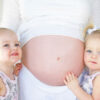
The update includes a number of terms associated with TTC (trying to conceive), including a large number of initialisms used chiefly online. These include BFN, standing for ‘big fat negative’, BFP (‘big fat positive’) – used mostly online to report or talk about the results of a pregnancy test – and to pee on a stick, a colloquialism for taking that pregnancy test. Aunt Flo is a punning euphemism for the menstrual period.
The word babymoon was originally used to describe the time following the birth of a baby during which the parents can focus on establishing a bond with their baby but is now more frequently used to describe a relaxing holiday taken by parents-to-be before their baby is born. Less enjoyable experiences associated with pregnancy include baby brain, a supposed state of impaired memory or concentration during pregnancy or after giving birth, and gestational diabetes, used to describe elevated glucose level in the blood during pregnancy.
The update includes words that reflect the many and varied approaches to parenting, such as baby-led weaning and helicopter parenting. The former is a method of weaning allowing a baby to eat food by him or herself as opposed to being spoon-fed, while the latter is the practice of being a parent who takes an excessive interest in the life of his or her child, especially with regard to education. Other entries include CIO or cry-it-out, a method of sleep training, and co-sleeper, a child sleeping in the same room as the parental bed.
Words with regional differences also appear. Some may be familiar: the term nappy bag is used in the UK while in the US the same item is called a diaper bag. But few outside the US. may know that diaper cake describes a gift given to expectant or new parents made up of items for the new baby; and the phrase too posh to push seems to be both characteristically and exclusively British.
In her blog post on the project, OED Senior Editor Fi Mooring comments: “These words reflect personal experiences but many of them also resonate much more widely, even with people who are not parents. The distinctive lexicon of parenting maps a whole range of human experience, from immense joy to immeasurable sorrow and, considering its relevance to so much of the population it seemed an underrepresented category of vocabulary in the Dictionary.”
Some other parenting abbreviations, words and terms:
Pump and dump: To express and discard breast milk, typically following the ingestion of alcohol or medication that might be harmful to an infant.
SAHM (noun): Stay-at-home-mum, a mother who does not go out to work.
Push present (noun): A gift given to a woman shortly after she has given birth, typically by her spouse or partner.
Balance bike (noun): Type of learner’s bicycle with no pedals or training wheels.


 This journey of broad discovery essentially starts at primary and indeed pre-primary level and provides all children with the opportunity to seek out and explore areas of interest and to develop talent which provide many with a lifelong love of learning. Over the years I have spoken to many parents whose main requirement, when considering the options for their children, is to ensure their children are happy. Happiness and thus mental health are of key importance in a world of increased pressure and expectations. Children supported and nurtured and indeed loved within their school will automatically have a head start and hopefully will develop a hunger for knowledge. Of course the breadth of study and the balance of the curriculum is also key and provides the option for all to explore their individual burgeoning interests. All children develop academically at a different pace. On many occasions I have had to reassure anxious parents that their child is not a failure because they are struggling with their spellings or their fractions. These are just moments in time in the life of a young person and should not be the basis of perceived success nor failure.
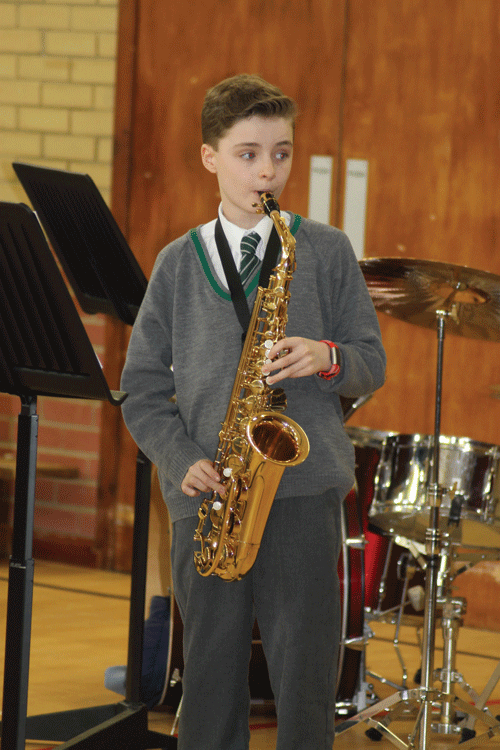
 Confidence is key together with a large dose of resilience. So your child isn’t going to win a Spelling Bee! But watch them play their musical instrument with pride and courage or hear them sing in front of an admiring audience. Look at their artwork and wonder at their developing sensitivity. Stand back in awe at their prowess on the hockey field and feel proud at their selfless teamwork and support for others. Marvel at their enthusiasm for their castle project in history or their ability to recite verse in French or Spanish. And admire them on the stage in the school production as a child you barely recognise as the one who you take home every day from school!