Category

Sport

group ski trip

Beyond the bell – Enriching every child’s school journey

By family, fun for children, Holiday, Playing, Sport, Sprintime, Wellbeing
by Mrs Faye White
Assistant Principal Pupil Engagement, Shoreham College

Education is often understood as the transmission of knowledge: facts learned, skills practised and qualifications achieved. Yet anyone who has worked in or experienced education knows that the true power of schooling lies not only in what children learn, but in how they grow. A truly enriching school journey nurtures curiosity, builds character and helps young people understand both the world around them and their place within it. It is in this broader sense that enrichment becomes not a luxury, but a vital part of education.

Enrichment gives learning depth, meaning and relevance. It allows children to make connections between what they encounter in the classroom and what they experience beyond it. It supports personal development alongside academic progress and helps pupils become confident, resilient and engaged learners. Trips, visits, residential opportunities and clubs all play a crucial role in this process, bringing learning to life and ensuring that education is not simply remembered, but lived.

Trips and educational visits are often a child’s first step into seeing learning in the real world. A visit to a museum transforms history from dates and diagrams into tangible stories. A trip to a science centre allows pupils to experiment, explore and question. A walk in a woodland or along a coastline turns environmental science into something that can be seen, heard and felt. These experiences anchor learning in memory and emotion, making it far more likely to be understood and retained. Beyond their academic value, trips and visits also promote social learning. Children learn to travel together, behave responsibly in public spaces and represent their school community with pride. They learn to ask questions, listen carefully and engage respectfully with experts and guides. In doing so, they develop communication skills, confidence and a sense of belonging to something larger than themselves.

Residential experiences take enrichment a step further by offering children the chance to grow personally as well as academically. For many pupils, a residential trip is the first time they have spent an extended period away from home. This brings with it excitement, uncertainty and challenge, all of which are powerful tools for learning. On residentials, children learn independence in practical ways: organising their belongings, managing routines and taking responsibility for themselves and others. They learn resilience by facing unfamiliar situations, trying new activities and overcoming small setbacks. Whether it is climbing a wall, navigating a trail or performing in front of peers, these challenges build confidence and self-belief. Just as importantly, residentials strengthen relationships. Pupils learn to support one another, to work as a team and to develop empathy and understanding. They see their teachers not only as instructors, but as mentors and role models. These shared experiences build trust, community and a sense of belonging that often carries back into school life long after the trip has ended.

Clubs and enrichment activities further enhance the school journey by offering pupils opportunities to explore interests beyond the core curriculum. Sports clubs encourage physical health, teamwork and perseverance. Creative clubs such as art, music and drama nurture imagination, self-expression and confidence. STEM clubs, coding groups and problem-solving activities promote logical thinking, innovation and curiosity. Gardening, debating and cultural clubs broaden perspectives and develop responsibility, communication and global awareness. These activities allow children to discover strengths they may not otherwise recognise. A child who struggles in the classroom may shine on the sports field, in a rehearsal room or during a practical project. This recognition builds self-esteem and motivation, helping pupils to see themselves as capable and valued learners. Clubs also offer safe spaces for children to take risks, make mistakes and learn from them, an essential part of developing resilience and a growth mindset.

Alongside these experiences, schools should also play a vital role in helping young people connect with their communities and understand the value of contributing to others. Through charity fundraising, volunteering and enterprise projects, pupils learn that they are not only learners, but citizens with the power to make a difference. Many access this through inspiring initiatives such as the Duke of Edinburgh’s Award, partnerships with local care homes, beach cleans, fun runs, food collections and community events. These experiences teach empathy, compassion and social responsibility in ways no textbook can. Becoming a well-rounded adult requires learning not only how to achieve, but how to give; not only how to succeed, but how to support others. The value of this learning is profound, both for the individual and for society, and it is something schools nurture with care, creativity and commitment.

Together, these enrichment opportunities create a holistic education that prepares pupils not only for exams, but for life. They help children develop essential life skills, collaboration, adaptability, empathy, leadership and perseverance. They expose pupils to new environments, cultures and ideas, broadening horizons and raising aspirations. They help children understand that learning is not confined to a classroom or a timetable but is a lifelong journey.

In an increasingly complex and fast-changing world, this kind of education is more important than ever. Young people need more than knowledge; they need the confidence to navigate uncertainty, the curiosity to keep learning and the resilience to face challenges. Enrichment provides the space and structure for these qualities to grow. To enrich a child’s school journey is to invest in their whole development, academic, social, emotional and personal. It is to recognise that education is not simply about preparing children for the next stage, but about helping them become thoughtful, capable and compassionate individuals. Trips, residentials, clubs and community engagement are not add-ons to learning; they are integral to it. They are the experiences that children remember, the moments that shape identity and the opportunities that open doors.

In enriching their school journey, we do more than teach. It is beyond the bell that education becomes experience, and it is through enrichment that every child’s school journey is truly transformed.

Please call 01273 592681 to find out more about what Shoreham College can offer you, or to arrange a personal visit at any time of the school year.
www.shorehamcollege.co.uk
active fun for kids

The importance of children being active and socialising throughout the school holidays

By Education, environment, Exercise, fun for children, Green, Mental health, Playing, Relationships, Sport
by Debbie Webb
Founder of Activ8 For Kids

The school holidays can be a time for fun and relaxation, but it’s also important to keep children engaged and active during this time. School holidays are always an exciting time for children, but it can be a challenging time for parents who still need to work. This is where holiday clubs often come in, providing children with a safe, fun environment. There are a wide range of holiday clubs available depending on the interests of the children, but with the rising cost of living, parents may wonder whether the cost of the holiday clubs are worth it and whether trying to entertain them at home is a better option. So what do we want our children to be doing during the school holidays, what will help them to develop and grow as individuals and help them later in life?

As much as your child may push against routines, children actually thrive in a routine. It gives them a sense of purpose, clear expectations and a structure to their day. Routines can help their self-esteem and ensure they feel less anxious and more comfortable. Lie-ins, chilled time in front of the TV, playing computer games and having days out are all great and bring a range of benefits, but it is also important to build in time to be active and have opportunities to socialise with others regularly.

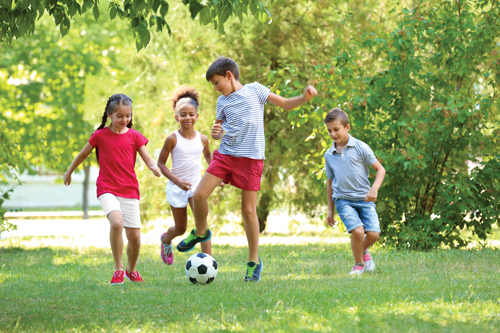
Current recommendations from the government are for children to take part in at least 60 minutes of moderate to vigorous activity a day. This means their heart rate should increase, they should be out of breath and feel hot after the activity. Physical activity is essential for maintaining good health, strengthening muscles and bones, enhancing motor skills and can prevent obesity and related health problems. Ensuring your child is active every day and recognises the benefits it brings (both physically and mentally), can cultivate a lifelong habit of exercise and a healthy lifestyle. As well as keeping them healthy, being active brings so many more benefits:
• Allows children to burn off excess energy; remember school is very tiring and during the holidays they need alternative ways to channel that energy.
• Boosts confidence and promotes social skills.
• Develops and improves their fundamental movement skills of balance, co-ordination and agility.
• Improves mental wellbeing and makes them feel good about themselves. Exercise can improve their mood, enable them to experience a sense of accomplishment and can also stimulate the release of endorphins, which are natural mood boosters.
• Contributes to better sleep.
• Increases self-esteem and helps to reduce stress and anxiety.
• Physical activity stimulates brain function and enhances cognitive abilities. Studies have shown that active children perform better academically and have improved attention spans. During school holidays, engaging in physical activities like sports, outdoor games or even activities that involve problem solving and critical thinking can contribute to their cognitive development.
• Engaging in different activities and exploring new places fosters creativity, stimulates imagination and curiosity and also problem solving skills.

Children who get to be active everyday alongside other children will also benefit in all the following ways:
• Develop new skills.
• Develop team work and leadership skills.
• Make new friends.
• Develop independence.
• Develop their social interaction skills.
• Learn how to transfer skills across activities.

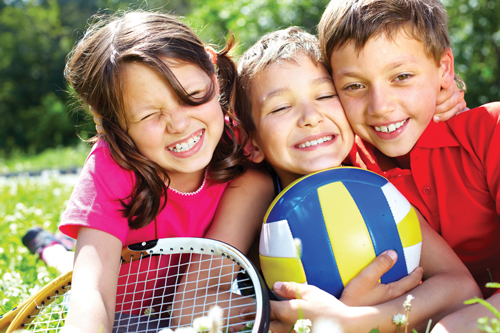
Socialising with others during school holidays is crucial for children’s social development. It provides opportunities for them to practise communication, co-operation, teamwork and conflict resolution. Participating in group activities and interacting with others helps children build friendships, develop empathy and understand diverse perspectives.

Overall, children being active and socialising during school holidays is essential for their physical health, mental wellbeing, cognitive development, social skills and creativity. Parents, carers and communities should provide opportunities and support for children to engage in a variety of activities that promote physical activity.

Debbie Webb is a qualified teacher and sports coach. She runs Activ8 For Kids and has developed programmes of activity for the different ages and stages between two and sixteen years old based on the fundamental movement skills. Visit www.activ8forkids.co.uk for more information.


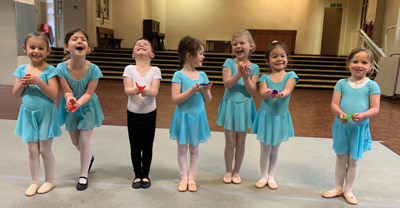
girls' ballet class

Studio to stage

By dance & Art, Exercise, fun for children, Mental health, Music and singing, play, Relationships, Sport, Wellbeing
by Lynda Forster
Dance Art Studio

Preparing to perform a dance on stage is a journey of commitment and dedication, bringing hours of practise to life, bringing sheer joy to the audience and an experience like no other for the dancer.

Lots of little girls and boys express an interest to start dance classes. They have no inhibitions, a natural sense of rhythm and love to dance ‘like no one is watching’ when they hear a tune. Many skip into their first class without ever looking back to their parents, whilst others, with the help of their teacher, need a few lessons to gently ease into it building their confidence with each lesson.

Dance classes have many benefits at all ages which can really help set children up for life. Children can be faced with lots of worries and upsets during their school life so having a hobby they love and a safe place to go is, at times, a huge relief.

For preschoolers a dance class will open up a whole new world – they will soon be able to isolate different parts of their bodies to move separately (a huge plus for co-ordination) and develop better overall concentration. Infant children will develop these skills in more depth, and will soon be able to raise their hand and be more involved in their school lessons because they’ve learnt participation within a dance class. Once assemblies and seasonal performances at school come round they’ll be happily volunteering for the lead parts!

At junior school, being a dancer will teach them to be physically and mentally stronger, gain more flexibility through their bodies and learn ‘time management’ to help manage academia and extra circular activities more easily which in turn will help with their all important and busy social life, with their school and dance friends – lots of parties to go to!

Starting senior school can be overwhelming for many children but most schools have a dance department where they can share their interests, make new friends and start showcasing their dance and creative skills in performances. Overall they will be confident, happier and more active teenagers. If their dance school has an exam option, they would have taken plenty of them since they were young, so again they will have learnt essential life skills; the purpose of working towards something to the best of their personal ability, revision skills, commitment skills and the experience of actually taking an exam, so hopefully the GCSE exam room will not feel as daunting.

Performing in their first dance show is where all the skills mentioned above unfold. They’ve had to work hard and wait patiently for their moment. Seeing the excitement build in the lead up to a dance school show makes all the months of hard work and effort by the teacher and the performers so worthwhile.

When practise starts for their first performance it is impossible for young children to visualise the finished piece and understand why repetition is so vital. By the time they reach dress rehearsal day, when it all comes together and the buzz is palpable, they completely understand and in fact start asking for more rehearsals so that they can work on their performance skills. At this stage they really understand it’s a team effort and they all become such close friends. Reassurance about having nerves is spoken about in a positive way by explaining about the fight or fight mode our bodies go into. It is a journey from start to finish, with them seeing how choreographers create their work from a starting point through to the finished piece. Their eyes are opened to new styles, techniques and interpretations to various music style. If the show has a theme, they have gained knowledge on the narrative and learnt how the whole production blends together.

The costumes are an extension of the dance and compliment choreography – after a couple of shows even the youngest dancers start to develop an eye for detail and will soon say if a costume isn’t quite looking right or needs an accessory added! It’s an opportunity for all the various ages to come together to inspire and support each other.

So many emotions are experienced during performance day, the excitement and happiness on their faces when they are waiting in the wings to go on stage is joyful. The nervous excitement transforms into electric energy and then the thrill of the applause which of course they love embracing!

Confident children leave the theatre feeling very proud of themselves and will hopefully remember the whole experience for many years. When they return to regular grade lessons they have a positive approach, more motivation and an understanding that you gain more from things by giving your best. A truly valuable life lesson.

Dance Art Studio is located in the Fiveways and Preston Park area of Brighton offering pre-school ballet and dance for 3-4 year olds and graded ballet, tap, modern theatre dance and street as well as boys only tap and jazz. Exams and performance opportunities. We also hold holiday workshops. www.danceartstudio.co.uk

learn to swim

Six questions about baby swimming that you are perhaps too afraid to ask

By Sport, swimming
by Susan Lee
new mum and Blue Lagoon regular

Being a first time mum there are so many new experiences as I learn to navigate the journey of parenthood, and baby swimming has definitely been a highlight for me. When I began my baby swimming adventure I had so many questions, so, in the small hours of the morning between feeds, I started my research online and then in person a few weeks later.

Now having experienced classes with my baby, I believe these are the top six questions parents want to ask when it comes to baby swimming, so decided I would share them with you.

When should I start to take my baby swimming?
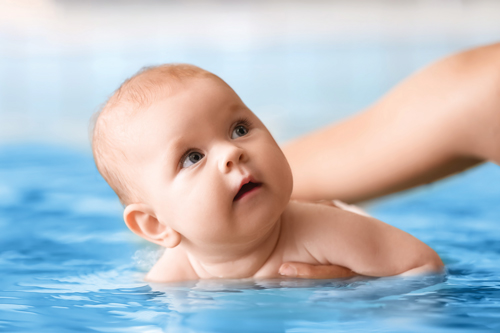
Babies are allowed to go swimming at any age and do not have to have had their eight week vaccinations before entering a pool. It is, however, recommended that their umbilical cord stump has come off. It is also advised that mums go in the water only after having had their six week postnatal check. For your first time, it’s also great to go with another adult, another pair of hands to help with the bags and someone to help you relax in the water. Whilst we started early, it is never too late to embark on your swimming adventure – although the later you leave it the more likely you will have a delightfully stubborn toddler to contend with!

Do I need to attend classes or can I just take my baby to a swimming pool?
We found classes to be an excellent way to introduce our baby to the water. Not only did we learn some amazing skills, we got to meet other parents and have the reassurance of the teacher’s guidance. We were informed that babies who attend classes are more likely to be super confident in the water at an early age. You don’t however, need to attend structured classes and can simply go to your local swimming pool that offers parent and baby sessions.

Or why not treat yourself to a private swim where you can take your whole family along – we also did this so that our daughter’s grandparents could join in with and enjoy her swimming journey.

I learnt that taking my baby swimming was great for strengthening her heart and lungs, bonding with myself and my partner and creating a positive relationship with water. I found that swimming really helped to regulate her sleep – and boy did she sleep well after her class.

What should I put in my baby’s swim bag?
My big fear of taking our newborn into the water was, what if she has a poo? Having read that normal nappies blow up like balloons and then explode, we packed the suggested swimming nappies and neoprene covering pants which gave us total confidence that no ‘code browns’ would happen in the pool on our watch! We also packed a little swimsuit (because let’s face it they are just so cute), a poncho towel and a roll-up changing mat, although the place we went to did provide them, along with a changing table.

Please also remember to bring your own swimming costume and towel, so unlike my partner who once forgot his, you won’t have to go into the water in your underwear – turns out this is not good swimming pool etiquette! It made me laugh though, at least I can blame things like that on having ‘mummy brain.’ He didn’t have the luxury of that age old (but very real) excuse.

Do I need to be able to swim to attend classes?
Although I consider myself to be an honorary mermaid, in my classes there was a grown-up who was really sacred of the water. In fact, it was their main motivation for taking their little one swimming, helping to ensure that they wouldn’t grow up feeling the same way. Their fear was no issue at all as there is so much support from the staff and other parents and we were never out of our depth or our comfort zone anyway.

How to choose the perfect swim school?
Apparently not all swim schools are required to use trained teachers. So, whilst that may not be seen as essential, I wanted the reassurance that my teacher was a qualified baby instructor. Also important for me was:
• Nearby free parking.
• Good changing facilities – friends of mine have been to classes held in private residential homes and found themselves having to get changed by the side of the pool or in unsuitable facilities.
• A warm shower to wash off the chorine before getting dressed.
• Somewhere to feed after swimming. Again I’d heard horror stories of only having fifteen minutes to change afterwards and having to feed in the car – babies in my experience tend to be very hungry and tired after classes.

Is it important my baby goes underwater?
All of the classes we attended were child-led learning which I loved. If for any reason, our little one didn’t want to go under the water, which was part of the programme, it was never a problem. We were taught that an early underwater experience is a great way to teach our baby all important self-rescue skills. This means, should our daughter find herself falling into water she will kick up and float on her back or turn and return to safety whether that be to me, a noodle, or the side of the pool.

Amazingly, newborn babies have a very strong natural reflex that helps them not to take a breath underwater. Swimming classes use this reflex to give children an underwater experience in a safe and fun way. I have to say however, watching my baby go underwater for the first time really took my breath away. We were delighted to see that she was completely unfazed by submerging, and were encouraged by the instructor to give positive reinforcement, which resulted in big smiles all round.

In summary, we both really love our weekly half hour swimming sessions. We have so much fun together through guided learning and look forward to the coffee and cake in the café with the other mums and babies after the class. I get to feel a real sense of community and know that my baby is getting the best introduction to water play. As a bonus the underwater photographs at the end of our first term were so beautiful – great memories from this very special time in our lives.

More than physical – Five added benefits of getting your children into sport

By environment, fun for children, Health, Sport

Many of our children already partake in some form of sports, with over 90% of children between five and 16 years old consistently being involved with sport, whether this be participating in the annual school sports day or an after-school activity. But did you know there are many other added benefits to your children doing sport?

Alongside improving fitness among the young, sport can also be beneficial for the mental wellbeing and growth of your children. Here, Suso explore five ways your child can benefit from taking part in sporting activities.

Sport helps to improve mental health
The physical benefits of sport are undisputed, but did you know that sport can actually help your children improve and manage their mental health better? Children who are active tend to have a better outlook on life. They are also better at managing mental health issues including anxiety and depression. This is due to the release of endorphins during exercise.

Team sport is recognised as being the best for your child’s mental wellbeing. While children with attention difficulties might find that individual sports are more helpful, on average, team sport is the best for improving your child’s mental health.

Children will become more resilient
Making sure your children are prepared for whatever they might face in the future is a large part of your role as a parent. Encouraging them to partake in sport can actually help build resilience within your children from a young age. Children who participate in sport are better equipped to handle obstacles in the future, with sport being identified as a key factor in young children’s resilience.

Whether it is finding a tactic when the other team has an advantage, or improving play when another player gets injured, the obstacles which can occur in team sports means that children can learn and better understand flexible ways of thinking. This will also give children the chance to handle disappointment better as they develop a good sportsmanship way of thinking.

Your children will develop their skills
In fact, there are a host of skills which your child can learn through taking part in sports activities. Not only will they be resilient, but their communication skills can also be developed through team sport. Sport encourages your children to speak on many levels – not only to their peers and teammates, but also to coaches and the opposition.

Other skills your child can develop through sport include:
• Leadership
• Responsibility
• Problem solving
• Teamwork
• Co-ordination

Improvements in behaviour
The benefits don’t just apply on the playing field – you might see an improvement in your child’s behaviour both at home and in the classroom too. By participating in sport, your child will likely learn respect for others, authority figures and their peers. It has also been shown that PE can help your child learn key skills such as self-discipline and concentration which can help in the classroom significantly.

There is a boost in confidence
Finally, your children can benefit from a boost in confidence due to being active in sport programmes. Physical activity can bring about a mindfulness in your children that allows them to be ‘in the zone’. This concentration means that intrusive thoughts, such as self-doubt, are forgotten – leading your child to be more confident in their decisions.

Children who have higher levels of confidence and self-esteem tend to do better in school, at home and with friends. Whereas a child with low self-esteem might repeatedly be unsure of themselves and doubt their abilities – halting progression.

The physical benefits of sport aren’t the only advantages your child can have from partaking in football, cross country, and other physical activities. In fact, UNICEF claims that children who participate in sport and play tend to do better academically as their development and learning are enhanced. The hidden benefits of physical activity can set your child up for success in the future as they develop key skills, have confidence in themselves, and learn to regulate emotions such as disappointment and joy.

For further information please visit www.susodrinks.co.uk

There’s no ‘i’ in ‘team’!

By fun for children, Mental health, play, Relationships, Sport
by Sarah Nesbitt
Kiddikicks

It is well-known that regular exercise is beneficial for a child’s physical development. What may come as a surprise though, is learning just how useful group sports can be when it comes to developing important social skills.

Working as a team
Interacting in a group sports class will help your child to recognise the importance of working as a team and interacting not only with other children, but also with their coaches. They learn about leadership, team building and communication, all of which are important life skills that will help them in school, their future career and personal relationships.

Bringing people together
Group sports classes bring together children from various religious and cultural backgrounds, which will undoubtedly provide a valuable experience. Teammates must understand how to adapt to, and accept, each other’s cultures so they can work together. Learning how to get along with people with different personalities and of different cultures is a skill that will be needed throughout life.

Coping with wins and losses
Developing a child’s competitiveness while teaching them to both win and lose gracefully can help them learn how to tackle obstacles and accept the setbacks that life will naturally throw at them. Playing sports like football will demonstrate the fundamental lessons of winning and losing which are important for a child’s development.

New friendships
Group sports classes build a child’s confidence and regular classes allow new friendships to blossom. It’s a good idea to encourage your child to get to know their new friends with out-of-class play dates or days out. It’s also useful for new parents to build a support network of new friends in their local neighbourhood. It’s a win win for adults and children alike.

Finding a class that focuses on developing skills and encouraging everyone to have fun while keeping fit, is a great start for children less than five years of age. www.kiddikicks.co.uk, Tel: 020 7937 7965 Office hours 10am – 3pm daily during term-time info@kiddikicks.co.uk during the holidays

learn to swim

Six reasons why you should learn to swim

By children's health, Sport, swimming
by Darren Bubb
Swim Safe Director

1. It’s great for your health
Swimming when young helps children to develop their strength, co-ordination and flexibility. It helps solidify a love of physical activity and exercise which will help them keep fit and stay fit no matter their age.

2. There are no age limits
Swimming is for EVERYONE, it doesn’t discriminate against age. From babies and children to parents and grandparents. It’s never too late to learn to swim and open up a whole form of physical activity.

3. It’s a low impact sport
Unlike other popular sports, swimming’s low impact means that you reduce the chance of injury. Which means that not only is it a great recovery and rehabilitation sport it means that you can swim well into older age.

4. Swimming lasts a lifetime
Learning to swim not only gives you a new skill. It gives you the opportunity to enjoy swimming for many years to come.

5. Great place to make friends
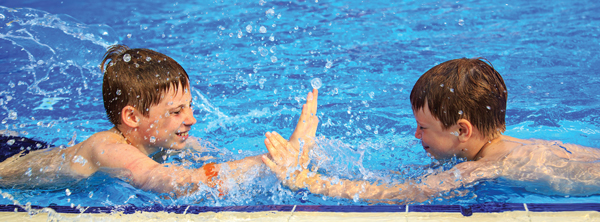
Swimming is a powerful way to bring people together, whilst having fun, overcoming struggles and fears. It gives your children a chance to meet people away from their classrooms and gives them a wider social circle. It’s also a great way for parents to meet other parents too.

6. Swimming could save your life
Drowning is the second-biggest cause of accidental death in children aged one to 14 years old in the country. This means that it’s vital that your child knows how to react should they find themselves in trouble in the water. Learning to swim will help your child become a strong swimmer and give them the best chance of survival should they find themselves in a difficult situation in water.

For more information please visit www.swimsafeschool.co.uk

holiday camps

The importance of children being active and socialising throughout the school holidays

By environment, family, fun for children, Holiday camps, Playing, Sport
by Debbie Webb,
Founder of Activ8 For Kids

The school holidays can be a time for fun and relaxation, but it’s also important to keep children engaged and active during this time. School holidays are always an exciting time for children, but it can be a challenging time for parents who still need to work. This is where holiday clubs often come in, providing children with a safe, fun environment. There are a wide range of holiday clubs available depending on the interests of the children, but with the rising cost of living, parents may wonder whether the cost of the holiday clubs are worth it and whether trying to entertain them at home is a better option. So what do we want our children to be doing during the school holidays, what will help them to develop and grow as individuals and help them later in life?

As much as your child may push against routines, children actually thrive in a routine. It gives them a sense of purpose, clear expectations and a structure to their day. Routines can help their self-esteem and ensure they feel less anxious and more comfortable. Lie in’s, chilled time in front of the TV, playing computer games and having days out are all great and bring a range of benefits, but it is also important to build in time to be active and have opportunities to socialise with others regularly.

Current recommendations from the government are for children to take part in at least 60 minutes of moderate to vigorous activity a day. This means their heart rate should increase, they should be out of breath and feel hot after the activity. Physical activity is essential for maintaining good health, strengthening muscles and bones, enhancing motor skills and can prevent obesity and related health problems. Ensuring your child is active every day and recognises the benefits it brings (both physically and mentally), can cultivate a lifelong habit of exercise and a healthy lifestyle. As well as keeping them healthy, being active brings so many more benefits:
• Allows children to burn off excess energy; remember school is very tiring and during the holidays they need alternative ways to channel that energy.
• Boosts confidence and promotes social skills.
• Develops and improves their fundamental movement skills of balance, co-ordination and agility.
• Improves mental wellbeing and makes them feel good about themselves. Exercise can improve their mood, enable them to experience a sense of accomplishment and can also stimulate the release of endorphins, which are natural mood boosters.
• Contributes to better sleep.
• Increases self-esteem and helps to reduce stress and anxiety.
• Physical activity stimulates brain function and enhances cognitive abilities. Studies have shown that active children perform better academically and have improved attention spans. During school holidays, engaging in physical activities like sports, outdoor games or even activities that involve problem solving and critical thinking can contribute to their cognitive development.
• Engaging in different activities and exploring new places fosters creativity, stimulates imagination and curiosity and problem solving skills.

Children who get to be active everyday alongside other children will also benefit in the following ways:
• Develop new skills.
• Develop team work and leadership skills.
• Make new friends.
• Develop independence.
• Develop their social interaction skills.
• Learn how to transfer skills across activities.

Socialising with others during school holidays is crucial for children’s social development. It provides opportunities for them to practice communication, co-operation, teamwork and conflict resolution. Participating in group activities and interacting with others helps children build friendships, develop empathy and understand diverse perspectives.

Overall, children being active and socialising during school holidays is essential for their physical health, mental wellbeing, cognitive development, social skills and creativity. Parents, carers and communities should provide opportunities and support for children to engage in a variety of activities that promote physical activity.

Debbie Webb is a qualified teacher and sports coach. She runs Activ8 For Kids and has developed programmes of activity for the different ages and stages between two and sixteen years old based on the fundamental movement skills. Visit www.activ8forkids.co.uk for more information.

boy biking

New Active Challenge to help families set healthy habits in 2023

By children's health, fun for children, Health, Playing, Sport

Families wanting to be more active in 2023 are invited to sign up to a new physical activity challenge, which features fun fitness activities to be completed throughout the year. The Premier Active Challenge is centred around 52 exhilarating activities – one for every week of the year. Activities require minimal equipment, are accessible and can be modified to suit children and adults of all ages.

From balloon volleyball, to scavenger hunts and a World Book Day-inspired fitness challenge, the activities are themed to the seasons and intended to get the blood pumping.

The challenge has been devised by Premier Education, the leading provider of sports clubs, curricular PE and holiday camps to primary schools. Passionate about encouraging children to lead more physically active lives, they hope the challenge will entice more families to regularly participate in physical activity in a fun, inclusive and accessible way for all.

David Batch, chief executive at Premier Education, comments: “Our Premier Active Challenge is about setting healthy habits for the year ahead. It doesn’t matter if you’re five, 55 or 105 – there are ways to participate and keep the body moving! Obviously, each activity needs to be adapted to those taking part, but if families can make a concerted effort to spend time together in an active way, they will be making an important commitment to their physical and mental health. We can’t wait to hear about everyone’s progress – and above all it’s about giving it a go and having fun!”

Each month, Premier Education will reveal the latest batch of weekly challenges, which will be published in a downloadable and printable planner to stick on the fridge.

Each new weekly challenge will begin on a Monday and participants should aim to complete each one a minimum of three times per week, putting special focus on weekends when it’s the perfect time to encourage friends and family to join in!

Participants are invited to share progress on socials using #PremierActiveChallenge. A star participator will be selected every month, with prizes including home sports equipment such as a cricket set, rugby balls and tennis racquets.

For more information about the Premier Active Challenge or to take part, visit www.premier-education.com/news/ 2023-active-challenge or see Premier Education’s social channels for details.
sporty education

The importance of sport in junior schools

By Education, Sport
by Katie Atkinson-Hunt
Deputy Head of Sport at Chinthurst School

Sport teaches children life lessons that go far beyond the physical benefits of activity. There is a growing body of research that links physical activity to improvements in educational achievement. This is down to the fact that sport helps children to develop character and learn important social and brain skills such as problem solving, resilience, perseverance, confidence and team work. But these benefits do not just happen; they come from a well devised physical activity programme that is carefully planned and delivered at school. There are certain key principles on which this should be based.

Inclusion and choice are extremely important. A school games programme should enable all children to learn new skills and techniques successfully and to choose the sport they want to play, without restriction. To truly deliver this, children’s choice should not be constrained in any way, least of all by their gender. Our games department facilitates boys and girls training alongside each other in rugby, football, netball and hockey and they play fixtures together in competitive teams. As a result of this approach, the children see themselves as equals on the pitch with no preconceived limitations and the encouragement and support they give one another on the games fields continues off it.

To help children make informed decisions about the team sport they want to play each term, taster sessions should be incorporated into several of the first sports lessons. These tasters showcase the variety of skills each sport develops and help the children to buy-in to their subsequent sports lessons. Choice is empowering. Giving children a voice and some control over their life helps to build self-esteem and confidence, both important attributes which certainly transfer to the classroom, and have an impact on their approach to life generally.

A good sports programme should foster healthy competition and teamwork. So much of what we do in life requires us to work collaboratively and for everyone to play their part no matter what their size, shape, ethnicity, or gender. This is the essence of team sports and playing in a team is empowering. Fixtures and competitions are important ways for the children to showcase their skills and are often their first real taste of competitiveness. Playing matches should not be the preserve of the gifted and talented but instead provide an opportunity for the children to have fun and build new friendships. Every fixture is an important experience for the players. Whether the team wins or loses, the children always gain something from it. They learn to play by the rules and to be the best they can be within the constraints of the game. Teamwork fosters self-belief, collective discipline and rewards hard work. A mistake or loss is often an excellent opportunity to learn and improve. The ability to be resilient and bounce back is really important in life.

Beyond the traditional school sports, there is so much more to games and PE lessons. There are a huge variety of different activities that children can become involved in. The key is to give them an opportunity to try these out. At our school we run a multi-Sport Week annually which is the highlight of the school calendar. Children have the opportunity to take part in many less well-known activities, from Ultimate Frisbee to archery and orienteering to Zumba. Inspirational speakers visit and fun challenges are set for the whole school. ‘Terrific Tuesdays’ and ‘Funky Fridays’ in the last week of each term continue the emphasis on variety giving the children a chance to play games like capture the flag, squares and a range of different dances. Some children go on to pursue these activities further in after-school clubs or outside school. All find it motivating and are excited to do more.

We must not forget that having fun is the most important thing about any successful sports programme. Through sport everyone can experience fantastic moments that they remember forever. There are huge psychological benefits to laughing and smiling so sport should be a positive experience for all the children. It’s a moment for them to be free of the classroom, express themselves in a new way and gain confidence in something that might normally really challenge them.

Within games and PE lessons it is important to create fun and challenging activities which stretch the more able but support the less confident. To achieve this, we now base every lesson around ‘game play’. This involves having a ‘game play’ area and a ‘skill zone’. The skill zone is a small, very structured place where we help develop specific skills or stretch children’s techniques and knowledge. Whilst some children are in a skill zone, the rest are continuing in the game play area, practising playing a game situation and creating rules, superpowers and learning how to play as a team. At the end of the lesson, the children will play a match where we encompass all the skills/game play activities into a real-life match using the exact rules of the specific sport.

Sports days, house competitions and fun swimming galas are great ways to give children the chance to have fun competing alongside different age groups for their house or to represent different groups in the school. They are also brilliant ways to foster community spirit, a sense of identity and feeling of belonging.


Katie Atkinson-Hunt is Deputy Head of Sport at Chinthurst School in Tadworth. The school have been named 2022 Independent School of the Year for Sporting Achievement in recognition of their pioneering sports programme. www.chinthurstschool.co.uk