
Category

fun for children

baby swimming

From first dips to sunny trips – six tips for getting your baby set for holiday water fun

By fun for children, Summer, sun safety, swimming

Planning your baby’s first summer holiday? Whether you’re off to the coast, heading abroad or just hoping for some sunshine and splash time closer to home, it’s only natural to have a few nerves when water’s involved.

From hotel pools to beaches and even splash parks, these are all new environments – and for babies, they can be a bit much if they’re not used to them. The good news is there’s lots you can do before you even leave home to help your baby feel more confident in and around water.

Here, Tamsin Brewis from Water Babies, shares her top tips to help your family enjoy a calmer, more relaxed first summer of water play – wherever you’re headed.

1. Try regular water play at home
You don’t need to wait until you’re on holiday to get your baby used to being in water. A few minutes of fun in the bath or even in a shallow washing-up bowl with warm water and their favourite toy can make a real difference. Splash water over their arms and legs, gently pour it over their shoulders and let them feel the water running down their skin. These simple activities help your baby get used to water movement and temperature changes – all of which they’ll experience when they are at the beach or in a pool.

2. Get them used to their ‘swimming kit’
Babies aren’t always thrilled the first time you pop a sunhat on their head or try a swim nappy. So, it’s worth letting them wear these items for short periods before your trip. Try letting them wear their swimwear in the bath or garden and have a few short ‘practise’ sessions with their hat on indoors while they play. That way, you’re not adding new sensations to an already unfamiliar environment when you’re on holiday.

3. Treat water time as exploration, not a task
When you arrive at the pool or beach, go at your baby’s pace. Sit by the water’s edge and let them watch and listen. If they’re feeling brave, dip their toes in, then gradually their legs and hands. Hold them close and talk to them softly so they know you’re there and they’re safe. The aim isn’t to ‘get them in’ or have them swim – it’s just about helping them feel comfortable with this new space.

4. If they’re unsure, stay calm and responsive
If your baby seems unsettled or cries when you try to introduce them to water, don’t worry – it doesn’t mean you’ve done anything wrong. Step back, have a cuddle and try again later or another day. Your calm reassurance tells them it’s OK to take things slowly. Babies are sensitive to your emotions – so staying positive and relaxed helps them do the same, even if things don’t go to plan right away.

5. Build in quiet, connected moments
Being in water together – whether it’s a pool, sea or bath – is a lovely opportunity for bonding. Hold your baby close, maintain eye contact, and talk or sing to them while you float or sit in shallow water. These peaceful moments help your baby associate water with safety and closeness. And for you, it’s a chance to slow down and enjoy the moment – which isn’t always easy on a busy family holiday.

6. Prepare with gentle swim sessions
If you’ve got a holiday coming up, booking a few baby swimming sessions beforehand can help give you both a head start. At Water Babies, we focus on building confidence through trust – not pressure. Our lessons are designed to help babies feel comfortable in the water and to give parents the tools to support them safely. Even a short series of lessons can make a big difference when it comes to enjoying water time on holiday.

With a little bit of preparation, your baby’s first summer around water can be full of happy memories – not just for them, but for you too. Whether it’s dipping tiny toes in the sea, sharing a splash in the pool or simply cooling off in the garden, building their confidence early means you can both relax and enjoy the moment when it counts.

For more information about Water Babies please visit www.waterbabies.co.uk
happy children lying

Outdoor play matters

By Education, environment, Family Farms, fun for children, Gardening, Green
by Jennifer Clary
Little Growers Farm

Children today face a brand-new frontier, defined by rapidly evolving technologies that have been baked into their lives since birth. While their Millennial and Gen Z parents fondly remember childhoods with books and hours spent in the playground, Generation Alpha children born between 2010 and 2024 are growing up with screens and touch interfaces as the predominant stimuli.

The UK’s Education Committee published an astonishing report just a few months ago which tracked a 52% increase in children’s screen time between 2020-2022, providing evidence that nearly 25% of children exhibit smartphone usage consistent with a behavioural addiction. This report also revealed that 20% of children in the UK between three and five years old have their own mobile phone! Back in the early 1980s when I was navigating young life, my time was spent kicking a ball around at the park or play acting with my younger brother. Technology fancier than Skip-It and Teddy Ruxpin was the furthest thing from my mind!

Recently I attended an Ignite Women in Business brunch hosted by the indomitable Natalie Montagnani. Many of the women in attendance were mums as well as business owners, so the conversation naturally touched on our collective concerns for Generation Alpha and, importantly, what we can actively do to support children’s healthy development and preparedness. The overwhelming consensus was to encourage more outdoor, hands-on and screen free play.

Here’s why:
1. Physical fitness matters
Being in nature encourages active play and normalises daily physical activity for children as an important, healthy habit. Yet more than 400 playgrounds have closed across our country since 2012, decreasing readily accessible outdoor areas for children. One of the greatest supports that parents can provide to children is seeking out safe, engaging outdoor locations for play. We are lucky here in Sussex as we have many places locally where children can run wild and play freely whether that be a beach, park or forest. After all, it doesn’t matter how technically proficient our offspring are if they’re physically unwell.

There’s an old adage “You have 1,000 problems until you have a health problem – then you only have one problem”. It’s true. Teaching children the benefit of prioritising physical fitness is a lifelong gift.

2. Executive function is developed, not inherited
Unstructured play time is the best way for children to build the skills to help them plan, prioritise, troubleshoot, negotiate and multi-task. Being outside gives children the opportunities they need to practise these vital skills.

3. Taking risks is necessary on the path to success
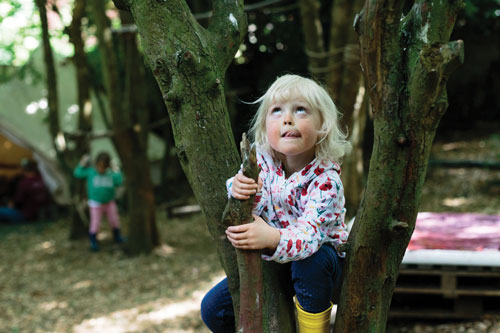
As human beings, we all need to take risks to achieve our goals. Taking risks can be uncomfortable, but when children are encouraged to push boundaries in their youth, they are better prepared to take big dream-building swings as adults! Climbing a tree, balancing on a log and other outdoor challenges build confidence and teach children that – even when taking a risk falls flat – the lessons they learn from failure are valuable and empower them to ultimately realise success.

4. Nature needs protecting
Having been born into a society that emphasises technology means that Generation Alpha will only learn to appreciate nature if we model the importance of environmental protection. Children who spend quality time playing outdoors are more likely to become adults who advocate for our planet. It is not a given that future generations will be able to walk in the woods, view animals in their natural habitats or play in a stream. Generation Alpha’s behaviours will largely dictate what becomes of our Earth and so it falls mainly to us, their parents, to provide this most important education.

5. Outdoor play boosts brain function for life
Research has shown that the increased oxygen levels from being outdoors enhances cognitive performance and that the expansiveness of nature provides a respite from the over-stimulation of indoor, screen-dominated spaces. Outside ‘brain breaks’ allow for improved information processing and better learning outcomes. So even if your child is a tech whiz destined for a career as a drone manager, cybersecurity expert, or virtual habitat designer, playing outside lays the strongest possible foundation for their future.

At the end of the day, I am not a Luddite. My own children, aged four and five, revel in Bluey and enjoy listening to GoKidGo podcasts like Snoop and Sniffy or Story Train from my phone while building with magnetic blocks. After all, I recognise that Generation Alpha is indeed facing a NEW frontier: one which old school Millennials like me are grappling to keep up with in real time and the full possibilities of which are almost impossible to imagine. Technology will undoubtedly transform the future in many positive ways as well as negative ones, and I certainly believe that there is a need to educate our young people about the realities of their world, from robotics to AI. But, as human beings, it is vital to remember that we are more than simply machines. Outdoor play is a key developmental experience and, despite exponential advancements in the tools we use, preserving this most foundational education for our children should be the highest priority.

Jennifer Clary is the founder of Little Growers Farm, a summer pop-up for art, science and play.

From making lava lamps to catching bubbles, there’s something for every family to enjoy

at Little Growers Farm! www.littlegrowersfarm.co.uk

skateboard lesson

They’re not broken – it’s their superpower potential

By ADHD and neurodiversity, Education, fun for children, Mental health, special educational needs
by Jack Francis
The Skate Club

How passion helps neurodiverse children discover their ‘superpowers’

A few months ago, I stood in front of 200 primary school children, sharing stories from my life – skateboarding down hills with Christmas trees strapped to my board, struggling to keep up at university and writing a book I never thought I’d be able to write. As I spoke, a boy turned to his mate and whispered, “I’ve got ADHD and dyslexia – like him.” That moment stuck with me. That small moment of recognition, pride even, is why I’ve been doing these assemblies.

I was diagnosed with dyslexia at university, and ADHD much more recently, as an adult running a skate school. Growing up, these weren’t framed as ‘superpowers’. At best, they were obstacles. At worst, signs of somehow falling short. I’d often been called bright, but that made it harder – like I had all the pieces, just not the ability to put them together.

It’s only in recent years that I’ve come to see how much of what I’m good at – from teaching, to coaching, to running a business – is tied to the way my brain works. My hyperfocus, creativity, energy and problem-solving skills aren’t things I’ve achieved despite my neurodiversity. They are my neurodiversity. And I’m not alone.

The power of passion
In every school I visit, there are children sitting quietly with heads full of big ideas, or legs bouncing under the table. Some have diagnoses, many don’t. They might struggle with reading, listening, or managing frustration – but the potential in those children is massive. What they need isn’t ‘fixing’. What they need is space to explore something they care about, something that lets them feel good at being themselves. For me, that thing was skateboarding.

Skateboarding gave me freedom. It wasn’t about winning or being picked for a team. It was about solving tiny physical puzzles – how to move, how to balance and how to land a trick. It was social but low-pressure. I could focus completely on what I was doing, fail over and over again and still feel proud of the progress. Looking back, skateboarding was the first place I truly felt capable.

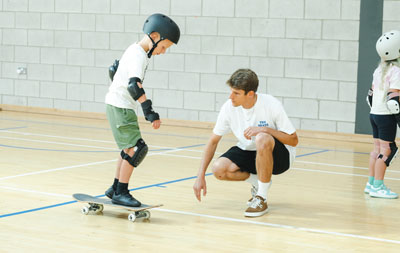
Today, as a skate coach, I see the same thing in other children – especially those who are neurodiverse. Children who are anxious or fidgety, or who’ve been told they “Just need to focus,” often find a rhythm through skating. I’ve watched children go from nervously standing on a board to rolling down ramps on their own, grinning from ear to ear. Some of them go home and do their reading for the first time in weeks. It’s not about the trick – it’s about the shift in how they see themselves.

Reframing ‘difficulty’
One of the challenges for neurodiverse children today is that their journey often begins with being told what they can’t do. A diagnosis, helpful as it is, can also carry an unspoken message: you’re going to struggle. And yes, there may be challenges. But there are also advantages – and children deserve to hear that side too.

Dyslexic thinkers often have strong visual and spatial awareness, creative imagination and big-picture thinking. Those with ADHD may have intense focus (on the right task), incredible energy and rapid-fire ideas. Autistic children often bring attention to detail, emotional honesty and deep interests. But these traits only shine when we let children follow what they love.

That’s the heart of it: when a child finds their passion – whether it’s skateboarding, coding, storytelling or animals – it becomes a doorway into confidence. Passion gives purpose to their focus, structure to their energy and joy to their learning. And when a child starts seeing themselves as someone who can, not just someone who struggles, everything changes.

The adult’s role
As parents, educators, and carers, our role isn’t to tell children who they are – it’s to notice when they light up, and to help them follow that thread. Sometimes that means letting them try unusual things. Sometimes it means not pushing them to do what everyone else is doing. And sometimes it just means listening when they talk about something they care about.

Skateboarding might not be your child’s thing – and that’s fine. But something is. There’s something out there that lets them feel free, focused and fully themselves. Our job is to help them find it. Not to demand they perform, but to offer them the kind of support that says, “You’re not broken – you’re just different and that’s a strength.”

I still get overwhelmed. I still struggle with admin. I still forget things. But I’ve also built a skate school, written a book and coached hundreds of young people. And I’ve done that not in spite of my neurodiversity, but because of it.

So when your child gets obsessed with something, try not to brush off. Watch closely. That might just be the spark that helps them discover their superpower.

Jack Francis is the founder of The Skate Club and author of “How to Train Your Skateboard”, a beginner’s guide to skateboarding.
www.theskateclub.com

girl in forest

Let them climb

By children's health, Education, environment, fun for children, Green, Safety, Wellbeing
by Lucy Owen-Collins
Head of Adventures at Bee in the Woods

The powerful benefits of outdoor risky play

In an age of screen time, padded playgrounds and hyper-awareness of safety, it can feel instinctive to shout “Be careful!” every time your child climbs a tree or scrambles up a boulder. But what if, in our effort to protect, we’re holding our children back?

As parents, we want to keep our children safe, but research shows that too much caution can actually hold children back from vital developmental opportunities.

Risky play; those thrilling, uncertain, physical experiences like climbing, jumping from heights, balancing on logs, or exploring wild spaces – is more than just a childhood rite of passage. It’s a crucial ingredient in how children grow into confident, capable, resilient adults.

Author and childhood play advocate Tim Gill, in ‘No Fear: Growing Up in a Risk Averse Society’, argues that children need real opportunities to test their limits and take measured risks. When we support rather than suppress this kind of play, we empower children to become more aware of their bodies, make better decisions and develop lifelong emotional resilience.

The benefits of risky play
Physically, risky play helps children build strength, agility, coordination and fine motor control. Scrambling up a climbing frame, balancing on a log, or running across sand not only keeps children active – it enhances their core stability, posture and endurance.

Sensory development also thrives in outdoor play. Movements like spinning, swinging, rolling and balancing stimulate the vestibular and proprioceptive systems – key components in helping children understand where their body is in space. These experiences lay the foundation for everything from focus and attention to emotional regulation and coordination.

Cognitively, risky play sharpens problem-solving and decision-making. Children must assess their environment – “Is this branch strong enough? Can I jump that far?” – and adjust their approach in real time. This self-assessment builds independence and executive function.

Socially and emotionally, children learn to regulate emotions like fear and frustration, and to persevere after a fall or failure. When playing with others, they negotiate, take turns, lead and follow – all vital skills for life. Risky play also nurtures courage and self-esteem: there’s nothing like the glow of pride after scaling a tall rock or swinging across a stream.

Risk is not the enemy – danger is
There’s a difference between risk and danger. Risk is a challenge a child can see, consider and try to overcome. Danger is something hidden or poorly understood. As adults, our role is to assess the environment, offer guidance and stay nearby, rather than removing every possible hazard or stepping in too soon.

Forest School Leaders often use a ‘risk-benefit’ approach – recognising that the benefits of play with risk often outweigh the downsides when managed sensibly.

Supporting safe risky play: What parents can do
Instead of shutting down adventurous play, we can shift how we support it. Here are a few ways parents can help children assess risk:
• Talk it through: Ask, “What’s your plan?”, “How could you do that safely?” or “What’s your next step?” These questions should help children think critically and prepare.
• Model curiosity, not fear: Stay calm and positive, even when your instincts are shouting. You can always move closer or spot from a distance.
• Celebrate effort, not just achievement: Say, “You tried that really carefully” or “I noticed how you tested that first”, to reinforce thoughtful behaviour.
• Know your child: Every child has a different threshold for risk. Trust their instincts, but be there to encourage and, occasionally, challenge them.

What to say instead of “Be careful”
“Be careful” is vague and often ineffective. Try these alternatives:

• “Can you find a steady place for your feet?”

• “Use both hands.”

• “Take your time and notice what’s around you.”

• “What’s your plan if that wobbles?”

• “I’m right here if you need me.”

These phrases promote awareness, decision-making and reassurance without instilling fear.

Risky play in different environments: Safety tips
Outdoor environments offer rich, natural opportunities for risky play. Here’s how to support children’s exploration safely and confidently in a few common settings:

At the beach
• Water safety first: Teach children to respect the tide, watch the sea and stay within view. Watch for strong currents and always stay close when water is involved.
• Digging and climbing: Sand dunes and rock pools offer exciting climbing opportunities. Encourage kids to test ground firmness and wear shoes with grip.
• Sensory-rich play: Let children roll, bury, balance, and run. Sand is a great medium for physical and imaginative play, but remind children not to dig too deep or tunnel near unstable edges.

In the woods
• Tree climbing: Don’t lift children into trees to climb them – encourage them to understand their own abilities by climbing themselves. Encourage kids to “climb down as well as up”- if they can’t get down safely, they’re too high. Avoid trees with dead branches and teach children keep ‘three points of contact’ on the tree at all times (two hands, one foot/one hand, two feet)
• Sticks and stones: Playing with natural materials builds creativity and coordination. Teach children how to carry sticks safely (point down, away from faces).
• Rough ground: Roots, mud and slopes are ideal for balance and proprioception. Wear shoes with grip and support falls as learning moments rather than failures.

On climbing equipment or rocks
• Let them fall small: Risky play doesn’t mean no bumps or bruises, but small falls teach children to adapt and try again.
• Check surfaces: Sand, bark chips or grass under climbing equipment help cushion falls. Encourage safe jumping and always remind children to look before leaping.

Why it all matters
When we give children permission to play with risk, we do more than help them become physically stronger. We show them that we trust their judgment, believe in their resilience and honour their growing independence.

Let’s raise children who aren’t afraid to fall, try again and learn through doing. The outdoors is their natural training ground. So next time your child teeters on a tree limb or builds a fort from branches, take a breath and remember: this is childhood, exactly as it should be.

Bee in the Woods Kindergarten is a woodland preschool and community Forest School for three to seven year olds, based in Portslade and Stanmer Park in Brighton.
For more information www.beeinthewoods.co.uk

upside down selfie with kids

The benefits of an active holiday camp

By environment, fun for children, Holiday camps, Mental health, Wellbeing
by Emily Finch
Ultimate Activity Camps

The school holidays are a time for children to take a break from the school routine, have fun, relax and recharge but they can also be an opportunity for growth, adventure and to learn new skills. Holiday camps offer a fantastic alternative to boredom at home, long hours in front of the screens and finding fun and engaging childcare solutions for parents. Active holiday camps create the perfect environment for children to stay fit and build valuable life skills through physical activities, games and team challenges.

Active holiday camps are more than a way of burning off energy. They can support children’s mental wellbeing, help them make new friends, and even spark a lifelong love for the outdoors. Whether it’s boosting their confidence through new experiences or simply encouraging healthy habits, the benefits go far beyond the holiday itself.

Improved physical health
Activities like sports, swimming, hiking and obstacle courses help improve cardiovascular fitness, strength, flexibility and coordination. Regular physical activity can also boost the immune system and supports healthy growth and development. With a range of activities throughout the day to participate in, an active holiday camp will help children get moving and trying new activities can inspire a love and help exercise to become a regular occurrence.

Being on camp for a day, a week or the whole summer can help to create a lifestyle change. An active camp creates a fun atmosphere and where it’s normalised for children to be on the move. Enjoying themselves in this environment means it is likely children will want to carry it on outside of the camp, creating a new norm. By being outside and in the natural environment, whether that is whilst on a multi-activity camp, on school playing fields or a sports specific camp on astro turf or specialist surfaces or survival camps in the woods all these will help children appreciate the outdoors, fresh air and a gain a respect for nature.

Boosts mental wellbeing
Being outdoors and engaged in fun physical activities releases endorphins that help elevate mood and reduce stress and anxieties. The regular exercise children get in an active holiday camp can also boost their mood and improve their focus. Being active will also naturally tire a child out, meaning they will come home from camp and have a deeper and more restful night’s sleep, which will help improve their overall mood and wellbeing.

Active camps also help to develop children’s social skills. They are a great place to meet new people and make new friends. Many activities on an active camp involve an element of teamwork, bringing all kinds of children together to work towards a common goal. Children learn to communicate, co-operate, resolve conflicts and support one another – skills that are essential in all areas of life. The shared experiences create lasting memories and bonds.

Active camps also help build confidence and independence. Trying new activities with new friends and succeeding while being supported by new peers helps build confidence and self-esteem. Whether it’s on the football pitch or in the art room, being praised and supported by others leaves children with a sense of achievement. Being in a new environment without their parents, with unfamiliar faces and possibly unfamiliar surroundings, encourages children to step out of their comfort zone. They learn to adapt to new instructors/teachers and navigate new conversations and friendships on their own, giving them invaluable life lessons and skills.

Reduces screen time
Holiday camps, and active camps especially, can be a great way to pry digital devices from children’s hands. The limited screen time creates a great opportunity to reconnect with play, the outdoors and simple childhood fun! With all the activities on offer and action-packed timetables, children’s devices will be a distant memory. Reduced screen time increases focus, creativity and emotional regulation, on and off of camp.

Promotes learning through play
Many activity camps incorporate learning into the timetable, almost like sneaking extra vegetables into dinner by cutting it very fine! This can be through teamwork, creative thinking or STEM. Activities like team-based problem-solving games, treasure hunts and movement-based STEM challenges help children develop critical thinking, communication and collaboration skills. All while staying active, making learning feel exciting and rewarding. Whether they’re figuring out clues in a scavenger hunt or building a structure that can withstand movement, children are developing skills that will benefit them long after the camp day ends.

At Ultimate Activity Camps, children can enjoy a range of over 40 sports, games and craft activities each week, led by inspiring staff in superb facilities – running at 45 locations this summer! For further information about camps near you please visit www.ultimateactivity.co.uk

boys outside

The importance of physical activity on children’s mental wellbeing

By Childcare and Nannying, environment, Exercise, family, fun for children, play, Playing
by Debbie Webb,
Founder of Activ8 For Kids

Physical activity is an all encompassing term, which can refer to PE lessons at school, participation in team or individual sports, running around at the park and much more. Each one brings its own physical benefits such as healthy bones and muscles, a strong heart and lungs as well as developing fundamental movement skills, speed, strength and stamina. However, physical activity can bring a wealth of other benefits to children, meaning that even if your child is not ‘sporty’, helping them develop a lifelong habit of regular physical activity can help them across many aspects of their life.

Physical activity is defined by the World Health Organisation as any bodily movement produced by skeletal muscles that requires energy expenditure. This includes walking to school, cleaning their rooms, kicking a ball around in their garden and any other movement that uses energy. The NHS recommends that children aged five to 18 years need to take part in 60 minutes of physical activity per day and for children under five it is 180 minutes.

We know that this is important for physical health and the importance of developing strong bones and muscles at a young age but do we consider all the other benefits our children are getting when they are being physically active?

As adults we have all been there; it is cold outside and we want to stay inside, warm and dry, but we feel tired, lethargic, possibly even a little low or agitated. If we are able to pull ourselves out for a walk, the fresh air can help wake us up, make us feel more invigorated and awake. We may return feeling tired, but it is a different type of tiredness – a good tiredness. It is the same for children, physical activity in any form can wake the brain up, release good chemicals and help them feel more alive.

We live in a society where computer games, TV and social media are part of life but it is important to help our children develop habits of coming away from screen time whenever they can, or at least to plan in breaks from the screens. A family walk along the beach, or in the woods can have so many positive effects on the whole family, time to talk, have fun with each other, wake your brains up and step away from the screen. It doesn’t have to be a long trek, a short walk around the block can have similar effects.

What are the benefits?
Physical activity can help hugely with maintaining mental health. Endorphins are released during all types of physical activity and can help to improve mood, energy levels and sleep. Physical activity has also been linked to a more positive body image in children and young people.

We are hearing more and more about rising anxiety levels in children. Physical activity can help break the cycle of anxiety by helping them focus on something different and gaining a sense of achievement, even if that is a short walk, taking a ball down to the beach or getting out on their bike. The feel good chemicals released in the brain during activity can also help a child with anxiety. There are so many pressures on children and young people in today’s society and many of these are amplified by social media. Taking part in physical activity can help children make friendships out of school, improve their confidence and help them with social anxiety.

There are many activities available that don’t focus on elite ability and are there to encourage physical activity, it is a case of exploring the options, looking at holiday activities, after-school clubs and going out with your child when you can. The benefits to your child’s mental wellbeing will be priceless and will stay with them for the rest of their lives. We need to help children recognise how physical activity makes them feel better about themselves and encourage them to find the activities they enjoy.

Debbie Webb is a qualified teacher and sports coach. She runs Activ8 For Kids and has developed programmes of activity for the different ages and stages between two and sixteen years old based on the fundamental movement skills. For more information please visit www.activ8forkids.co.uk

girl trampoline

Stress-free birthday parties

By Exercise, family, fun for children, Party, Playing
by Lily Derbyshire
AirHop

Outsource and sit back!

Your child’s birthday should be a joyous occasion but it often turns into a significant source of stress due to planning for the big day! From choosing a theme and organising activities and entertainment, to preparing food and cleaning up the aftermath, the to-do list can suddenly feel endless and costs can add up too. The good news is, there is a solution that ensures a memorable and stress-free experience for both parents and children: opting for a venue with dedicated children’s party services. Generally, most activity or play centres will have a range of party packages readily available to suit different requirements and budgets.

One of the biggest advantages of booking a party package at a venue with activity-based facilities is the significant reduction in stress. Planning and hosting a party at home means taking on countless responsibilities such as decorating, organising games, preparing food and drinks and cleaning up, alongside ensuring the party runs smoothly from start to finish. It is easy to see why hosting at home can sometimes seem more like a chore than a celebration.

Additionally, play and activity centres have a range of attractions, activities and trained hosts already in place that aren’t available at home, to ensure guests have an exciting and action-packed party. The truth is, children do not measure the success or value of their party by the hours put in by their parents organising it but how memorable and how much fun they and their friends had. Everyone wants to have the party that children will talk about long after.

By booking a party package at an activity centre, parents can delegate these tasks to experienced party hosts. Many venues handle everything from set up, activities and entertainment, to food and cleaning up, leaving the parents free to focus on what matters most – enjoying the special day with their child. Imagine walking into a fully prepared party, watching activities run effortlessly, and leaving at the end with no mess to clean up. Hosting at an activity centre eliminates the ‘what if’ worries: What if it rains? What if we run out of food? What if the children get bored? With experienced staff and well-equipped facilities, venues are prepared for any scenario. It is not just a party for your child – it is a gift for yourself!

While stress-free planning is a huge win for parents, the real magic of hosting at an activity centre venue lies in the experience it offers the children. Trampoline parks, in particular, are a standout choice. Combining high-energy fun with physical activity, they offer an unforgettable setting that keeps children entertained from start to finish. With wall-to-wall trampolines, giant airbags, dodgeball courts and many other exciting attractions, trampoline parks cater to a wide range of ages and energy levels and are sure to keep the children active.

Beyond being fun, trampolining is a fantastic form of exercise. It is three times more effective than jogging when it comes to burning calories, all while being easier on joints. As the children jump, they will engage multiple muscle groups, improving their balance and coordination and get their hearts pumping – all without even realising they are exercising and far away from any screens!

Trampoline parks provide a safe environment for high-energy play, featuring facilities designed with safety in mind and supervision from trained staff and party hosts to ensure a secure and enjoyable experience for everyone. Guests can engage in physical activity by bouncing around the park, the perfect outlet for their energy. Parents can relax and have a coffee, knowing their children are in safe hands. By the time the party comes to a close, the children will be happily tired from all the excitement.

When it comes to stress-free party packages, AirHop and Jump In Adventure and Trampoline Parks features multiple locations nationwide and a range of party packages designed for all ages, making it easy to plan a celebration that’s stress-free for parents and exciting for the children. AirHop’s party packages include everything you need for a fantastic party: hoptastic jump time, access to private party areas, delicious food options and even a FREE return bounce pass for the birthday child. Visit the www.airhop.co.uk to learn more and book your next party.

dance for children

Dance is for everyone

By children's health, dance & Art, Exercise, fun for children, Music and singing, Party
by Jess Child
JC Dance

You may be wondering; how can a dance class benefit my child in more ways than just keeping them busy for half an hour? Well, I am here to tell you about the amazing benefits of a dance class – not just for your mini human – but for you too!

Let’s break away from the myth that dance is just for girls and encourage movement exploration for ALL children. Dance is for everyone. If you have a body you can dance. As a preschooler, dance is less about learning particular steps and more about imagination, expression, socialising and aiding development, making it a perfect activity for any child.

Preschool dance benefits your child’s physical development by increasing their ability to perform motor skills. We might stand on one leg pretending to be a flamingo, whilst improving balance, or we could march like an astronaut on the moon or gallop sideways like a crab to enhance coordination. This also builds your child’s knowledge of their bodies, helping them gain control of their extremities and core muscles, ultimately increasing reflexes and reducing the likelihood of any bumps or falls.

Dancing as a toddler promotes the idea of good posture to your child. We like to see who can stand the tallest or who can have the straightest back whilst sitting with their imaginary string connected all the way from the top of their head to the ceiling. This early foundation sets them up for life, keeping force balanced throughout their fast-growing little bodies. The distribution of force on muscles, bones and ligaments that good posture brings, not only reduces risks of injury but also builds confidence and creates more space for the organs, improving breathing and digestion. All of these aspects give your child greater awareness of their bodies in space, helping bodies self-regulate. What’s not to love?

Dance classes will give your child the opportunity to move to many different types of music enhancing their musicality. Using music and stories and linking physical movements to imaginary ideas and finding a teacher who is passionate and encouraging, can help your preschooler to create a magical world and a safe space.

Preschool dance gives them the opportunity to interact with new children, grown-ups and teachers, ultimately helping them improve on social skills. Toddlers will continue to learn how to follow instructions and are able to start understanding taking turns and sharing with other children, they may take turns dancing one at a time, or wait their turn to get their maracas. This means each child has the opportunity to have one to one focus from the teacher, ensuring they all have a moment in the class to feel special and valued as an individual. This opportunity to move their bodies to music, along with a positive learning environment can help children’s confidence skyrocket. In turn it can increase their independence, maybe by tidying up or dancing by themselves. Every child is different but at this age children are sponges for information, taking it all in, in their own way. With the use of repetition in dance classes your child is able to learn new words, new ways of moving and find a passion for something new and exciting.

Now onto you. How can a preschool dance class benefit you? This is time for you to meet other grown-ups with children of the same age, the ability to connect with others going through similar experiences can uplift us, support us and reduce stress. These classes also offer valuable one on one time with your little one without the outside pressures of being a grown-up. Dance classes are a space where you and your mini human can bond and enjoy time together without having to worry about ‘life stuff’.

Time with your preschooler is short and precious, make the most of every second and most of all make time to enjoy it!

Jess Child runs BalletBees – dancing together, growing together. Where every child is welcomed, valued and supported in their movement journey. www.jcdanceclasses.com 07305 228770 info@jcdanceclasses.com @jess_jcdanceyoga

gardening for children

Involve children in gardening

By Education, environment, Forest School, fun for children, Gardening, Green
by Victoria Rumens
Studio Hummingbird

Cultivating minds and bodies

Gardening is a simple but powerful way to spend quality time with your children while supporting their mental and physical health. In today’s world, where screens often dominate our family life, introducing your little ones to gardening can be a breath of fresh air – literally. A well-designed garden isn’t just a patch of soil; it can be a place of discovery, creativity and joy for children, providing memories that stick with them for life.

Gardening: A calm oasis for young minds
We all want our children to grow up happy and resilient, and spending time outdoors in the garden is a wonderful way to nurture that. Gardening combines physical activity with moments of quiet focus, creating a natural way to unwind. For children, the act of planting seeds or watering flowers can bring a sense of accomplishment and calm. Studies even show that green spaces help reduce stress, improve mood and boost concentration.

Gardening also teaches patience and persistence. Children learn to wait for seeds to sprout and flowers to bloom, showing them the rewards of time and care. For little ones struggling with anxiety or focus, repetitive, hands-on tasks like digging and planting can be especially grounding.

A natural workout
Pulling weeds, pushing wheelbarrows and digging soil are fantastic ways to keep children active and improve their coordination. These tasks also help develop fine and gross motor skills, which are essential in their early years.

Gardening can also spark an interest in healthy eating. When children grow their own vegetables or herbs, they’re far more likely to try them on their plates. Imagine the pride they’ll feel plucking a juicy tomato or picking fresh basil for the family dinner – it’s an experience that nurtures both body and soul.

Reconnecting with nature
Children are naturally curious about the natural world and a garden is the perfect place for them to explore it. Watching a bird build a nest in a birdhouse, noticing how bees buzz around flowers, or learning how compost helps plants grow can ignite a lifelong fascination with nature.

Step away from screens
Let’s face it – it’s tough to compete with the omnipresence of screens. But gardening offers something screens can’t – the joy of creating something real with their own hands. When children see their flowers bloom or vegetables grow, the sense of achievement is unmatched. This hands-on activity can naturally pull children away from devices, offering them a fulfilling and creative way to spend their time. As parents, we can make gardening a family affair. Whether it’s planting a bed of bright flowers or designing a vegetable patch together, these shared experiences build memories and strengthen bonds. Plus, you’ll enjoy the benefits of fresh air and sunshine alongside them.

Make gardening fun
If you’re wondering how to make gardening more exciting for children, here are a few tips to get started:
1. Pick child-friendly plants: Choose plants that grow quickly or are especially colourful and fun, like sunflowers, snapdragons or strawberries. Children love to see fast results and bright colours.
2. Add a playful touch: Create little paths or secret spots for children to explore, like stepping stones leading to a hidden patch of flowers or a ‘fairy garden’ corner.
3. Grow snacks: Edible plants like peas, carrots and cherry tomatoes are easy to grow and give children a tasty reward for their efforts.
4. Use child-sized tools: Smaller spades, gloves and watering cans make gardening more accessible and enjoyable for little ones.
5. Invite wildlife: Bird feeders, a bug hotel or even a small and safe water feature can turn the garden into an exciting habitat. Children will love spotting different creatures and learning about them.

Lifelong lessons in responsibility and growth
Gardening isn’t just about growing plants; it’s about growing life skills. When children take responsibility for watering plants or pulling weeds, they learn how small daily efforts lead to big results. They also see first-hand the importance of caring for living things, fostering empathy and compassion.

Beyond these practical skills, gardening encourages creativity. Whether it’s designing a flower bed or choosing what to plant, children have the chance to express themselves. These moments of decision-making and problem-solving can help build confidence that carries over into other areas of their lives.

The big picture: A healthier future
Introducing your children to gardening now can have a lasting impact. Early exposure to outdoor activities instils a love for fresh air and movement, setting the foundation for an active lifestyle. The connection they develop with nature may also inspire them to make eco-friendly choices as they grow up.

Gardening teaches children to appreciate the world around them and the effort it takes to sustain it. Whether they go on to grow their own gardens or simply carry an appreciation for nature, the seeds you plant today will shape the way they see the world tomorrow.

Victoria Rumens is passionate about promoting sustainability and creating gardens that support family wellbeing. As the owner of Studio Hummingbird with years of experience in designing gardens, she advocates for hands-on learning through nature-based activities.
For further details on Victoria’s work please visit www.studiohummingbird.com


bored child

“… But I’m soooooo bored.” Should boredom be part of your child’s daily routine?

By Education, family, fun for children, Mental health, play, Playing, Relationships, Wellbeing
by Laura Tristram
www.lumii.me

In today’s fast-paced society, boredom is typically viewed as something negative to be avoided. However, new research from the Child Mind Institute suggests that allowing children to experience boredom can actually be beneficial for both them and their parents.

Why is boredom seen negatively?
Parents, influenced by societal narratives, often perceive boredom as an unproductive and negative state. Being busy is often equated with success, leading to the belief that boredom signifies laziness. However, it’s time to rethink this notion, as boredom can play a significant role in children’s development and mental health. When children are bored, they are prompted to use their imagination and creativity to entertain themselves. This self-directed play fosters curiosity, helps them discover their interests, and enhances their innovative thinking. Research shows that engaging in monotonous tasks can boost creativity when later performing creative activities.

Overcoming challenges
Boredom teaches children resilience by encouraging them to persevere through challenges rather than becoming discouraged. This ability to persist is crucial for facing future obstacles and cultivating a proactive mindset. Dealing with the ‘problem’ of boredom enhances their problem-solving skills and self-reliance, fostering a sense of initiative and independence.

Social skills
Unstructured playtime allows children to interact with peers, developing essential social skills like negotiation, collaboration and communication. These skills are vital for forming relationships and working well with others. Successfully finding ways to entertain themselves boosts children’s confidence, helping them take risks and explore new things, thereby strengthening their self-esteem.

Positive wellbeing
Allowing children time to simply ‘be’ can significantly improve their mental health by reducing anxiety and stress. It gives them the opportunity to process their thoughts and emotions. Unstructured time helps children engage with their surroundings, often resulting in cherished memories and a happier childhood. Despite initial resistance, periods of boredom can lead to a more fulfilling and creative life.

Four easy ways to introduce more boredom
Parents can create opportunities for boredom by resisting the urge to overschedule their children. Here are four tips to help incorporate boredom into a child’s routine:
1. Set aside one day a week without structured activities
Encourage children to create their own activities on this ‘activity detox’ day, helping them explore their interests and creativity.
2. Provide simple toys
Offer materials like blocks, art supplies and household items to inspire creativity and free play.
3. Reduce screen time and encourage outdoor exploration
Take your child to open spaces and allow them to explore independently, fostering a sense of independence and creativity. Limit the use of electronic devices and encourage imaginative play instead.
4. Be a role model
Show how to embrace boredom by engaging in creative activities yourself and limiting your own screen time.

Experiencing boredom helps children develop crucial life skills such as resilience, problem-solving, and creativity, which are essential for their future success and wellbeing. Boredom also helps children build tolerance for less enjoyable experiences and encourages mindfulness, self-reflection and interpersonal communication skills.

It’s a valuable lesson for all: alongside your to-do list, create a ‘let’s be’ list. Make time to be mindfully present with those around you.

Amidst the rushing around, take a moment to walk and clear your head. These idle moments without a to-do list are important for mental clarity and happiness.

For both you and your child, embracing boredom can enhance resilience, creativity and productivity. Could embracing boredom be the antidote to burnout? By incorporating boredom into daily routines, you can help your child develop a happier, more balanced childhood.

So, the next time your child complains of being bored, resist the urge to immediately organise something for them. Instead, embrace the opportunity to foster their creativity, growth and wellbeing.

Laura Tristram is a teacher, mum and mental health and wellbeing lead. For more information please visit www.lumii.me