
Category

Childcare and Nannying

love

Parenting Moving from protecting to equipping

By Childcare and Nannying, Early Years, Education, family, Mental health, Playing, Wellbeing
by Molly Potter, Children’s wellbeing expert

As parents/carers, we most commonly begin with a baby who depends on us for everything and needs our protection. At the other end of the parenting timeline, we hope to deliver an ‘effective adult’ into the world – someone we have equipped well to navigate it.

When you consider how much a child changes between these two stages, it makes obvious sense that our parenting will also need to change. However, being a parent is an extremely demanding role and it’s understandably difficult to find the time and motivation to continuously take stock and reflect upon our parenting. It can therefore be helpful to hold some ‘big picture’ awareness of what we might be trying to achieve on this journey.

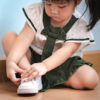
As our children leave babyhood behind, our responsibility becomes helping them learn how to become increasingly self-reliant. We can discard the plug-socket protectors and playpens as our children start to learn what’s safe and what isn’t. We teach them basic skills, such as putting their shoes on, so they can do more for themselves. However, as this process unfolds, we might sometimes miss opportunities to stretch their self-reliance and understanding of the world even further.

For example, we might sometimes continue to do things they could learn to do but also overlook chances to let our children sort minor difficulties out for themselves. When our child is struggling with a situation, we might typically bombard them with solutions, dismiss the problem or sort everything out directly and immediately for them. We probably do this in the name of expediency or be responding automatically – unable to bear seeing our children suffer or struggle even a little (which, of course, comes from a place of love). However, it might seem counter-intuitive, but allowing our children to struggle, fail and mess up and then work through the situation for themselves, helps them prove to themselves that they can problem-solve, that they don’t always need someone else to fix things and that they can cope.

So, what can help us do this without feeling as though we have abandoned our children to a regime of far-too-uncomfortable tough-love? The answer lies partly in managing our own reactions. When a child has a problem that we don’t really need to become involved with (like falling out with a friend, struggling in a lesson at school or not being invited to something) we will understandably find it distressing to see them upset and want to put them out of their misery as quickly as possible. But if we’re going to be able to leave them to sort things out for themselves, we need to be fully convinced by the idea that developing self-reliance is ultimately really going to be beneficial in the long term as it reduces anxiety and boosts self-worth.

Once we have managed our own tendencies, how can we help in a ‘hands-off’ way that doesn’t leave us feeling as though we have completely abandoned our child? The key is to actively listen while they talk about their problem. Simply let them explore the issue while you attentively listen. Add in the odd “Hmm, yes… go on, I’m listening,” to encourage them to unpack and consider what they need to. Better still, try to identify the likely emotion behind what they are saying to help them feel truly seen and heard. Comments such as, “You sound as though you’re feeling misunderstood,” can encourage them to open up further and take a deeper dive into what’s bothering them. At worst, they will feel listened to; at best, they might arrive at a solution to their problem.

Another aspect of moving from protecting to equipping our children as they grow is about giving information. Books and stories can obviously help with this. As a parent though, it can be hard to know what information to give them and at what age, but quite often the things we deem inappropriate are linked to our instinct to protect our children from certain topics, when we might better be equipping them.

Take the ‘birds and the bees’ as an example. Without thinking, we might have a gut reaction that makes us want to shield our children from information relating to this topic. However, they are eventually going to be exposed to similar information from other sources (the internet, peers and wider community) that might not always be accurate or pleasant. Therefore, isn’t it better that we use suitable resources ourselves, giving opportunities to ask questions? In doing so, we equip our children with knowledge rather than simply trying to protect them from ever being exposed to it – which would be extremely difficult.

And we don’t have to stop at factual information. When we discuss topics such as friendships, emotions, worries, differences and consent with our children, it can be a deeply connecting experience and can give us delightful insights into their worlds. Exploring such topics helps them develop the necessary skills and positive values that will enable them to navigate life’s challenges more confidently. So while we might love the idea of our children remaining young and needing our protection forever, if we want them to become capable and self-reliant adults, we need to accept that equipping them to navigate and discern for themselves is fantastic parenting.

Molly Potter is a bestselling author of 35+ books for teachers, parents/carers and children covering a variety of topics under the broad umbrella term of ‘wellbeing’.

For further information please visit www.bloomsbury.com/uk/education

girl ice cream

Little explorers, big adventures Feeding your toddler well this summer

By Childcare and Nannying, environment, Food & Eating
by Ed van der Lande, founder of More Toddler Meals

Ah, summer. You’ve planned the perfect family holiday. Sun cream packed, travel cot assembled, toddler outfit game strong. You picture lazy lunches, new flavours, perhaps even a child who eats their vegetables without negotiating.

Reality, however, tends to arrive with a major meltdown at a motorway services.

Because here’s the thing, nobody tells you about summer with toddlers: the heat, the disrupted routine, the sheer relentless novelty of it all plays absolute havoc with mealtimes. Picture the child who reliably ate their pasta on a Tuesday evening at home – in a holiday cottage with a two-ring hob – an entirely different creature.

As a dad of two toddlers, founder of More Toddler Meals and former Army Officer, I’ve spent a lot of time thinking about how to feed small children well when you’re far from your own kitchen. Here’s what’s actually worked for us.

Tip: Don’t abandon your standards just because you’re away

It’s tempting, when you’re tired and the supermarket options are limited, to reach for whatever is quick and familiar. And yes, sometimes that’s fine. But the meals your toddler eats in their first few years genuinely shape the eater they’ll become; the textures they accept, the flavours they enjoy, the breadth of what ends up on their plate at age five.

Summer doesn’t have to mean a nutritional holiday. With a little forward planning it can be a brilliant window for adventurous eating. New places, a relaxed pace and a picnic blanket is a surprisingly powerful combination for getting a toddler to try something new.

Tip: Think about texture (it really matters)

One thing I feel strongly about: toddlers need something to actually bite into. An over-reliance on smooth pouches, convenient though they are, can genuinely slow down early chewing development. Chunky, textured food builds oral motor skills and food confidence in ways that purée simply doesn’t.

At home this comes naturally when you’re cooking from scratch. When away, it takes a bit more intention. Look for options that offer real texture, not just something to squeeze out of a packet.

Tip: Keep it savoury

Summer brings an abundance of naturally sweet things; ice creams, fruit, yoghurt pouches and, while there’s nothing wrong with any of those, a strong preference for sweetness built up early on can make savoury foods a hard sell later.

Aiming for a proper savoury meal as the anchor of the day, even on holiday, is a simple habit that pays dividends long after the tan has faded.

Tip: Pack like you’re going on expedition

There’s an old military principle: proper planning prevents poor performance. It absolutely applies to toddler mealtimes too!

Our summer adventure food checklist:

• Flask of hot water – more useful than you think, even in the height of summer.

• Snacks beyond rice cakes – fruit, cheese, savoury bites.

• A proper meal option that doesn’t need refrigeration.

• Water bottles – hydration drops off fast in the heat.

• Spoon, bowl and wipes (always the wipes).

Fresh air and excitement dramatically increase toddler appetites. Pack more than you think you’ll need. Rationing oat bars on a beach is nobody’s idea of a good holiday.

Tip: Let the setting do the work

A toddler who flatly refuses pasta at the kitchen table will sometimes eat the exact same thing enthusiastically from a plastic pot on a picnic blanket. The novelty of eating outside, in a different place, with different sounds around them, is genuinely powerful.

Use it. A foreign supermarket, a farmers’ market, a new café. Frame it as an adventure rather than a mealtime and you’ll often be surprised what they’ll try.

Final thoughts: Good food travels

Feeding your toddler well over the summer isn’t about perfect picnics or colour-coordinated lunchboxes.

It’s about:

• Planning ahead so you’re not making desperate decisions when everyone is tired and hungry.

• Keeping texture and variety in the mix even when you’re away from your own kitchen.

• Not letting convenience become the enemy of quality.

Some days will feel effortlessly wholesome. Others will end with emergency snacks in the car and the quiet acceptance that you did your best. Both are completely fine.

The meals your toddler eats this summer won’t just fuel their adventures – they’ll help shape the eater they become. And that’s worth a bit of forward planning, wherever you end up.

More Toddler Meals are freeze-dried toddler meals that just need water added to be munch-ready in minutes. Nutritious, wholesome and genuinely travel-friendly.

Rated Excellent on Trustpilot and available on Ocado and www.moretoddlermeals.co.uk

boy with microphone

Public speaking and confidence A gift or a skill?

By Childcare and Nannying, Education, Independence, Mental health, Relationships, Wellbeing
by Aysha Powell, Planted Voices

Picture the scene. You are in a cafe and the waiter asks your child what they would like. Your child, who spent the entire car journey telling you exactly what they wanted, goes completely silent. They bury their face in your arm. You smile apologetically, say something about being shy and order for them. It happens a hundred times in a childhood. Most of us let it pass without a second thought. But those moments matter far more than we realise, because inside each one is a message your child quietly gives themselves about their voice. And once that message takes hold, it  is hard to change.

The question parents most often ask me is whether confidence is something a child is born with or something that can be built. The answer, backed by decades of child development research, is unambiguous – it is built. And the most important thing to understand is when. It does not begin at secondary school. It does not begin when a child is asked to present in class. It begins in the earliest conversations, at the kitchen table, in the car, on the way to nursery, long before anyone thinks to call it public speaking.

Communication confidence is not a secondary school subject. It is not a skill we should begin developing at eleven or twelve, when habits of silence and self-doubt are already well established. Research in early childhood development consistently shows that children who are given a voice from a young age, asked for their opinions, listened to with genuine attention and encouraged to express themselves in safe environments, develop significantly stronger communication skills, higher self-esteem and better academic outcomes than those who are not. The gap is visible well before a child reaches primary school.

“Communication confidence is not a secondary school subject. It begins in the earliest conversations, long before anyone thinks to call it public speaking.”

And yet our school system is not designed to develop every child’s voice. Susan Cain’s landmark research in Quiet shows that schools are built overwhelmingly for extroverts. The child who leads every group project and shouts out answers is rewarded. The child who thinks deeply and speaks only when certain is too often overlooked, or labelled as shy, as though that explains everything. The UK Government’s growing investment in oracy, the ability to speak clearly and with confidence, acknowledges something has been missing. Research shows that children who receive explicit communication teaching make measurable gains in literacy, critical thinking and self-confidence. Parents do not need to wait for the curriculum to catch up.

From the moment a child begins to talk, parents are their most important communication teacher, often without realising it. Even a two-year-old who is encouraged to say please and thank you to a stranger is practising something real. The conversations we have at breakfast, how we respond when a child tells us something that matters to them, whether we let them order their own food or do it for them – these are the earliest lessons in whether a voice is worth using. The most effective things parents can do require no specialist training, no expense and very little time.

The most powerful starting point is genuinely listening when your child speaks, not just hearing but responding as though what they have said matters. Ask follow-up questions. Invite opinions on small things – what film shall we watch, what do you think happened there? A child who is regularly asked what they think, and whose answer is received with curiosity rather than correction, learns early that their voice has value. This is where all communication confidence begins, and it can start at three just as easily as at thirteen.

Second, create small, real-world speaking moments and step back. Let your five-year-old hand their library books to the librarian and say thank you. Let your eight-year-old order their own meal at a restaurant. Let your twelve-year-old call to ask about a booking. These micro-moments feel insignificant but they are anything but, because each one builds a child’s evidence that their voice works outside the home. The temptation to step in is natural and kind. Resist it. Give them five seconds. The discomfort is not distress. It is growth.

Finally, look for structured activities in the right environment. Drama, debate, storytelling and public speaking workshops all help, but the setting matters as much as the activity. Large or competitive groups can overwhelm quieter children. Seek out small groups where every child is seen, confidence is built through encouragement rather than evaluation, and the child who speaks last is valued as much as the child who speaks first.

I spent twenty years learning something that could have been natural if someone had started building it when I was small. It is the story of a generation who waited too long. Our children do not have to. The window opens early. Pay attention when it does.

Aysha Powell is a corporate professional and public speaking coach for children, with twenty years of experience in communication-led environments. She works with children across South London, from early years through to secondary school, helping them build the confidence, clarity and courage to find their voice. www.plantedvoices.com @weareplantedvoices

children-on-beach-foraging

5 outdoor skills every child should try this summer

By Childcare and Nannying, Education, Forest School
by Lucy Owen-Collins, Head of Adventures at Bee in the Woods

Summer has a way of inviting us outdoors. The days are longer, shoes are optional and suddenly the world feels full of possibility. For many parents, though, summer can also bring a familiar pressure: How do I keep the children entertained?

However, children don’t need endless organised activities or expensive days out to have a rich summer. Some of the most powerful learning and memorable times happen when children are trusted with real experiences – using tools, growing food, cooking outdoors, building things, exploring wild spaces and testing their own capabilities.

Outdoor play offers something many modern childhoods have less of: freedom to experiment, opportunities to take manageable risks and space to become genuinely capable and grow.

Here are five outdoor skills families can explore together this summer.

1. Learn to use real tools

Many adults instinctively think that real tools are too dangerous for young children, but with careful supervision and clear boundaries, children are often far more capable than we expect.

Start simple by supporting your child to:

• Hammer golf tees into a pumpkin, log or thick cardboard.

• Use a child-friendly hand drill to make holes in conkers or driftwood.

• Build a simple stick boat using string and found materials.

Children are naturally drawn to real, purposeful work. Using tools develops hand-eye coordination, concentration, perseverance and problem-solving – but perhaps most importantly, it helps children learn how to assess risk. Child sized hammers and hand drills can be sourced online and can be used safely with supervision.

Rather than teaching children to fear tools, we can teach respect, safe handling and responsibility.

Top tip: Resist the urge to fix it for them. A slightly wonky creation built independently is far more valuable than a perfect adult-made one.

2. Grow something they can eat

You do not need an allotment, greenhouse or even much space for this one. A few pots on a doorstep or balcony can become a summer classroom.

Easy child-friendly choices:

• Strawberries

• Salad leaves

• Peas

• Mint

• Nasturtiums

• Tomatoes.

There is something magical about watching a child check their plant every day, noticing tiny changes and taking responsibility for watering.

Gardening teaches patience, observation, cause and effect and care for living things. It’s also a wonderful way to encourage adventurous eating – children are much more likely to taste something they’ve grown themselves.

And who doesn’t love digging for worms!

3. Cook outdoors

Outdoor cooking creates a special kind of magic that makes for a memorable summer.

There’s something about preparing food in fresh air – collecting ingredients, stirring, waiting, tasting – that naturally draws children in. Give children of all ages real jobs – stirring, chopping softer foods (age appropriately), mixing, wrapping and serving.

If you have a fire pit, wonderful. If not, a barbecue, camping stove or picnic setup works beautifully.

Simple ideas:

• Elderflower, blackberry or blueberry pancakes (Vegan/gluten free recipes can be found online too).

• Banana boats (banana with chocolate melted inside foil).

• Campfire apples or pineapples with cinnamon.

• Flatbreads cooked outdoors.

• Herb butter corn on the cob.

Cooking supports maths (measuring, quantity), language development, sequencing, fine motor skills and independence. It also creates something less measurable and equally important: connection. Shared outdoor food experiences become the moments children remember.

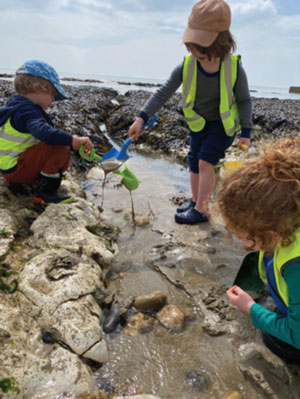
4. Become a beach explorer

Living by the coast gives families a wonderful summer classroom.

A trip to the beach doesn’t need to mean simply paddling and ice creams (although both are lovely). Children are natural scientists when given the chance.

Try:

• Shell sorting by shape, colour or size.

• Driftwood sculpture building.

• Rock pooling with gentle care for wildlife.

• Watching wave patterns.

• Drawing maps in the sand.

• Collecting seaweed varieties.

• Noticing tides and how the shoreline changes.

Beach exploration encourages observation, curiosity, early science thinking and environmental awareness.

For families living in coastal towns, the beach also offers an important opportunity to teach safety awareness and risk assessment – essential life skills for children growing up by the sea.

Notice the waves together.

Ask questions:

• Does the sea feel calm today?

• Would it feel safe to go to the water’s edge?

• What might the sea look like when it isn’t safe?

• What would we do if the waves were high?

• How deep is safe to go?

These kinds of conversations help children learn that risk is not something to fear, but something to notice, think about and respond to.

One child may spend an hour fascinated by a crab. Another may become deeply invested in transporting wet sand from one place to another. Both are learning. Alongside all the joy, digging, splashing and discovery, children are developing respect for the sea – understanding both its beauty and its power.

Top tip: Keep a spare towel, spare clothes and low expectations about staying clean!

5. Build a den

If I could prescribe one childhood activity, it might be den building.

Dens are extraordinary spaces because children must imagine them before they exist. You don’t need woodland to do this.

Try:

• Garden dens with sheets and chairs.

• Stick shelters in a local park.

• Beach windbreaks.

• Mini fairy shelters made from natural materials.

• Blanket forts that migrate outdoors.

Den building develops:

• Planning

• Engineering thinking

• Collaboration

• Persistence

• Creativity

It also gives children ownership of space – something many children deeply value. And once the den exists, the imaginative play begins!

Let children lead. The ‘best’ den is not the neatest one.

Family life can be wonderfully full, especially in summer, with so many opportunities, outings and activities on offer.

Yet some of childhood’s richest experiences often come from simpler moments – getting muddy, hours of playing, solving problems, building, climbing, cooking, digging and discovering.

The outdoors offers a rare kind of freedom: space to explore, test ideas and grow in confidence. Sometimes the most memorable summer moments are the ones where children are given time, trust and a little room to surprise us.

Bee in the Woods Kindergarten is a woodland preschool and community Forest School for  three to seven year olds, based in Portslade and Stanmer Park in Brighton.

For more information www.beeinthewoods.co.uk

angry father

When the volume goes up, connection goes down

By Childcare and Nannying, family, Mental health, Relationships
by Giulia Galli
Parental Coach

How our words and our tone become their inner voice

Lately, I’ve been noticing a sound that cuts through everyday life – not laughter from the playground or the hum of conversation drifting from kitchens, but shouting. Not the occasional raised voice that slips out in frustration, but the repeated, sharp, heavy kind.

Sometimes it’s siblings snapping at each other. Sometimes it’s teenagers slamming back at parents. And often, it’s parents themselves, shouting at toddlers, at primary-age children, even at babies not yet walking.

One mother’s voice has stayed with me. Every time her one-year-old knocks something over or spills his food, her response is the same: loud, harsh, full of judgement. Every fall of a toy, every food-splattered shirt, every curious gesture that leaves a mark is met with anger. He’s only one. Just one.

And yet, what he is learning isn’t just how objects fall or how sounds are made: it’s what power feels like. What anger sounds like. What happens when you do something ‘wrong’. What it means to be small in a world where big voices rule.

Let’s be clear – this isn’t about shaming parents. We’ve all raised our voices. I have, too. Shouting happens. Sometimes we’re exhausted, sometimes we’re overstimulated, sometimes we’re carrying far more than our nervous system can handle. And many of us grew up with shouting ourselves, so it became the norm.

But here’s the truth – shouting doesn’t teach reflection. It teaches fear. It doesn’t create understanding. It creates compliance. And in children, especially very young ones, it doesn’t build confidence. It builds shame.

Think about it – when a toddler spills water, shouting doesn’t teach them how to hold the cup better next time. It teaches them that trying is dangerous. When a child touches something fragile, a loud scolding doesn’t teach caution, it teaches that curiosity isn’t safe. When a child is overwhelmed and cries, shouting doesn’t teach them how to regulate their feelings, it teaches them that big emotions aren’t allowed.

This is the danger of repeated shouting: it turns moments of behaviour into a story about identity.

“I dropped something” becomes “I’m clumsy.” “I was curious” becomes “I’m annoying.” “I was upset” becomes “I’m too much.”

Those stories stick. And they echo long after the moment has passed.

The irony is that shouting might get us what we want in the moment – it might stop the behaviour. But the cost is disconnection. We silence. We scare. We disconnect. And in that silence, children don’t learn what to do differently. They just learn to feel small.

So what’s the alternative? First, awareness. Notice when the urge to shout rises. Often, it’s not the behaviour itself that pushes us over the edge, but the meaning we attach to it: “He’s doing this on purpose.” “She never listens.” “I can’t take this anymore.” That story is what fuels the reaction.

Second, pause. Parenting gives us endless opportunities to reset. Even a few seconds can change everything. Lower your voice instead of raising it. Name your own feeling: “I’m getting frustrated.” Ask for help: “Let’s take a minute to calm down.” Step out of the room for three breaths before you respond. Replace “What’s wrong with you?” with “Let’s try again.”

Small shifts like these model something powerful. They show children that mistakes are part of learning. That emotions can be managed without force. That connection matters more than control.

Because children aren’t just learning from our instructions. They’re absorbing our example. The words and the tone we use today becomes the inner voice they’ll carry tomorrow.

Think back to your own childhood. The voices you heard most often probably still echo in your head. They may tell you to “be careful,” to “try harder,” or perhaps to “quiet down.” Those phrases, spoken in particular tones, become part of who we are. And now, as parents, we are shaping that voice for our children.

That’s why shouting is more than just noise. It’s a message. And if repeated, it becomes a belief.

This isn’t about never shouting again. None of us are perfect. It’s about noticing, repairing and choosing differently when we can. Even after we’ve raised our voice, we can come back and say, “I shouldn’t have shouted. I was tired and frustrated. Let’s try again.” That moment of repair doesn’t erase what happened, but it teaches accountability. It shows children that mistakes can be mended.

One day, our children will be grown. They may not remember every word we said. But they will remember how it felt to be with us. Was the home a place where mistakes were punished or explored? Where curiosity was stifled or encouraged? Where fear entered the room with us or safety did?

When the volume goes up, connection goes down. But when we choose calm, patience and presence instead, we give our children something far more lasting than obedience: we give them an inner voice that supports them for life.

Giulia Galli is a parental coach and author of When a Parent is Born. She supports families with intentional parenting. For further information please visit www.reegal.co.uk

early years

The heart of early learning – an inspirational reflection on being a nursery educator

By Childcare and Nannying, Early Years, Education, Forest School
by Karen Martin
Tots’ Village Nursery

To step into a nursery classroom each morning is to step into a world where wonder lives in the smallest moments, where a single crayon stroke is a masterpiece in progress, where a shy smile is the start of newfound confidence and where tiny hands hold enormous potential. To be a nursery educator is to witness magic daily, but more importantly, it is to help create it.

Being a nursery educator is not simply a job; it is a calling rooted in compassion, patience and a belief in the extraordinary abilities of young children. It is the joyful responsibility of nurturing minds and hearts during the most foundational years of life. These are the years when children discover their sense of self, begin to understand how the world works and learn how to connect with others. And in the middle of every milestone, big or small, is the educator, guiding, encouraging and celebrating.

In many ways, nursery educators are architects of the future. While the world often measures success through visible achievements, nursery educators understand that success begins long before a child can read their first word or solve their first equation. In the nursery, success looks like empathy taking root when a child shares a toy unprompted. It looks like resilience when a child who was once hesitant now tries something new. It looks like curiosity every time a little voice asks,“Why?”.

These moments may seem small, but they are transformational! Nursery educators know that early childhood education is the soil in which the seeds of lifelong learning are planted. With every story read aloud, every question answered, every conflict gently resolved and every imaginative game encouraged, nursery educators help children build the emotional and cognitive foundations they will carry forever.

And yet, the job demands more than knowledge of child development. It asks educators to be storytellers, dancers, scientists, mediators, nurses, cheerleaders and sometimes even magicians! It requires them to be flexible enough to shift from teaching colours and shapes to comforting tears within seconds. It asks them to balance structure with spontaneity, offering routines that make children feel safe whilst also embracing the unexpected creativity that young minds bring into the room.

But the true beauty of being a nursery educator lies in the relationships. Children respond to the teachers who kneel down to meet their eyes, who celebrate their ideas, who make them feel seen and valued. A nursery educator knows that children learn best when they feel loved and so they fill their classrooms with warmth, encouragement and opportunities to succeed. They know that each child is different, each with their own rhythm, needs and spark and they take the time to understand those differences.

There is a profound sense of fulfilment in knowing that you are shaping the earliest experiences of learning. It is an honour to be one of the first adults a child trusts outside of their family. It is a privilege to hear the unfiltered thoughts of young minds and to watch them unfold into capable, confident learners. Nursery educators hold space for children as they navigate big feelings, celebrate first friends and find their voice.

Whilst the work is deeply meaningful, it is also undeniably challenging! The days can be long, the tasks unending and the emotional energy required immense. Yet nursery educators return each day because they know their work matters, perhaps in ways not immediately visible, but inevitably powerful. They know that the lessons they teach extend far beyond the classroom: patience, perseverance, kindness, curiosity and a love of discovery.

What makes nursery education inspirational is not only the impact educators have on children but also the impact children have on them. Children remind adults to see the world with fresh eyes, to find excitement in the ordinary and to appreciate the beauty of simple things. They remind us that progress is not always linear and that learning is as much about exploration as it is about achievement. To work with children is to witness unfiltered joy, pure honesty and boundless imagination every single day. This is the gift of being a nursery educator.

Every child who walks through the nursery door brings a universe of potential. And every educator who greets them helps shape that universe, through patience, guidance, creativity and love. Nursery educators change lives not by delivering grand speeches or dramatic lessons, but through consistent, gentle and intentional acts of teaching and care.

So, to every nursery educator: know that your work reverberates far beyond the classroom. Know that the stories you read, the songs you sing, the hugs you offer and the encouragement you give will echo throughout a child’s life. Know that your presence, your passion and your belief in each child help shape confident, compassionate, capable human beings.

Being a nursery educator means being a builder of futures, a cultivator of curiosity and a guardian of childhood wonder. It is one of the most impactful roles in education – and perhaps one of the most inspiring roles in the world.

Tots’ Village is a family run nursery for children aged 0-5 based in Caterham. Graded Outstanding by Ofsted we build strong foundations for happy futures! Discover the difference – where love and care comes first and learning is fun. www.totsvillagenursery.co.uk


cuddles

The compassionate parenting revolution- How a new parenting approach is transforming family life

By Childcare and Nannying, family, Special support needs
by Dr Jennifer Swanston
Clinical Psychologist and co-author of the Compassionate Parenting Workbook

Parenting has never been simple, but in today’s fast paced, emotionally demanding world, many parents tell me they feel stretched thin. They worry about losing their temper, about saying the wrong thing, or about whether a difficult moment has somehow damaged their connection with their child. These concerns are far more common than most people realise – read on to find out why compassion focused parenting can be transformational.

What compassion focused parenting really means
Compassion focused parenting is not about being endlessly soft or permissive. It’s an approach that blends evidence based knowledge, warmth, emotional awareness and practical strategies to help families thrive. At its heart, it teaches parents how to stay grounded, connected and confident – even when emotions run high.

This approach rests on some core pillars, each supported by decades of psychological research:
1. Self compassion
Parents often speak to themselves far more harshly than they would ever speak to their children. Learning to notice stress, soften self-criticism, and respond with kindness helps parents stay steady in difficult moments.

2. Emotional regulation
When a child’s behaviour triggers our fight or flight system, it becomes almost impossible to respond thoughtfully. Compassion focused parenting teaches parents how to calm their own nervous system first, so they can guide their child from a place of clarity rather than from being overwhelmed.

3. Creating safety and secure attachment
Children thrive when they feel understood. When parents model calmness and empathy, children learn to trust, communicate openly and regulate their own emotions more effectively.

4. Not ‘one size fits all’
We understand that all children are different and that some approaches work for some children and not for others. Compassionate parenting supports parents to really consider which strategy will be helpful for their own unique child, rather than ‘one size fits all’. This is particularly important when you have a child who is neurodivergent or has additional needs.

Together, these elements reduce power struggles, strengthen communication and support children’s long term emotional wellbeing.

What it looks like in real life
Imagine your child is having a meltdown or becoming upset and frustrated at a party when you are about to leave. Instead of reacting with frustration, compassion focused parenting encourages a five step process:
• Pause and ground yourself – a breath, a moment, a reminder that this is hard but manageable.
• Name and validate – “Leaving is tough, and you’re feeling upset.”
• Soothe before you solve – connection first, instructions later. For example, trying to use a warm tone of voice, even during tricky moments.
• Collaborate – offering a gentle, structured next step once emotions settle. This may be giving some simple choices or playful suggestions which can help break the tension and move forward. For example: “We need to leave. Shall we say goodbye now or would you like me to message when we get home?” or “Do you want to hop like a bunny or stomp like a dinosaur to the door?”.
• Reflection – in the hours and days afterwards, consider whether you may need to approach parties differently in the future or plan with your child how to manage the feelings associated with leaving.

This isn’t about letting children “get away with” anything. It’s about helping them move from panic to calm so they can actually take in what you’re saying.

Why it helps children with big feelings
Compassion focused parenting can be especially helpful for children who experience anxiety or strong emotional reactions, as well as those who are neurodivergent.

• For anxious children, we can encourage them to engage in slow breathing, grounding exercises and gentle reassurance to help settle their nervous system and show them they are safe.
• For children with ADHD: Movement breaks, shorter conversations and playful calming strategies can make it easier for them to stay regulated and connected.

The goal is always the same: helping your child feel understood, valued, and supported.

“Will being kind make my child spoiled?”
This is one of the most common worries parents share. But research shows that harsh or fear based approaches may stop behaviour in the moment, yet they can increase aggression, anxiety and long term emotional difficulties.

Compassionate parenting is not about being soft or giving in. It’s about combining warmth with wisdom – offering empathy while still guiding your child toward healthy boundaries and choices.

What if I feel I’ve already got it wrong?
Every parent has moments they regret. The good news is that relationships can be repaired. Honest conversations, small gestures of connection and consistent warmth help rebuild trust over time.

Children don’t need perfect parents. They need parents who keep trying.

For more information on how to tailor this approach to your unique child, The Compassionate Parenting Workbook’ provides a simple and friendly structure for you to use.

Dr Jennifer Swanston is a Clinical Psychologist and co-author of the Compassionate Parenting Workbook and also director at White Oaks, Chobham. For further information please visit www.whiteoaks.org.ok

toilet training

Why toilet training a year earlier is an urgent issue

By baby health, Childcare and Nannying, children's health, Health, special educational needs, Wellbeing

Toilet training children a year earlier could solve a host of issues in the education and health service and improve children’s overall health and wellbeing – so why aren’t policymakers pushing forward measures to support families doing it sooner?

ERIC, The Children’s Bowel & Bladder Charity, with support from Kindred Squared and Jodie Gosling MP, recently hosted a Parliamentary roundtable discussion bringing together key stakeholders in early years, education and children’s health and social care, to discuss the huge impact delayed toilet training is having on children’s lives. The discussion centered around the significant opportunities that exist to improve children’s health, social care, education and wellbeing by toilet training earlier.

The charity is pushing for clear guidance around toilet training, greater benchmarking of children’s progress, and standardised training for professionals supporting families in early years (including health visitors and early years practitioners).

Over the last two generations, the average age that children are being toilet trained in the UK has risen from 12-18 months, to an average of around three or even four years today. Later toilet training increases the risk of developing wetting and soiling issues later and also prevents the early identification of bladder and bowel problems.

The impact is profound across education, health and social care:
• A staggering 1 in 4 children start school still not toilet trained.
• 90% of teachers have at least one child in their class who is not fully toilet trained.
• On average 2.4 hours of teacher time is lost every day supporting children who are not school ready to catch up – directly affecting educational outcomes for all children in the class and hampering the Government’s mission to ensure children start school ready to learn.
• Hospital admissions for childhood constipation (which can be exacerbated by delayed toilet training) have increased by 60% over the past decade (over 44,000 children last year).

The charity argues that if children were toilet trained a year earlier, it would improve outcomes for children, save children’s health and education services time and money, and reduce the environmental impact of nappies going to landfill. The potential positive impacts are significant:
• Reduce the social and emotional impact of delayed toilet training on the child: Two thirds of teachers (65%) and 58% of parents agree that not being ready for school when starting Reception could have long term impacts on a child’s success in later life. Ensuring they are toilet trained well in advance of starting school means they’re less likely to feel embarrassed or be ostracized from their peers, which can have a profound effect on their early days in school.
• Better education: If they didn’t have to deal with children who weren’t toilet trained, teachers could save up to 456 hours – that’s around 10 days of extra teaching time they could spend focusing on improving children’s education over the academic year.
• Better health: There is a link between delayed toilet training and childhood constipation. Currently 1 in 3 children suffer from constipation. In a single year, the NHS spent £168 million treating constipation.
By preventing a number of children from suffering from this, it could also save the NHS a significant amount. The cost of treating constipation is equivalent to funding 7304 newly qualified nurses for a year.
• Better for the environment: It’s estimated that the average child uses between 4,000 and 6,000 disposable nappies before they are toilet trained, and the UK disposes of around 3bn disposable nappies annually. If every child was toilet trained one year earlier, we could save between 5.3bn – 7.1bn nappies from going to landfill.
• Cost savings for parents: Parents in the UK can expect to spend approximately £1,000 on disposable nappies per child from birth to toilet training. This translates to about £400 per year for disposable nappies. So by toilet training earlier, they could save themselves up to £400 – that’s equivalent to about two weeks of nursery fees in some parts of the country, or perhaps a UK family holiday.

Siân Wicks, CEO of ERIC, The Children’s Bowel & Bladder Charity said: “ERIC calls for children to be toilet trained a year earlier. We have reviewed the evidence base, examined the impact on the child and family that delayed toilet training has. It is time to reduce the stigma. It is essential that we raise the profile of this debate. We are calling for clear national guidance, both for families and professionals, particularly for those who support children in early years.There has been clear guidance on issues like breastfeeding and sleep, but not on toilet training; yet, as we’ve seen, this is causing a host of issues that are costing families, society and the government dearly. There needs to be a greater sense of collective responsibility for children’s bowel and bladder health, and all stakeholders across government, children’s health, education and social care need to work together to support families to reach this milestone sooner.”

Felicity Gillespie, Director of Kindred Squared said: “Our research shows that parents are keen for clear, simple and evidence-backed advice. That’s why we’ve worked with the early years sector to produce startingreception.co.uk. The medical evidence is clear; unless there is a diagnosed medical need, children are best served by being out of nappies between 18 and 30 months. We welcome Eric’s efforts to spread this information as widely as possible!”

Jodie Gosling, MP, said: “Too many children are starting school feeling anxious, isolated, or even ashamed – simply because they haven’t been supported to reach a basic developmental milestone: being toilet trained. The removal of Sure Start provision has left families without the necessary infrastructure to learn and thrive. This isn’t just about nappies. It’s about dignity. It’s about confidence. And it’s about giving every child the best possible start in life. We’ve heard today how delayed toilet training is affecting not just individual children, but their families, entire classrooms, our NHS, and our environment. The evidence is clear – and the cost of inaction is too high. This is an issue that requires urgent, coordinated action. We need clear national guidance, better training for early years professionals, and a shared commitment across government to support families in reaching this milestone sooner. Because when we help children thrive from the very beginning, we all benefit.”

Alison Morton, CEO of Institute of Health Visiting, said: “Gaining mastery of your own bladder and bowel function is an important milestone in a child’s development. However, toileting practices and advice have changed over the years, and are heavily impacted by marketing tactics to delay toileting and prolong the use of nappies under the guise of ‘waiting until children are ready’. This has a human, financial and environmental cost. I encourage all professionals to maintain high expectations for the ability of all children, including those with disabilities, to achieve the skills for toileting. Unnecessary delays and low expectations are limiting children’s life chances and can have lifelong consequences. Getting this right is not really a choice, it is fundamental for children’s dignity, safety and quality of life”.

For further information please visit www.eric.org.uk

Christmas Mum

A nanny’s guide to festive calm

By Childcare and Nannying, Christmas, family
by Isabel Kaye
Norland Nanny

The festive season is often painted as a picture of sparkling lights, joyful laughter and magical moments. Yet for many families, the reality is a little different: overtired children, disrupted routines and parents pulled in ten different directions at once. As a Norland-trained nanny, I’ve spent years supporting families through this wonderful but sometimes overwhelming time of year. With a little planning and a few simple strategies, it’s possible to enjoy a Christmas that feels calm, connected and truly memorable.

1. Hold on to the pillars of routine
Children thrive on predictability and during the holidays it’s easy for regular rhythms to disappear. While flexibility is important, keeping a few daily routines makes a huge difference. Bedtime doesn’t always have to be 7pm sharp, but maintaining the ritual of a bedtime story or bath signals security. At mealtimes, your little ones will benefit from consistency especially for younger children, who struggle when they become too hungry amidst the excitement. A familiar routine helps children feel safe, which in turn keeps festive spirits high.

2. Create calm corners
Festive environments are often filled with noise, bright lights and constant stimulation. While this can feel magical, it can also be overwhelming. I often suggest families set up a cosy ‘calm corner’. Create a small space with a blanket, some cushions and a few books or soft toys. This gives children a retreat when things become too much, a quiet spot to regulate emotions before they feel overwhelmed emotionally. Even five minutes of calm space can help them regulate.

3. Keep expectations realistic
Parents often feel pressure for everything to be picture-perfect – the Instagram-worthy tree, matching pyjamas, smiling children on Christmas morning. The reality rarely looks like the advert. Children may be unsettled by unfamiliar relatives, overstimulated by too many gifts, or simply overtired. Setting realistic expectations is the kindest thing you can do for your family. Focus on connection rather than perfection: one joyful moment shared together is worth far more than a forced photo.

4. Share the load
In many households, one parent ends up carrying the emotional and practical weight of the season. As a nanny, I’ve seen how quickly burnout creeps in. Delegation is key – whether that means involving children in setting the table, asking visiting relatives to help with washing up, or ordering food pre-prepared instead of cooking everything from scratch. Children actually love being part of the process – giving them little jobs not only keeps them engaged but also teaches responsibility.

5. Plan ’empty space’ Into the calendar
It’s tempting to say yes to every festive activity like the markets, the pantomime, the carol concert and the Christmas party. But a jam-packed calendar can tip children (and parents) into exhaustion. I recommend leaving deliberate ‘free space’ days in December. These quieter days give families breathing room to reset, whether that’s a pyjama morning at home, a gentle walk or simply a chance to play without schedule. Rest builds resilience and resilience makes the festivities far more enjoyable.

6. Keep traditions simple and meaningful
Traditions are the heartbeat of Christmas, but they don’t need to be elaborate or expensive. In the families I’ve supported, the most treasured memories are often the simplest: baking biscuits together, wearing matching pyjamas or reading the same festive story year after year. Children value repetition, familiarity and shared time more than grandeur. Choose a handful of meaningful traditions and let go of the rest.

7. Care for yourself
Calm is contagious. Children pick up quickly on the mood of their caregivers, so if parents are running on empty, little ones will feel unsettled. Taking care of yourself is not indulgent, it’s essential. Whether it’s a short walk alone, a bath with a book, or simply saying “no” to one extra event, prioritising your own calm helps the whole household. As I often remind parents: you cannot pour from an empty cup.

8. Finally, remember the magic is in the moments
At its core, the festive season isn’t about perfectly wrapped gifts or a flawless roast dinner. It’s about connection, presence and love. When I work with families at Christmas, my role is often to bring the focus back to what really matters: slowing down, savouring small moments and allowing children to experience the magic without pressure. The memories that last are the giggles during a board game, the flour on the kitchen floor after baking cookies or the Christmas story by fairy light.

Isabel Kaye is a Norland-trained nanny based in Bath. She has over 10 years’ experience supporting families with children from newborns to teens, and specialises in helping parents create calm, joyful environments, whether at home, at weddings or while travelling.

sleeping baby SIDS

Summer safe sleep tips

By baby health, Childcare and Nannying, Health, Safety, sleep
by Isabel Kaye
Norland Nanny

As temperatures rise in the summer, parents need to take extra steps to keep their babies safe and comfortable during sleep. Overheating is a significant risk factor for Sudden Infant Death Syndrome (SIDS), and young babies cannot regulate their body temperature as efficiently as adults. Here, we provide essential tips on ensuring your baby sleeps safely and comfortably in the warmer months, covering everything from room temperature to sleepwear choices.

1. Keep the room at an optimal temperature
Maintaining the right room temperature is one of the most important steps for safe sleep. Experts recommend that a baby’s sleep environment be kept between 68-72°F (20-22°C). This range helps prevent overheating, which is linked to a higher risk of SIDS.

Here are some ways to keep the nursery cool:
• Use fans or air conditioners: To keep the air circulating, a fan or air conditioner can be a helpful addition. Ensure that the fan is not blowing directly on the baby, but is angled to create a general breeze around the room. If using an air conditioner, be careful not to make the room too cold.
• Open windows for natural ventilation: If the weather allows, open a window to let in a cool breeze. However, make sure that the crib is away from any open windows, and that the baby cannot reach blinds or curtains.
• Monitor temperature with a thermometer: Use a room thermometer to ensure that the temperature remains in the safe range, especially at night when it may fluctuate.

2. Dress the baby in lightweight, breathable clothing
The choice of sleepwear is crucial for keeping a baby comfortable. Overdressing or bundling a baby too tightly can lead to overheating, so it’s best to keep clothing light and breathable:
• Choose natural fabrics: Natural, breathable materials like cotton or bamboo are ideal for baby sleepwear. These materials are soft on the skin and allow air to flow, which helps with temperature regulation.
• Avoid over-bundling: In warmer months, a single-layer cotton onesie or a light sleep sack designed for summer may be all a baby needs. Avoid heavy pyjamas or fleece, as these materials can trap heat.
• Consider a sleeveless sleep sack: If your baby uses a sleep sack, consider switching to a sleeveless, lightweight one for summer. This provides some coverage without causing overheating.

3. Skip all blankets and pillows
The American Academy of Paediatrics(AAP) recommends keeping the crib as bare as possible for safety reasons, especially during warmer months. Blankets, pillows, and stuffed animals can not only contribute to overheating but also increase the risk of suffocation and SIDS. Here’s how to make the crib as safe as possible:
• Use a light crib sheet: Choose a fitted crib sheet made from breathable fabric, like cotton. Avoid using heavy or quilted mattress protectors, which can trap heat.
• Avoid loose blankets: Instead of a blanket, use a sleep sack if your baby needs a little extra warmth. This will keep them safely covered without the risk of becoming entangled or covering their face.
• Skip pillows and bumpers: Pillows, crib bumpers and stuffed animals are not recommended, as they pose both suffocation and overheating risks.

4. Always place your baby on their back
Regardless of the season, placing a baby on their back to sleep is one of the most effective ways to reduce the risk of SIDS. This position helps keep the baby’s airway clear and reduces the likelihood of breathing difficulties. To maintain this position:
• Lay baby flat on their back: Always start sleep time with the baby lying flat on their back on a firm mattress. Avoid placing your baby on their stomach or side, as these positions increase the risk of accidental suffocation.
• Use a firm mattress: Make sure the crib mattress is firm and covered only by a fitted sheet. Soft mattresses, bedding, or materials in the crib can create air pockets and raise the risk of overheating.

5. Monitor for signs of overheating
Babies can overheat quickly in warm environments, so it’s essential to watch for signs that they’re too warm. Common signs of overheating include:
• Sweat on the neck or forehead: If you notice dampness on your baby’s neck or forehead, it could be a sign that they’re too warm. Try removing a layer of clothing or adjusting the room temperature.
• Red or flushed cheeks: Red cheeks and damp hair can also indicate overheating. Adjust the baby’s sleep environment by removing excess blankets, using a fan to circulate air or dressing them in lighter sleepwear.

6. When your baby is overheating, there are certain things you should avoid to ensure their safety and comfort
• Do not use ice packs or cold compresses: Applying something very cold to your baby’s skin can cause shock and be too intense for them. Instead, focus on gradually cooling them down by removing layers or moving to a cooler area.
• Avoid cold water baths: A sudden drop in temperature could cause discomfort or even hypothermia. If needed, use lukewarm water for a gentle cooling effect.
• Do not overdress: Adding more layers or heavy blankets can worsen overheating. Stick to lightweight, breathable clothing and minimal layers until they cool down.
• Avoid direct sunlight: Do not keep your baby in direct sunlight, especially during peak hours, as this can quickly lead to overheating. Use shaded areas or protective covers if you’re outside.
• Do not ignore symptoms: Overheating can be serious. If your baby shows persistent symptoms or seems excessively drowsy, lethargic, or difficult to wake, it’s best to consult a healthcare professional immediately.
• Avoid overusing fans or air conditioning: While airflow is helpful, blasting cold air directly at your baby can be too harsh. Instead, ensure that the room is comfortably cool without exposing them to strong drafts.

Taking these precautions can help you cool your baby down safely if they’re too warm.

Isabel Kaye is an experienced nanny sharing daily tips, activities and child development insights on Instagram. Please reach out if you’re looking for parental advice and she’ll be happy to help Instagram name – tiny.team.adventures