by Lucy Whitman, Aquarius Swimming
For many children, swimming lessons begin as a fun weekly activity – a chance to splash around, build confidence and enjoy time with friends. But as someone who has spent more than 25 years involved with teaching swimming, I know the benefits go far beyond the pool.
I first joined Aquarius Swimming as a child myself, before later becoming a helper at the age of 13. Over the years, I went on to complete my Level 1 and Level 2 swimming teaching qualifications, and today I still teach local children every week. Having grown up through the club myself, it has been incredibly rewarding to now help the next generation develop confidence and enjoyment in the water.
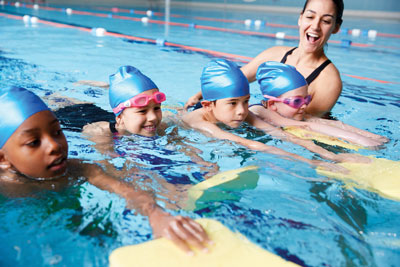
One of the things I love most about teaching swimming is seeing children progress at their own pace. For some, that first lesson can feel quite daunting. Even putting their face in the water can be a huge achievement. But over time, confidence grows, and so does their sense of independence.
Swimming is one of those rare activities that combines fun, fitness and an essential life skill all at the same time. Children often don’t realise how much they are learning because they are simply enjoying themselves. Whether they are collecting badges, practising dives or laughing with friends during lessons, they are also developing coordination, resilience and important water safety awareness.
As we head towards the summer months, that awareness becomes especially important. Families naturally spend more time around water during warmer weather, whether that’s at the beach, in swimming pools, on holiday or visiting lakes and rivers. Helping children feel safe and confident around water is one of the greatest gifts we can give them.
Every June, the Royal Life Saving Society UK runs Drowning Prevention Week to raise awareness about water safety ahead of the summer holidays. The campaign highlights an important reality: accidental drowning remains one of the leading causes of accidental death in children.
Recent figures from RLSS UK and the National Water Safety Forum showed that 249 people accidentally drowned in the UK and Ireland in 2024, while 141 children drowned across England, Scotland and Wales in the last three years. The charity has also highlighted concerns around rising child drowning rates in England in recent years – for further details please visit www.rlss.org.uk
Statistics like these are incredibly sad, but they reinforce why learning to swim and understanding water safety matters so much. Swimming lessons are not just about learning strokes; they are about teaching children how to stay calm, float, understand hazards and feel confident in and around water.
What many parents don’t always realise is how many opportunities swimming can open up for children beyond lessons themselves. Once children gain confidence in the water, many discover other activities they love, from snorkelling and water polo to lifesaving skills and competitive swimming.
Lifesaving lessons in particular can be fantastic for older children, helping them learn practical rescue techniques, teamwork and responsibility, while still keeping sessions active and enjoyable. For some children, these activities become lifelong hobbies and friendships.
Swimming also benefits children away from the pool. It teaches perseverance, patience and confidence. I’ve taught children who were initially very nervous but who, over time, became some of the most enthusiastic swimmers in the class. Watching that growth in confidence is one of the most rewarding parts of being a teacher.
In a world where many children spend more time indoors and on screens, swimming also offers something refreshingly simple: movement, social interaction and the chance to build real-world confidence. It encourages children to challenge themselves, celebrate progress and enjoy being active.
Importantly, swimming should always feel positive and enjoyable. Not every child will become a competitive swimmer, and they do not need to. The most important thing is that children feel safe, capable and happy in the water. Every small achievement matters, whether that’s swimming independently for the first time or simply building enough confidence to enjoy a family holiday without fear.
The summer months should be a time for children to enjoy the water safely and confidently. Learning to swim gives them that opportunity.
It equips them with skills that stay with them for life and opens the door to activities they can continue enjoying into adulthood.
Whether children go on to enjoy family holidays, try new aquatic activities like snorkelling or water polo, or simply build confidence in the water, swimming creates opportunities that extend far beyond the pool.
After 25 years of being involved with Aquarius Swimming, one thing has remained constant: seeing children grow in confidence and enjoy being in the water is incredibly rewarding.
As summer approaches, there is no better time to remind ourselves that swimming is not just an activity, but an essential life skill.
Lucy Whitman has been involved with Aquarius Swimming for more than 25 years, first as a swimmer and now as a qualified swimming teacher.
Operating across Warlingham, Caterham and Oxted, the club supports children of all abilities in developing confidence, fitness and essential water safety skills in a fun and encouraging environment. www.aquairusswimming.co.uk