

by Richard Templar
author of ‘The Rules of…’ series.
Being a parent is always going to be tricky at times, and while there’s no magic wand to make it run smoothly all the time, there are strategies that will help make it easier and more enjoyable. I’m not talking about tips and hints for potty training or getting them to sleep, useful as some of those can be. I’m talking about mindsets that will help frame your attitude to the whole parenting thing, in ways that make your life – and the kids’ lives – easier.
Do not be afraid of a bit of boredom
There can be pressure nowadays to run your kids around to countless after-school and weekend activities – football, swimming, drama, martial arts, dance, music classes and sessions. It keeps them busy, and boy does it keep you busy. However, the best thing for kids to do with their free time is nothing at all. That’s because it frees up their imagination and encourages real creativity. It’s actually better for the kids to run around together with sticks making up games, or look under stones in the park for insects, than to be organised by someone else. Being bored is the best stimulus the imagination can have, and most kids – especially if you can get them together with siblings or other kids – won’t stay bored for long. Our kids are going to grow up into a world where creativity and imagination are hugely valued, yet they risk having had less chance to cultivate it than previous generations. So give them a head start by incorporating loads of empty time into their week. That’s not to say all extra-curricular activities are a bad thing – they can be great – but while your kids are young a couple of sessions a week is plenty, and it’s healthier for them to fill the rest of their time themselves, while you settle down with a cuppa.
Sibling squabbling is healthy
I mentioned siblings back there, and if you have more than one child you’ll probably have experienced your share of sibling squabbles. So know this: squabbling is really healthy. It’s better than not squabbling. Yes I know it doesn’t always feel that way, and sometimes less is more, but next time you hear the kids bickering or fighting, smile and tell yourself it’s a good thing. Why? Because until you squabble, you can’t learn how to resolve an argument. Your kids are learning how far they can push someone, what helps get the other person on their side, how to control their anger, what works and what doesn’t – and all with someone who can’t just walk off and say “I’m not your friend any more.” Most of the world’s best diplomats grew up with siblings. So appreciate the squabbles despite everything and, above all, don’t impose solutions on them – make them find their own. You know the sort of thing: “I’m taking it away until you both/all come and tell me how you’re going to play with it without arguing.”
Lead by example
A good friend once asked me, “How do I get my kids to understand do what I say, not what I do?” The answer is very simple: you can’t. You have to set the example and if you can’t do it, why would you expect a child to be able to? Especially when the person they most love and respect isn’t doing it. So, if your child forgets their pleases and thank yous, or is always interrupting, or shouts at you a lot, it’s worth checking your own behaviour. I’m not saying it’s always down to you – lots of kids go through these phases without any help – but if your record isn’t a hundred percent, you’ll improve their behaviour much faster if you can change your own. And it’s surprising how many parents give their kids instructions without a please, or forget to say thank you to them. It’s understandable in the hustle and bustle of parenting, but you’re making your own job harder than it needs to be.
Healthy parenting – not perfect parenting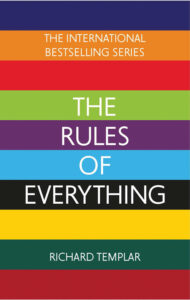
And finally, always remember that you shouldn’t even try to be perfect. Can you imagine what a burden it would put on kids to have perfect parents? Parents who were always right, who gave you nothing to kick against? Who couldn’t model how to apologise for mistakes because they never made them – or how to make up after an argument because they never argued? A perfect parent gives their child no clue how to be human, how to be flawed and imperfect but accept themselves as they are. If you can be a bit forgetful, or short-tempered, or neurotic, brilliant! That’s just what your kids need to see – that normal healthy adults can function perfectly well, and have great relationships, without having to be entirely prefect in every way. So next time you think you’ve messed up, don’t berate yourself. Just think, “Phew! I’ve dodged being perfect!”
Richard Templar is the author of the global best-selling ‘The Rules of…’ series. The Rules of Everything is published by Pearson, priced at £12.99, and is available from Amazon and all good book stores.