
Category

panto

panto

The importance of panto

By Christmas, family, Music and singing, panto, Relationships, Theatre
by James Stafford
Brighton Family Panto

This Christmas across the UK, we’ll hear thousands of children screaming “Oh yes it is! Oh no it isn’t! He’s behind you!”

For many children, the pantomime is their very first encounter with live theatre. In a world dominated by screens on tablets, phones and TVs, this is a rare and magical experience. Stepping into a theatre, feeling the buzz of anticipation and seeing a story unfold before their eyes can spark a lifelong love of storytelling, creativity and the arts. Unlike a cinema, where children are expected to sit quietly and absorb the story in silence, the panto invites them to participate, laugh and interact. Pantomimes provide a space where their energy and excitement are not just welcomed, but actively encouraged. The theatre becomes a safe, inclusive and lively environment, where children can express themselves freely, shout, cheer and take part without fear of judgement, celebrating their joy and individuality.

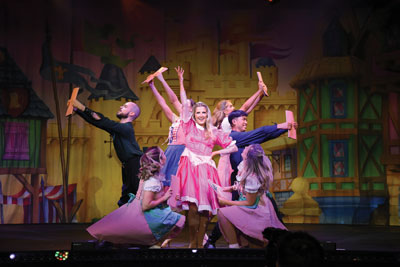
There is something uniquely enchanting about watching characters come to life on stage. The huge and dazzling costumes, the sequins, the energetic songs and the larger-than-life personalities create a world where imagination can roam freely. For many families, this first visit becomes a treasured festive tradition, full of laughter, fun and Christmas magic.

The tradition of panto
Pantomime is a uniquely British institution, combining fairy tales and well-known folk stories with music, comedy and audience participation in a joyous celebration. One of the most beloved elements of panto is its sense of fun and humour. The exaggerated characters, playful jokes and larger-than-life performances make children laugh out loud, often at the very things adults have learned to appreciate in a more subtle way.

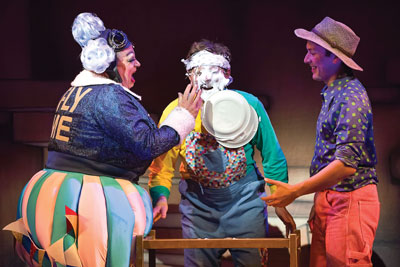
At the heart of this tradition is the pantomime dame. Children delight in seeing a clearly grown man dressed as a woman, performing outrageous antics on stage. This playful gender role reversal is central to panto, and much of its comedy springs from the dame’s larger-than-life presence. Beyond the laughs, the dame also introduces children to ideas about performance, identity and self-expression. It’s not just funny, it’s formative. Seeing these playful subversions of traditional gender roles can help children understand that identity is flexible, and that theatre is a space where creativity and self-expression can flourish. In a subtle but meaningful way, pantomimes challenge conventions and encourage children to think more openly about who they are and how they might present themselves in the world.

Participation, laughter and imagination
What truly sets pantomime apart is its interactivity. Children are not passive spectators, they are active participants. Calls of “He’s behind you!” and “Oh no it isn’t!” invite them into the story, giving them confidence, a sense of agency and the joy of a communal experience. In the theatre, children are encouraged to be loud, energetic and fully themselves, something often discouraged in other environments. This safe, playful setting nurtures emotional development and social understanding – all whilst being enormous fun.

Pantomime also teaches children the power of storytelling. Heroes and villains, lessons of right and wrong and the triumph of good over evil are presented with music, comedy and spectacle. These early encounters with narrative structure, dramatic tension and humour leave lasting impressions, shaping how children understand stories and performance for the rest of their lives.

Why it matters
In a world dominated by screens, pantomime offers a vital alternative. Live theatre is immediate, immersive and unpredictable. It demands attention, imagination and engagement. It shows children that the real magic happens in shared experience, that stories are best lived as well as watched and that creativity thrives in participation.

Beyond the spectacle, pantomime nurtures curiosity, empathy and emotional intelligence. It encourages children to dream, to imagine and to engage with the world playfully and thoughtfully. And it leaves memories that families carry for years, embedding a love of theatre and live performance that screens alone cannot replicate.

This Christmas, as theatres across Sussex and the UK fill with children laughing, cheering and joining in, we are reminded why pantomime matters. It is more than a festive tradition, it is an introduction to imagination, creativity and the joy of participation. It sparks wonder, challenges perceptions and opens doors to a world of stories waiting to be discovered. For children, the pantomime is not just entertainment, it is an unforgettable first step into a lifelong love of theatre, laughter and imagination.

James Stafford is part of the Brighton Family Panto Team, who have a beanstalk-sized treat for you this Christmas and a panto packed with tons of fe-fi-fo-FUN! 01273 719759 www.brightonfamilypanto.com  hello@brightonfamilypanto.com

performing arts

Beyond the curtain: The academic benefits of performing arts education

By dance & Art, fun for children, Mental health, panto, Panto
by Theatretrain
www.theatretrain.co.uk

Performing arts education is more than a creative outlet. Studies show that involvement in theatre, dance and music leads to better memory, concentration, literacy and overall school performance.

While the spotlight shines on stage, the benefits of performing arts reach far into the classroom. Far from being a distraction from academics, the arts actually enhance learning – in measurable and meaningful ways.

Boosting brain function
Neuroscience confirms that engaging in music, dance and drama activates multiple areas of the brain. These areas are also responsible for:
• Memory
• Language processing
• Concentration
• Emotional regulation

This means children involved in the arts are often better equipped to handle academic challenges.

Improved literacy and language skills
In drama, students constantly read, write, speak and listen. These tasks build:
• Vocabulary
• Reading fluency
• Comprehension
• Verbal confidence

Performers must understand tone, intent and narrative structure – all of which transfer to English and literacy studies.

Enhanced memory and focus
Memorising lines and choreography requires mental discipline. Students develop tools for:
• Retaining information
• Sustained concentration
• Pattern recognition

These skills apply directly to learning maths, science and other subjects.

Creative thinking in problem solving
Performing arts encourage ‘thinking outside the box’. Children learn to:
• Approach challenges creatively
• Link ideas across subjects
• Use storytelling to understand complex ideas

Emotional regulation and academic confidence
Children involved in the arts often:
• Handle stress better
• Express frustration in a healthier way
• Believe more strongly in their own abilities

This emotional resilience supports classroom learning and behaviour.

Team learning in arts and academics
Performing in a group teaches cooperative learning, a key approach in modern classrooms. Students learn to:
• Share responsibility
• Respect diverse ideas
• Learn through doing

What the research says
A report from the Arts Education Partnership found that students involved in the arts consistently outperform their peers in academic subjects and standardised tests.

Famous supporters of arts in education
Actor and singer Julie Andrews said, “I think music and the arts should be a mandatory part of every school day.” Her belief is backed by research showing real academic benefits.

Tips for parents
• Encourage your child’s arts involvement alongside school.
• Highlight the connections between arts and academics.
• Celebrate progress and curiosity, not just grades.

Final thoughts
The arts don’t compete with academics – they complement and enhance them. By engaging in theatre, dance and music, students become more focused, expressive and successful in school.

At Theatretrain, we believe the stage and the classroom go hand in hand. When young people perform, they don’t just entertain – they grow. For further information on Theatretrain please contact Gaynor on 07856 959299 or visit www.theatretrain.co.uk/brighton

panto oies

Panto – a quintessentially British tradition

By Christmas, Comedy, dance & Art, family, fun for children, panto
by Ellie Harman
Yvonne Arnaud Theatre, Guildford

Now the autumn term is in full swing, attention is beginning to turn to Christmas and how to keep the whole family occupied over the festive break. A trip to the panto is an institution for many families and school groups, and for some, Christmas would not be Christmas without this quintessentially British tradition. Panto is often the first experience of theatre as a child, and an experience that will often stick with someone for the rest of their life.

Pantomime has its roots in Italy and Ancient Greece, evolving from the Italian ‘Commedia dell’Arte’ which originated in the 16th century. These performances featured masked characters, slapstick style comedy, music and acrobatics, all of which are familiar aspects of today’s pantomime. But, whilst present-day pantomime performances are always jam-packed with eccentric, colourful characters, singing, dancing and quick-witted humour for children and adults alike, watching a panto has life-long benefits for young people.

Studies have proven that children who visit theatres when they are young are more likely to continue engaging with live theatre throughout their lives, which in turn has been proven to improve mental health. A recent survey by Norwich Theatre found that by seeing a pantomime at Christmas, the survey respondents experienced a significant boost in their mood, with over 80% feeling happier after the performance. Arts engagement more generally has been shown to enhance positive mental health and life satisfaction. The international children’s charity UNICEF suggests that “Dancing and singing are great ways to relieve stress. When you’re enjoying fun moments and laughing together, your body releases endorphins that promote a feeling of wellbeing.”

Pantomime is also a great introduction to the theatre and gives children the chance to learn the etiquette of public spaces in a more relaxed environment than a traditional play. The unique nature of a pantomime encourages children to get involved in the fun, singing along and shouting out “He’s behind you” and “Oh no it isn’t” at every possible opportunity. In a world that’s increasingly screen-based, the opportunity for young people to express themselves in a safe environment is invaluable for developing social skills, building self-esteem and making sense of the world.

Many people may see a trip to the panto as just a treat rather than a learning experience, but at the core of every pantomime is a heart-warming moral lesson too. Robin Hood, for example, tells a story of being courageous, standing up for injustice and helping those less fortunate than ourselves. Pantomime producers also often incorporate current topics and issues into the show, so as well as joyful entertainment that honours the traditional art form, pantomimes can also raise awareness of the challenges we may face. Teaching children these stories in a creative way not only helps develop their character but also widens their scope of ways to learn in the future, cultivating their creative mind-sets and all the while bringing joy and lasting festive memories.

Many children are visual learners, so pantomime provides a fantastic visual representation that they are more likely to remember. Dr Natasha Kirkham from Birkbeck University found that experiencing a story on stage rather than viewing it on a screen leads to a deeper understanding of the content. Similarly, a study by the University of Arkansas found students get significant educational benefits from seeing live theatre as opposed to watching a film, including improved vocabulary, and greater knowledge of the content. Representation matters, and diverse, inclusive casts, that represent the communities for which they are performing is important. For children, to see people on stage that look like them can be inspiring, empowering and confidence boosting.

This Christmas, many theatres are ensuring nobody is left out of the festivities by offering ‘relaxed performances’. Relaxed performances are adapted in several ways to make them more comfortable for people with Autism or learning difficulties, or who may benefit from a calmer environment. It’s also perfect for very young children who haven’t been to the theatre before. Adaptations to the performance include keeping the main lights on throughout the performance, allowing audience members to come and go as they please, providing a quiet break-out room, adjusting light and sound levels and removing audience interaction from the show. Many theatres have British Sign Language interpreted performances for deaf audience members, and a Dementia Friendly performance, so the whole family can enjoy the show.

So, at a time when the pressures put on young people are perhaps greater than ever, why not consider a trip to the theatre this Christmas? Pantomime provides a chance for children to come together with all generations to see a live show which will make everyone laugh and feel happy, inspire imaginations and encourage the next generation of performers and audiences.

The magic of pantomime is something the whole family can enjoy and at the Yvonne Arnaud Theatre, Guildford it’s always wonderful to see multi-generational families in the audience. The theatre has lots of upcoming family shows so please visit www.yvonne-arnaud.co.uk to find out what’s on.