
Category

Wellbeing

Supporting your child’s mental health

By ADHD and neurodiversity, Education, Mental health, Relationships, special educational needs, Wellbeing
by Emily Snape
author and mother

Supporting a child’s mental health rarely looks the way we expect it to. There isn’t a clear plan and progress is rarely straightforward. What works at one stage can stop working at another and what helps one child may not help the next. Over time, I’ve learned that supporting mental health is less about having the right answers and more about paying attention, staying connected and learning what your own child needs.

My middle son has ADHD, and our experience has included meltdowns, anxiety, school avoidance, high-energy moods and behaviours that can be difficult to manage. There have been moments when I’ve worried about what these struggles might mean long-term, and times when I’ve felt like I’m getting so much wrong.

One thing that has become very clear is that the relationship between me and my child must come first. Before consequences, before explanations, before trying to move things along. When a child is overwhelmed, what can help most is knowing that the adult in front of them is steady and on their side. That doesn’t mean removing boundaries or avoiding difficult conversations – it means prioritising connection, particularly when things are not going well.

Learning to notice the detail
With time, I’ve become better at noticing the detail behind behaviour. What looks like defiance or refusal is often anxiety, exhaustion or something that has built up quietly. Asking myself what might be driving a reaction, rather than focusing on stopping it, has helped me respond more calmly.

I’ve also learned that timing matters. My children rarely talk when emotions are running high. Some of the most useful conversations have happened in the car, or at bedtime, when the day has slowed down. Those moments can’t be forced, but they can be made possible.

Connection before direction
When emotions are high, instructions tend to land badly. I’ve learned that it usually works better to slow things down first, to sit nearby, acknowledge how difficult something feels, and wait. Once a child feels understood, they are far more able to reflect and take things on board.

Revisiting situations afterwards has also been important. I don’t always respond as well as I’d like in the moment. Going back to talk things through, and apologising, when necessary, has helped maintain trust and repair the relationship.

Remembering that feelings change
One thing I remind myself of regularly is that feelings are temporary. This has helped me keep perspective when my child is distressed, even if I’m feeling anxious myself.

When my eldest son, who is 16 and in the middle of his GCSEs, came back from the hairdresser last week, he was completely distraught. He announced he wouldn’t be leaving the house until it had all grown back. At the time, it genuinely felt like a crisis. I went straight into problem-solving mode, trying to reason with him that it was ‘just hair’, while panicking about school, exams and what Monday morning was going to look like. It took a few careful steps to get him back into school, but once he realised it wasn’t the catastrophe he’d imagined, he was able to move on. A week later, and he’s totally moved on – though at the time, it felt anything but small.

Of course, that isn’t always the case. Anxiety can be persistent, and school avoidance has been an ongoing challenge for us. It’s draining, and there are no quick solutions. But even here, I’ve learned that progress is rarely linear, and that patience and understanding tend to achieve more than pressure.

Opening conversations about ADHD
I wrote my books, My Amazing ADHD Brain and My Amazing Autistic Brain to help open conversations, both for children and for the adults around them. They are intended as a way for children to understand how their brains work, and to see themselves in a balanced and positive light. For many families, books can offer a starting point for conversations.

I’m still learning, and there are still difficult days. But I know now that supporting a child’s mental health isn’t about fixing everything or getting it right all the time. It’s about being consistent, paying attention and always staying by their side.

Emily Snape is a children’s author and illustrator living in London. Her work has appeared online, on television, in shops and even on buses! She has three cheeky children, Leo, Fin and Flo who keep her on her toes. www.emilysnape.co.uk Emily’s newest book ‘My Amazing Autistic Brain’ is published by Summersdale, £6.99

group ski trip

Beyond the bell – Enriching every child’s school journey

By family, fun for children, Holiday, Playing, Sport, Sprintime, Wellbeing
by Mrs Faye White
Assistant Principal Pupil Engagement, Shoreham College

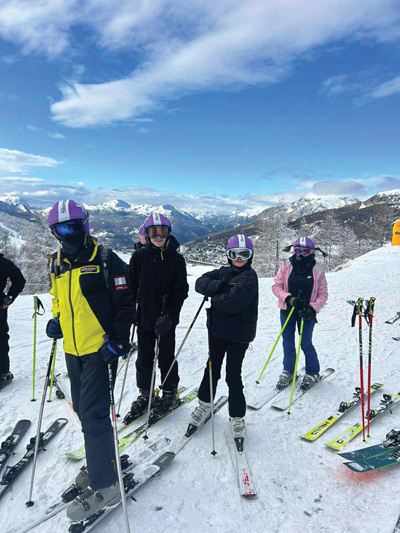
Education is often understood as the transmission of knowledge: facts learned, skills practised and qualifications achieved. Yet anyone who has worked in or experienced education knows that the true power of schooling lies not only in what children learn, but in how they grow. A truly enriching school journey nurtures curiosity, builds character and helps young people understand both the world around them and their place within it. It is in this broader sense that enrichment becomes not a luxury, but a vital part of education.

Enrichment gives learning depth, meaning and relevance. It allows children to make connections between what they encounter in the classroom and what they experience beyond it. It supports personal development alongside academic progress and helps pupils become confident, resilient and engaged learners. Trips, visits, residential opportunities and clubs all play a crucial role in this process, bringing learning to life and ensuring that education is not simply remembered, but lived.

Trips and educational visits are often a child’s first step into seeing learning in the real world. A visit to a museum transforms history from dates and diagrams into tangible stories. A trip to a science centre allows pupils to experiment, explore and question. A walk in a woodland or along a coastline turns environmental science into something that can be seen, heard and felt. These experiences anchor learning in memory and emotion, making it far more likely to be understood and retained. Beyond their academic value, trips and visits also promote social learning. Children learn to travel together, behave responsibly in public spaces and represent their school community with pride. They learn to ask questions, listen carefully and engage respectfully with experts and guides. In doing so, they develop communication skills, confidence and a sense of belonging to something larger than themselves.

Residential experiences take enrichment a step further by offering children the chance to grow personally as well as academically. For many pupils, a residential trip is the first time they have spent an extended period away from home. This brings with it excitement, uncertainty and challenge, all of which are powerful tools for learning. On residentials, children learn independence in practical ways: organising their belongings, managing routines and taking responsibility for themselves and others. They learn resilience by facing unfamiliar situations, trying new activities and overcoming small setbacks. Whether it is climbing a wall, navigating a trail or performing in front of peers, these challenges build confidence and self-belief. Just as importantly, residentials strengthen relationships. Pupils learn to support one another, to work as a team and to develop empathy and understanding. They see their teachers not only as instructors, but as mentors and role models. These shared experiences build trust, community and a sense of belonging that often carries back into school life long after the trip has ended.

Clubs and enrichment activities further enhance the school journey by offering pupils opportunities to explore interests beyond the core curriculum. Sports clubs encourage physical health, teamwork and perseverance. Creative clubs such as art, music and drama nurture imagination, self-expression and confidence. STEM clubs, coding groups and problem-solving activities promote logical thinking, innovation and curiosity. Gardening, debating and cultural clubs broaden perspectives and develop responsibility, communication and global awareness. These activities allow children to discover strengths they may not otherwise recognise. A child who struggles in the classroom may shine on the sports field, in a rehearsal room or during a practical project. This recognition builds self-esteem and motivation, helping pupils to see themselves as capable and valued learners. Clubs also offer safe spaces for children to take risks, make mistakes and learn from them, an essential part of developing resilience and a growth mindset.

Alongside these experiences, schools should also play a vital role in helping young people connect with their communities and understand the value of contributing to others. Through charity fundraising, volunteering and enterprise projects, pupils learn that they are not only learners, but citizens with the power to make a difference. Many access this through inspiring initiatives such as the Duke of Edinburgh’s Award, partnerships with local care homes, beach cleans, fun runs, food collections and community events. These experiences teach empathy, compassion and social responsibility in ways no textbook can. Becoming a well-rounded adult requires learning not only how to achieve, but how to give; not only how to succeed, but how to support others. The value of this learning is profound, both for the individual and for society, and it is something schools nurture with care, creativity and commitment.

Together, these enrichment opportunities create a holistic education that prepares pupils not only for exams, but for life. They help children develop essential life skills, collaboration, adaptability, empathy, leadership and perseverance. They expose pupils to new environments, cultures and ideas, broadening horizons and raising aspirations. They help children understand that learning is not confined to a classroom or a timetable but is a lifelong journey.

In an increasingly complex and fast-changing world, this kind of education is more important than ever. Young people need more than knowledge; they need the confidence to navigate uncertainty, the curiosity to keep learning and the resilience to face challenges. Enrichment provides the space and structure for these qualities to grow. To enrich a child’s school journey is to invest in their whole development, academic, social, emotional and personal. It is to recognise that education is not simply about preparing children for the next stage, but about helping them become thoughtful, capable and compassionate individuals. Trips, residentials, clubs and community engagement are not add-ons to learning; they are integral to it. They are the experiences that children remember, the moments that shape identity and the opportunities that open doors.

In enriching their school journey, we do more than teach. It is beyond the bell that education becomes experience, and it is through enrichment that every child’s school journey is truly transformed.

Please call 01273 592681 to find out more about what Shoreham College can offer you, or to arrange a personal visit at any time of the school year.
www.shorehamcollege.co.uk

teacher and kids

Life lessons and character in the classroom from the very start

By Early Years, Education, Independence, Wellbeing
by Matthew Jelley
Head of Junior School, Claremont Fan Court School

This article explores how skills like critical thinking, creativity and independent learning complement academic study to nurture confident, resilient and adaptable young pupils, ready to explore, grow and take on the world.

We all know that life can throw the unexpected as us – as Forrest Gump said, “Life is like a box of chocolates” and whilst we might want to pick out the fudge, we may end up with the coffee cream… So, how do schools provide the foundations for success right from the start of learning journeys and prepare our children for the challenges and unpredictability of life beyond the safety of the school walls? And when we read about character education, what does this actually mean?

Abraham Lincoln defined character as your actions when you know that you ‘would never be found out’, which suggests that in considering character education, we need to ensure that children understand the benefits of acting, for want of a better term, morally – and doing so in the knowledge that this is not only good for others but good for themselves as well.

In the classroom, this can be achieved by creating a culture where the habits that support effective learning are made explicit: problem solving, critical thinking, collaboration, communication, attentiveness and connection-making – though far from exhaustive, these are some of the habits crucial to future success in learning. A classroom that routinely demonstrates these behaviours will support both individual and group success – learning rarely happens in isolation as it’s a social process, after all. And schools must explicitly value these behaviours, noticing and celebrating the children’s efforts through assemblies, awards and recognition, as they work to become more effective learners.

Second, messaging around desirable character qualities, or virtues, should act as a golden thread to tie together all of school activity, again showing the mutual benefit to our selves and others of behaving in this way. A school’s curriculum extends far beyond what’s taught in the classroom so trips and residentials, recreational time, sport, music, drama, clubs, service, charity, outreach and pupil voice all present opportunities to learn how one’s character can be developed. This helps to develop greater independence, build resilience and solve problems, pushing children out of their comfort zone in order to thrive, and providing real life experience to illustrate the benefit that comes when we embrace challenge. And in all these activities children should be mindful, and reminded, of their commitment to acting in accordance with a prescribed set of values, where individual happiness and success is valued alongside that of the whole community.

Curriculum must be aligned with character based aims too. The content of what children learn can be carefully curated to provide examples, from history and contemporary society, of character qualities in action. This includes how to cope with adversity, how perseverance can pay off, why collaboration, teamwork and empathy are integral human qualities and why tolerance and respect are crucial to a healthy, functioning society.

Finally, we know that the most effective learning takes place when we are pushed beyond what is comfortable, and this goes for character education too. School culture should openly celebrate challenge, actively foster independence and autonomy and support children in understanding of where one ‘fits’. This means that processes and policies, for example an approach to behaviour management, conflict resolution and the management of recreational play, should be aligned with developing positive character traits, and support children in finding what makes them tick and how they can best ‘fit’ with others. This means providing children with the space to be themselves and to make mistakes, but safe in the knowledge that they have adults around them who support and care for them, who will be there to lend a helping hand but are committed to ensuring that they can stand on their own two feet to be productive, happy and successful future citizens.

Nestled in 100 acres of historic parkland in Esher, Surrey, Claremont is an independent co-educational HMC school for girls and boys aged two to eighteen, offering an academically ambitious environment that inspires and nurtures the whole child.
Find out more: www.claremontfancourt.co.uk/newsletter-and-events
Email: admissions@claremont.surrey.sch.uk Tel: 01372 46404


toilet training

Why toilet training a year earlier is an urgent issue

By baby health, Childcare and Nannying, children's health, Health, special educational needs, Wellbeing

Toilet training children a year earlier could solve a host of issues in the education and health service and improve children’s overall health and wellbeing – so why aren’t policymakers pushing forward measures to support families doing it sooner?

ERIC, The Children’s Bowel & Bladder Charity, with support from Kindred Squared and Jodie Gosling MP, recently hosted a Parliamentary roundtable discussion bringing together key stakeholders in early years, education and children’s health and social care, to discuss the huge impact delayed toilet training is having on children’s lives. The discussion centered around the significant opportunities that exist to improve children’s health, social care, education and wellbeing by toilet training earlier.

The charity is pushing for clear guidance around toilet training, greater benchmarking of children’s progress, and standardised training for professionals supporting families in early years (including health visitors and early years practitioners).

Over the last two generations, the average age that children are being toilet trained in the UK has risen from 12-18 months, to an average of around three or even four years today. Later toilet training increases the risk of developing wetting and soiling issues later and also prevents the early identification of bladder and bowel problems.

The impact is profound across education, health and social care:
• A staggering 1 in 4 children start school still not toilet trained.
• 90% of teachers have at least one child in their class who is not fully toilet trained.
• On average 2.4 hours of teacher time is lost every day supporting children who are not school ready to catch up – directly affecting educational outcomes for all children in the class and hampering the Government’s mission to ensure children start school ready to learn.
• Hospital admissions for childhood constipation (which can be exacerbated by delayed toilet training) have increased by 60% over the past decade (over 44,000 children last year).

The charity argues that if children were toilet trained a year earlier, it would improve outcomes for children, save children’s health and education services time and money, and reduce the environmental impact of nappies going to landfill. The potential positive impacts are significant:
• Reduce the social and emotional impact of delayed toilet training on the child: Two thirds of teachers (65%) and 58% of parents agree that not being ready for school when starting Reception could have long term impacts on a child’s success in later life. Ensuring they are toilet trained well in advance of starting school means they’re less likely to feel embarrassed or be ostracized from their peers, which can have a profound effect on their early days in school.
• Better education: If they didn’t have to deal with children who weren’t toilet trained, teachers could save up to 456 hours – that’s around 10 days of extra teaching time they could spend focusing on improving children’s education over the academic year.
• Better health: There is a link between delayed toilet training and childhood constipation. Currently 1 in 3 children suffer from constipation. In a single year, the NHS spent £168 million treating constipation.
By preventing a number of children from suffering from this, it could also save the NHS a significant amount. The cost of treating constipation is equivalent to funding 7304 newly qualified nurses for a year.
• Better for the environment: It’s estimated that the average child uses between 4,000 and 6,000 disposable nappies before they are toilet trained, and the UK disposes of around 3bn disposable nappies annually. If every child was toilet trained one year earlier, we could save between 5.3bn – 7.1bn nappies from going to landfill.
• Cost savings for parents: Parents in the UK can expect to spend approximately £1,000 on disposable nappies per child from birth to toilet training. This translates to about £400 per year for disposable nappies. So by toilet training earlier, they could save themselves up to £400 – that’s equivalent to about two weeks of nursery fees in some parts of the country, or perhaps a UK family holiday.

Siân Wicks, CEO of ERIC, The Children’s Bowel & Bladder Charity said: “ERIC calls for children to be toilet trained a year earlier. We have reviewed the evidence base, examined the impact on the child and family that delayed toilet training has. It is time to reduce the stigma. It is essential that we raise the profile of this debate. We are calling for clear national guidance, both for families and professionals, particularly for those who support children in early years.There has been clear guidance on issues like breastfeeding and sleep, but not on toilet training; yet, as we’ve seen, this is causing a host of issues that are costing families, society and the government dearly. There needs to be a greater sense of collective responsibility for children’s bowel and bladder health, and all stakeholders across government, children’s health, education and social care need to work together to support families to reach this milestone sooner.”

Felicity Gillespie, Director of Kindred Squared said: “Our research shows that parents are keen for clear, simple and evidence-backed advice. That’s why we’ve worked with the early years sector to produce startingreception.co.uk. The medical evidence is clear; unless there is a diagnosed medical need, children are best served by being out of nappies between 18 and 30 months. We welcome Eric’s efforts to spread this information as widely as possible!”

Jodie Gosling, MP, said: “Too many children are starting school feeling anxious, isolated, or even ashamed – simply because they haven’t been supported to reach a basic developmental milestone: being toilet trained. The removal of Sure Start provision has left families without the necessary infrastructure to learn and thrive. This isn’t just about nappies. It’s about dignity. It’s about confidence. And it’s about giving every child the best possible start in life. We’ve heard today how delayed toilet training is affecting not just individual children, but their families, entire classrooms, our NHS, and our environment. The evidence is clear – and the cost of inaction is too high. This is an issue that requires urgent, coordinated action. We need clear national guidance, better training for early years professionals, and a shared commitment across government to support families in reaching this milestone sooner. Because when we help children thrive from the very beginning, we all benefit.”

Alison Morton, CEO of Institute of Health Visiting, said: “Gaining mastery of your own bladder and bowel function is an important milestone in a child’s development. However, toileting practices and advice have changed over the years, and are heavily impacted by marketing tactics to delay toileting and prolong the use of nappies under the guise of ‘waiting until children are ready’. This has a human, financial and environmental cost. I encourage all professionals to maintain high expectations for the ability of all children, including those with disabilities, to achieve the skills for toileting. Unnecessary delays and low expectations are limiting children’s life chances and can have lifelong consequences. Getting this right is not really a choice, it is fundamental for children’s dignity, safety and quality of life”.

For further information please visit www.eric.org.uk

Forest-school

Why children need outdoor play – and simple ways to encourage it

By Early Years, Education, environment, Forest School, Wellbeing

by Dr John Allan,
Head of Impact and Breakthrough Learning at PGL Beyond

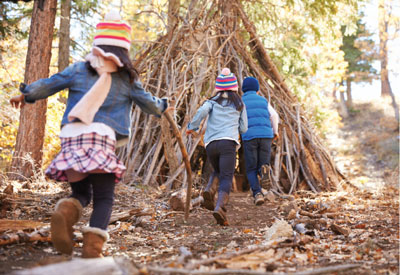
In a world dominated by screens, getting children outdoors has never been more urgent – or more important. Outdoor activity offers far more than just physical exercise: it nurtures resilience, builds confidence and develops a wide range of skills that can’t be replicated indoors.

Outdoor play provides conditions rarely found indoors. The unpredictability and multi-sensory nature of being outdoors challenges children to think creatively. Outdoor activities encourage children to explore, make decisions and adapt, building confidence and independence along the way. A child who is used to this is more likely to view setbacks in life as problems that can be solved, or even as stepping stones to growth.

Research shows that children who develop strong psychosocial skills early report better adult outcomes, including higher educational attainment, stronger employment prospects and improved mental health.

Learning new skills – whether physical, cognitive or social – is fundamental to healthy development. Outdoor experiences accelerate this process by fostering a balance of physical, social cognitive and emotional literacy at a time when brain development is most rapid.

Building resilience is central to this process. Psychosocial skills – such as self-awareness, empathy, creativity and adaptability – are established through varied, hands-on, practical experiences. Children who overcome physical obstacles can learn to ‘bounce beyond’ their original position, facing future challenges of all kinds with greater strength. This helps them to build the confidence and mental flexibility that supports both academic achievement and long-term wellbeing.

Getting children away from screens and embracing the outdoors
To inspire children to swap screens for fresh air, make outdoor activity accessible and enjoyable. Start small: set mini challenges such as a scavenger hunt or a timed bike ride. Lead by example – children are more likely to embrace the outdoors if parents value it too, whether through weekend walks, gardening or simply spending time outside together.

You can also weave outdoor experiences into daily routines; taking homework into the garden, organising play dates outdoors or using walks to school as opportunities to explore and chat. Consistency is key; when outdoor activity becomes a natural part of daily life, children see it as rewarding rather than a chore.

Five practical ways to encourage outdoor play
1. Choose a mix of activities
Outdoor play can come in many forms – climbing, cycling, splashing in puddles or exploring woodlands. Progressive exposure to uncertainty is not only healthy but essential for wellbeing. Parents can help by choosing a mix of activities that are both challenging and fun, such as adventure playgrounds or family walks.

2. Don’t let a little rain dampen the fun
The British weather is famously unpredictable, but outdoor play in the rain is just as rewarding. With waterproof clothing and a sense of adventure, children can thrive in wet conditions too.

3. Set smart boundaries on screen time
Today’s young people are predicted to spend the equivalent of 25 years of their lives looking at screens! Every hour sat staring at screens is an hour that could be spent outdoors, exploring, moving or simply playing. Instead, parents can set simple boundaries: no phones at mealtimes, less screen time before bed and encouragement to swap virtual play for real-world adventures.

4. Make movement part of everyday
For children aged five to 17, at least 60 minutes of moderate or vigorous activity daily is recommended. Bike rides, swimming or simply walking to school all count. These habits boost fitness, reduce anxiety and set the foundation for healthier adult lifestyles.

5. Let them learn by doing
For older children especially, independence is vital. Allowing them the freedom to wobble, stumble, fall and get back up teaches resilience. Over-protection, by contrast, can limit their ability to cope with setbacks. Activities that carry both risk and reward – such as trail walking – help young people practise bouncing back.

Children need more than exercise – they need experiences that challenge, inspire and prepare them for the future. Outdoor activity provides stronger physical health, confidence, self-esteem and resilience. Only the unpredictability and vitality of the outdoors offers the mix of skills young people need to thrive in today’s fast-changing world.

Dr John Allan is a leading academic in Sports Pedagogy, Psychology and Adventure Education.

growing confidence in children

Growing confidence

By Education, Mental health, Relationships, Wellbeing

Why many children are struggling and how parents can help

Confidence is often described as the quiet superpower that shapes a child’s life, influencing everything from their mental wellbeing to their willingness to try new things and build friendships. Yet, recent research shows that a significant number of children in the UK are facing a confidence crisis – one that could have lasting impacts if left unaddressed.

The Listen Up Report from youth and education agency Hark reveals that up to one in three adolescents nationwide experience little or no confidence. While the report focuses on young people aged 11 to 18, many of the challenges it highlights are rooted in earlier childhood and can begin to take shape well before secondary school.

What is the ‘confidence crisis’?
Children with low confidence often struggle to speak up in class, join social activities or express their opinions. This ‘unheard third’ – roughly 10 children in every classroom – may find it difficult to participate fully in school and social life, which can hold them back academically and emotionally.

The report found that at age 11, when children start secondary school, around 29% already feel little or no confidence. This figure rises as children face new pressures and transitions during adolescence. Although confidence can improve with time, early experiences are crucial in shaping a child’s self-belief and future aspirations.

What’s behind the decline in confidence?
The factors contributing to this crisis are complex and interconnected:
• The lingering impact of Covid-19
School closures and social isolation disrupted normal childhood development, making it harder for children to build social skills and resilience.
• Social media and online pressure
Even younger children are exposed to the pressures of maintaining an ‘online persona’ through siblings or early access to technology. The fear of judgment and comparison can chip away at their self-esteem.
• Fear of judgment and lack of emotional safety
Many children, particularly girls and those from minority groups, feel they cannot speak openly without being misunderstood or judged harshly. This fear stifles their confidence to express themselves authentically.

Without safe spaces at school or home to discuss feelings and experiences, children may internalise their doubts, leading to a downward spiral of invisibility and self-doubt.

Why early confidence matters
Confidence in childhood is not just about feeling good in the moment – it shapes how children engage with learning, develop friendships and approach challenges.

Children who lack confidence are less likely to participate in class, join clubs or speak up, which means they miss out on valuable opportunities to grow and be seen.

This invisibility can become a self-perpetuating cycle – the quieter a child is, the less support and encouragement they receive, further eroding their confidence and narrowing their future possibilities.

What can parents do?
The good news is that confidence is not a fixed trait – it can be nurtured and developed with the right support and environment. Parents play a vital role in helping their children build belief in themselves. Here are some practical ways to help:
• Create safe spaces for expression
Encourage your child to share their thoughts and feelings without fear of judgment.
Listen actively and validate their experiences.
• Celebrate small successes
Recognise and praise your child’s efforts and achievements, no matter how small. This builds a sense of accomplishment and motivation.
• Model confidence and positive self-talk
Children learn by example. Show them how to approach challenges with a growth mindset and kindness towards themselves.
• Support social skills development
Encourage play dates, group activities and social interactions that help your child practise communication and cooperation.
• Be patient and persistent
Building confidence is a journey, not a race. Consistent encouragement and under-standing make a big difference over time.

A call to listen louder
Every child’s confidence journey is unique, and it’s vital that parents, teachers and communities work together to see, hear and value each child. The Listen Up Report reminds us that confidence gaps are not personality flaws but broken social patterns that can be changed.

By fostering environments where quieter voices can thrive and teaching children to believe in themselves, we can help them step through doors they might not even see are open to them.

This article is based on insights from Hark’s Listen Up Report 2025, a comprehensive study on youth confidence in the UK. Hark is a London-based education and youth agency with over 30 years’ experience supporting young people and organisations to build confidence and skills. For further details or to read the full report please visit www.harklondon.com/listen-up/


happy family

The mindful family holiday

By environment, family, Family Farms, fun for children, Holiday camps, Relationships, Wellbeing
by Adry Capodanno
The Holiday Fixer

10 tips to make travel more memorable (and less expensive)

Family holidays don’t have to be expensive or packed with attractions to be unforgettable. In fact, the most powerful memories are often born in the small, ordinary moments – especially for children. When we shift from “doing more” to “noticing more”, the whole experience becomes richer, calmer, and often, more affordable.

Mindfulness on holiday simply means approaching the trip with a little more intention – and making space in the day for your child to fully experience where they are.

Here are 10 experience-backed ways to bring more presence, connection and lasting joy into your family holidays – without overloading your itinerary or your wallet.

1. Even a simple holiday is a big deal for children
As adults, we often crave ease – a familiar resort, a beach where we don’t have to think, or a well-trodden ski route. It’s easy to feel like we’re just “recharging”. But for children, even the simplest holiday is an exciting experience. The texture of hotel bedding, the sound of a different language, the way the sun feels in a new place – it’s all new. You don’t need to seek out constant stimulation. That hotel breakfast buffet may feel routine to you, but for a child, it’s exciting and fascinating.

2. Leave ‘breathing room’ in the day
There’s a temptation to make the most of every moment, especially if the holiday has been hard-earned. But over-scheduling leaves everyone overstimulated and tired. Instead, keep the itinerary light. Aim for one or two structured plans per day, and let the rest unfold. That half hour spent sitting in a town square eating crisps, or watching snow fall outside a café window, often becomes the memory they talk about later.

3. Begin the experience before you even leave home
Children connect more deeply to places they feel familiar with. Introduce your destination early – through a short video, a picture book, or a few fun facts. Learn how to say “hello” and “thank you” in the local language. When your child sees that same flag, animal or landmark in real life, the recognition brings pride and excitement – “I know this!”

4. Use a destination-themed holiday bingo
This is a brilliant way to help younger children stay engaged. Create a bingo card with images specific to the location: a monument, the local flag, a food item, a traditional costume or a certain animal. The moment your child spots one and ticks it off, it becomes a little victory and the thrill on their face is priceless! It turns sightseeing into a game, and gently encourages them to look around more closely.

5. Let their senses lead
Taste, smell and touch are powerful memory anchors. If your child falls in love with a pastry or gelato, let them have it again – consistency helps memories stick. Let them choose a local soap or spice to take home. A few years from now, that scent might take them straight back to a tiny village bakery or the steps of a museum.

6. Invite them to observe and create
You don’t need to give them a travel journal – though some children love that. A disposable camera, a sketchbook, or even a prompt like “What do you think is the story of this small cafe?” helps children engage with their surroundings. Drawing a lighthouse, taking a photo of a street performer, or collecting small treasures like ticket stubs or postcards adds personal meaning to the trip.

7. Let them interact with the place – not just watch it
Encourage small interactions. Let your child say “merci” at the bakery, ask the tour guide a question, or learn a game from local children. You are teaching them that the world is full of people with different ways of life – and that it’s OK to be a guest in someone else’s culture.

8. Give children a say
Let them help make decisions – choosing between two places to visit, picking a route to walk or a plan B when it rains. When they feel part of the process, they’re more present and interested, they gain a sense of agency and connection to the journey.

9. Mix destinations – strategically
If possible, include more than one stop. Studies in cognitive psychology show that the brain segments memory by context and environment. A few days by the sea, followed by time in a town or mountainside village, creates variety. A shift in scenery helps children form clearer, more durable memories. The key is to transition thoughtfully, not rush.

10. Keep the story going at home
When you get home, print a few photos. Let your child pick their favourites. Display a postcard, a shell, or a drawing. Talk about the best bits over dinner. Retelling the story of your trip helps children internalise it and treasure it.

You don’t need to do more, or spend more, to give your children a meaningful holiday. Instead, notice more – and help them do the same. The real luxury lies in unhurried time together, where the pace lets moments breathe and children can connect with the world – and with you.

Whether you’re surfing down a sand dune, exploring a Christmas market, or watching fish dart under a pedal boat, it’s the moments you truly share that will stay with them the longest.

Adry at The Holiday Fixer specialises in expert, high-quality, bespoke travel itineraries worldwide, with a focus on family holidays and friendly, stress-free, parent-to-parent service. Your next adventure is just a chat away! Contact Adry at adry@theholidayfixer.com or 07583 581042.

loving dad

Preparing dads for fatherhood

By family, Mental health, Relationships, Wellbeing
by Gordon Dowall-Potter
MANtenatal

Why support matters more than ever

For many men, becoming a father is one of life’s biggest milestones, and one of its biggest unknowns. While conversations around motherhood are supported by books, classes, apps and appointments, fatherhood is often treated like something that will “come naturally” once the baby arrives.

But here’s the thing: it doesn’t always come naturally. And when men don’t feel prepared, confident or supported, the impact can ripple through their relationship, affect mental health, and family life.

Men want to be involved, but are often left guessing
The idea of dads standing awkwardly in the background while mum does everything is outdated and most modern fathers want to be hands-on from the start. They attend scans, they take paternity leave (when they can), and they’re often just as excited, and nervous, about what lies ahead.

But despite the willingness, many men describe feeling unsure, sidelined or invisible during pregnancy and the early days of parenting. Antenatal services tend to focus on maternal needs (as they should), but that leaves a lot of dads guessing about what their role is and how to prepare.

Antenatal education aimed at men can make a huge difference. It offers emotional insight, relationship tools and practical parenting skills, delivered in a way that speaks to dads directly and honestly.

This is exactly why I set up men’s antenatal classes, to educate, guide and support all dads, no matter their background, relationship status or starting point. Too often, men are expected to simply “know what to do” without ever being shown how. These classes offer a space where dads can ask questions, build confidence, and prepare emotionally, without judgement or jargon.

It’s all part of my personal mission: No Dad Left Behind. Because when we give dads the tools and the time to prepare, they show up for their partner, their baby and themselves. It’s not about being perfect. It’s about being present. #BestDadYouCanBe

Mental health: A quiet concern for new dads
Research shows that around 1 in 10 fathers experience postnatal depression, although professionals suggest the real figure may be much higher. Unlike mums, who are routinely screened and encouraged to open up, many men still feel they need to push through alone and in silence.

Some don’t recognise the symptoms, brushing off low mood, irritability or withdrawal as tiredness or stress. Others worry that admitting they’re struggling could be seen as weakness. This silence can lead to emotional distance, tension at home and longer-term mental health issues if not addressed early.

Open, honest support and early intervention is the key – and that starts with normalising the idea that fatherhood can be just as overwhelming for men as it is for women.

The benefits of being prepared
When dads are supported in their transition to fatherhood, everyone wins.

Children benefit from stronger bonds with both parents. Partners feel more supported and less alone. And dads themselves feel more confident, connected and capable. Even knowing how to be helpful – in the birthing room, what to say, how to advocate, what not to take personally, can make a huge difference to how included and empowered a father feels.

Being a dad today is about more than providing. It’s about showing up emotionally, being present and being part of a team. But none of that happens by accident, it takes preparation, and it takes space for men to learn and grow without judgement.

Where we go from here
If you’re a mum-to-be reading this, one of the most powerful things you can do is involve your partner in the preparation process. Whether it’s recommending a class, sharing resources or even gifting him a course designed for dads, it sends a clear message: we’re in this together. It can help him feel included, informed and more confident about what’s to come.

And if you’re a dad reading this, well, you’ve already taken an important step. Just by engaging with this conversation, you’re showing up. You’re seeking support, wanting to understand more and laying the groundwork for being the kind of parent you want to be.

The truth is, fatherhood isn’t something you’re expected to just “know” how to do. Like anything else, it takes learning, patience and support. That support is out there and we’re here to help you find it.

Parenting is a shared experience. When both parents feel informed and supported, families are stronger, relationships are healthier and children thrive.

No dad should have to navigate this alone and with the right support, no dad has to.

Gordon Dowall-Potter is the founder of the multi award-winning MANtenatal programme – the UK’s leading antenatal education platform designed specifically for dads-to-be. Gordon works alongside NHS services and perinatal professionals to improve education, awareness and emotional support for men as they prepare for fatherhood. Learn more at www.mantenatal.com

schoolkid learning

Building independent learning in the early years

By Early Years, Education, Relationships, Wellbeing
by Michelle Thurley
Head of Early Years at Little Amesbury, Amesbury School, Hindhead

It is said that ‘play is the work of childhood’, and it is well known and understood that the first five years of a child’s life are absolutely crucial in setting them up for success in later learning and life. Before the age of five children are at their very peak of natural curiosity, enthusiasm and brain capacity for new learning. Good quality early years education is all about teaching children the tools to harness their desire for independent learning. Teaching children how to learn and how to interact, and equipping children with these skills will give them the confidence and ability to learn independently for the rest of their school careers. So how is it done well?

The importance of play and free flow
In the early years children learn through play. In many other European countries children do not even begin the formal business of educating in maths and English until age seven. Instead, in such countries the early years’ curriculum encompasses lots of learning through play. In reality the two approaches are quite aligned.

Play is profoundly important when it comes to children’s social, emotional and cognitive learning. It allows children to pretend, to take risks, to explore and follow their own desires and interests. They learn to negotiate and communicate with their peers. Play also provides opportunities for children to control their emotions and behaviour. At the same time, it teaches skills like creativity and problem-solving.

A nursery or classroom set up that allows children to learn through play and explore in this way is a key component in developing their independence. ‘Free flow’ between activities and the outdoor space is vital in providing the physical environment to stimulate children and give them the confidence to build their independent learning. This typically means a formal activity then three or four complimentary activities being set up and explained to the children for them to go and enjoy, with the child leading their own choice of activity. For instance, a maths based early years activity could look like this; the children are digging in the sand and having fun, yet each child has been tasked to find three objects hidden in the sand. The preschoolers are all finding three different types of leaves at forest school, vs just collecting leaves. The variety of provision being notably inside and outside the classroom.

Bringing learning to life
Appealing to the broadest range of learning experiences possible in rich, creative ways to pique learning interest is the best approach. A teacher will refer to the ‘seven areas of learning’, from academic learning in literacy and maths, real-world exploration, physical activities, communication and language, expressive art and design and personal social and emotional development. A quicker short form for parents to remember is to nurture the ‘PIES’, Physical, Intellectual, Emotional and Social aspects of the life of their child. A rotation of rich and exciting opportunities to learn through play to ensure all of these vital areas of early learning are captured is key to building the independent learner early on.

Varying how learning is delivered is key, a range of materials, song, music, games and objects – giving children access to real objects as well as toys. Using a rich range of resources, like iPads or interactive whiteboards where children can select a worksheet, all build a child’s skills and give them agency in their own learning. Also allowing an activity to run on if children are very engaged is to be encouraged – early years learning is the best time for flexibility in the timetable. Getting outside, access to mud and leaves and weather, and opportunities to dress up and pretend within the school day are key to capturing a child’s imagination. I greatly enjoy teaching phonics with at least two of the class dressed as princesses or a superhero.

Recently, this provision in professional educational settings has become increasingly specialist. It is now more common for early years settings to offer specialist music, dance, languages, forest school and even Makaton and specialist sports. This is clear evidence of the need to offer the most ‘high definition’ learning possible to build independent learning.

The best illustration I can offer of independent learning starting to really take shape is a recent anecdote. One of the children I teach has been learning about the UN rights and responsibilities of a child in ‘The Real World Exploration’ aspect of the EYFS curriculum. The child had clearly understood from this lesson that children in the nursery and wider school community have a voice, and they must command dignity, respect and be accepted for who they are. This child was asked to effectively play a game of tag in their PE lesson, they asked to “sit out” the lesson as they did not see themselves having a role as either being chased or chasing anyone in that lesson and please could the teacher “respect my decision!”

Little Amesbury is a centre of excellence, dedicated to providing our youngest children with outstanding early years education, in a vibrant and challenging learning environment. For further details please visit www.amesburyschool.co.uk/littleamesbury


Arty owl

Children need more art

By dance & Art, Education, fun for children, Mental health, play, Playing, Wellbeing
by Sebastian Dewing
Founder Artroom Brighton

Nurturing creativity beyond the classroom

Back at primary school, in the 1980s, I had a weekly art lesson in an art room, a pottery class in a pottery studio and a needlework lesson in a fabrics room. Whereas I appreciate, this was not necessarily on offer in every school, it certainly wasn’t radical.

Fast forward 40 years and the demotion of art from a core subject to a smattering of token options that children dip in and out of, is astounding. If my daughter is lucky enough to get an art lesson, it is usually in conjuction with a topic lesson – like lets draw ‘a Viking long boat’ or design a ‘save the rain forests’ poster. There is still value in this but it is rarely art for art’s sake. Our children are being disadvantaged by the requirements of national educational targets, which hugely favour ‘core’ subjects, meaning art is now undervalued in primary schools. It is the participation in art, rather than the ability and skill level of the child, that is fundamentally important here.

In a world of innovation, it couldn’t be a more crucial time to use art to empower our young people, as employers place a huge emphasis on creative thinking, in addition to personal skills such as confidence, effective decision-making and originality. Such skills are bolstered by studying the arts and being able to think outside of the box, innovate and be creative is something that seems lacking in many young people entering the workforce.

Sir Ken Robinson in his TED Talk, Do Schools Kill Creativity, said that: “Creativity is now as important in education as literacy – we don’t grow into creativity; we grow out of it. Or rather, we get educated out of it… Our education system has mined our minds in the way that we strip-mine the earth: for a particular commodity. And for the future, it won’t serve us. We have to rethink the fundamental principles on which we’re educating our children.”

The Digital, Culture, Media and Sport Committee (2019) said in their report Changing Lives: “We are deeply concerned by the evidence we received around the downgrading of arts subjects in schools, with all the consequent implications for children’s development, wellbeing, experiences, careers and, ultimately, life chances.”

While schools work really hard to deliver a broad curriculum, the time and resources available for creative subjects, such as art, are frequently limited or sidelined. Yet, for many children, art isn’t just a subject – it’s a language, an outlet and a way to connect with themselves and the world around them.

Art workshops can offer a space where that creative expression can truly flourish. Unlike the school environment, where outcomes and assessments can sometimes overshadow the process, workshops are structured around exploration and fun. They allow children to use new materials, think visually and build confidence in their own ideas – all in a relaxed and supportive setting.

During the long summer break, when routines shift and screen time can easily dominate, art workshops can provide children with meaningful, hands-on experiences. It’s not just about keeping them busy – it’s about giving them the tools and space to grow, create and have fun.

For parents looking to support their child’s artistic interests beyond the classroom, workshops can be an ideal stepping stone. They bridge the gap between what schools can offer and what children truly need to thrive as young creatives.

At Artroom Brighton, we truly and firmly believe that art has the power to transform and nurture the lives of young people – we’ve seen it happen many, many times.
In the current climate, it’s no wonder that more and more parents are choosing to send their children to our classes. Unlock YOUR child’s creative potential and book them in for a course at our studio. Visit www.arrtroombrighton