
by Nick Oakden
Head of Junior Prep School, Hurst College
In our fast-paced, ever-changing world, Nick Oakden, Head of Junior Prep School at Hurst College, explains how we can best prepare our children for their futures. The last few years have taught us that whilst we may not know what is around the corner, or indeed yet understand the world our children will face as adults, we do know that developing a strong sense of independence will mean that our children will be able to adapt and thrive in any situation.
Developing independence is a journey, and one that should start at the very beginning of a child’s education. An independent mindset that is developed from a young age will build self-confidence, develop problem-solving skills, and encourage a sense of responsibility. Embedding an independent attitude should be a fundamental part of the Early Years Foundation Stage (EYFS). It starts with small practical steps such as getting dressed into their school uniform and packing their own bags which develops into shaping their own learning in a safe, nurturing environment.
One of the most critical benefits of developing independence in young children is that it builds their self-confidence. In a world where the internet and social media have a powerful influence on our children’s self-image, it is important that we embed opportunities for our pupils to develop inner confidence from a young age, about who they are and how to relate positively to others. One of the ways we seek to do this is to encourage pupils to try new things and give them opportunities to develop friendships outside of their form. We provide our pupils with a wide variety of co-curricular opportunities such as Woodland Camp craft skills, drama, dance and sporting activities, from the Reception year, to broaden their experiences and extend their learning beyond the classroom.
Independence also fosters creativity and imagination among pupils. When they are given the freedom to explore and experiment, they can expand their understanding and develop new ideas and solutions. It is important to provide pupils with tools and open-ended tasks which allow them to express themselves. Sometimes, a pot of water, a paintbrush and a brick wall are all that is needed, alongside an environment that encourages creative play.
Of course, one of the major obstacles that can prevent pupils from becoming more independent is a fear of failure. To encourage a more independent approach, we must help pupils to see failure as an opportunity to learn, rather than something to be avoided at all costs. As parents, the temptation to ‘helicopter in’ and save the day by dropping off a forgotten PE kit can seem to be the right thing to do. However, if we foster independence rather than dependency, then children will learn so much more than where the spare kit is kept at school. The skills and strategies that children develop when things don’t go to plan are vital in preparing them for the future.
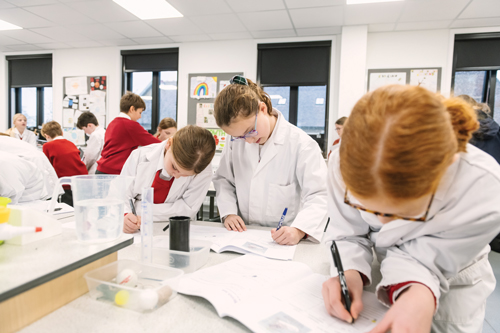
In school, the learning environment should echo this ethos and be a ‘safe space’ where pupils are encouraged to take risks and make mistakes. Whether this is designing and testing experiments in a science lab, exploring Woodland School or performing on stage, pupils should focus on the importance of the learning journey, rather than the outcome. When pupils do this, failure is recognised as an important part of the journey.
Another benefit of developing independence is that it teaches pupils about responsibility. When children are independent, they learn to take responsibility for their actions, decisions and behaviour. In Early Years, examples such as self-registering, tidying the classroom and packing their school bags should be part of their daily routines. As the pupils get older, the levels of responsibility invariably increase, and they use the building blocks that have already been established to independently embrace new challenges, such as the introduction of homework.
As well as the practical aspects of responsibility, schools should allow pupils to take responsibility for their learning and develop ownership of their studies. We seek to achieve this through a curriculum that empowers the pupils. In the Early Years, child-initiated activities and discovery time are at the heart of excellent practice. This allows pupils to direct their learning around their own interests, creating purposeful and bespoke learning opportunities. As pupils progress into Key Stage One, a creative curriculum weaves together all subject areas through a thematic approach which allows them to ask questions and seek their own answers, putting in place the building blocks for independent research as they progress in their academic journey. Although knowledge is important, what will be required in the future is an aptitude for flexibility and an attitude of mind which promotes questioning and is open to new learning.
We are all aware that the world is changing, and our role as educators is to prepare pupils to embrace the future. As children become more independent, they become more confident in their abilities to think critically, solve problems and find solutions, which is a valuable skill for success in school and beyond.
As Franklin D Roosevelt famously said: “We may not be able to prepare the future for our children, but we can at least prepare our children for the future”.
Hurst College is a thriving independent school for children aged between 4 and 18 with an overarching aim to provide an excellent all round education with a strong academic core and is ideally located between Brighton and Haywards Heath. www.hppc.co.uk


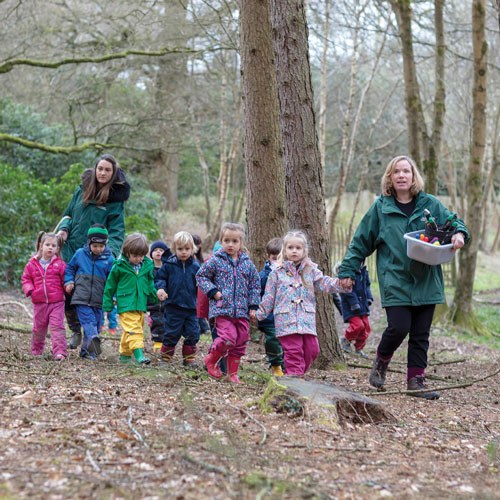
 Helping schools to enhance their outdoor learning offering and ensure children can enjoy meaningful and effective lessons, the Forest School Association offers a national accreditation that schools can apply for to deliver both structured and unstructured outdoor sessions. At our school, we have a long-established Forest School programme, led by our own Forest School accredited teachers and trainers, who are able to deliver valuable outdoor sessions for children from the age of two upwards.
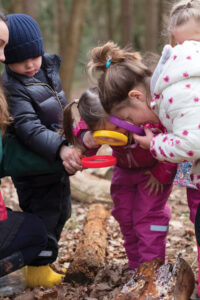 r experience, we have found that outdoor learning is particularly beneficial for younger children. They are given the space to be active and enjoy being noisy and messy, while engaging in play-based learning and exploration. With activities based on small, achievable steps, spending time outside helps to increase self-confidence and independence in the early years. Additional benefits of outdoor learning for younger children include improving their focus and attention, while physically helping to improve their balance, co-ordination and fine motor skills.