Category

Forest School

children in forestschool

A year in the woodland classroom

By Education, Forest School
by Neil Harris
Shoreham College Junior School

Much like farming, teaching has its own cyclical rhythm. We mark the passing of time not by the calendar alone but by familiar milestones: the excitement of a new term, the joy of the harvest festival, the sparkle of Christmas concerts, the splash of swimming galas and the cheers of sports days. Each new school year, like the start of a growing season, carries with it optimism and promise. The first page of a brand-new exercise book lies open, waiting to be written, every possibility still ahead.

For Forest School practitioners, that rhythm is felt even more keenly. Nature itself becomes our clock, and the shifting seasons write their lessons all around us.

As the seasons roll by, their transitions are mirrored in the landscape. Because my Forest School is based within a school setting, our year begins in September. While we look forward to the start of a new academic cycle, the forest is already preparing for its winter sleep – but it’s not quite done yet.

If you know where to look, the forest offers polished treasures hidden within spiky seed pods. Shiny brown chestnuts and horse chestnuts, acorns and winged ash seeds are amongst the most coveted prizes for many children. Their smooth surfaces glint like jewels in small hands, and beyond the thrill of the find, they lend themselves to a wealth of activities: threading, counting, crafting or even serving as the currency in elaborate role-play games.

Meanwhile, the elder bushes hang heavy with berries, their clusters almost black, glistening like beads against the fading green leaves. Crushed, they release a deep, inky purple – perfect for art projects, or for brewing up ‘magic potions’ in the imaginative world of children’s play.

Yet this is also the moment for gentle reminders: the forest provides not just for us but for its wild inhabitants too. Birds feast on these berries, and the purple splatters beneath their favourite perches become vivid clues for young nature detectives and a warning to leave plenty on the tree for the wildlife we share this space with.

As the bright hues of autumn fade into winter, the bones of the forest are revealed. Skeletal trees shiver in icy winds and we gather close to the fire – not only for its cheerful glow but for its comforting warmth, a beacon against the cold.

Winter is also a season of beginnings, the perfect time for planting tree whips – young saplings with slender stems and neat, compact roots that slip easily into the earth. In our setting, we aim for every child to plant a tree during their time with us, a lasting mark that they were here and an opportunity to give back to the woodland that nurtured them.

Spring is, without doubt, my favourite season in the forest. In the earliest days, when the ground still holds winter’s chill, the spring bulbs push their snouts through the frozen soil – a small but thrilling promise of warmer days to come. By the season’s height, the woodland has transformed into something close to magical.

Cow parsley and elder burst into bloom, their umbels creating clouds of creamy white that froth through the undergrowth like a bridal bouquet scattered across the forest floor. The air grows heavy with their delicate scent, challenged by the sharper, more pungent aroma of wild garlic as it unfurls its star-like blossoms. The woods in spring are alive not just with colour and fragrance, but with activity.

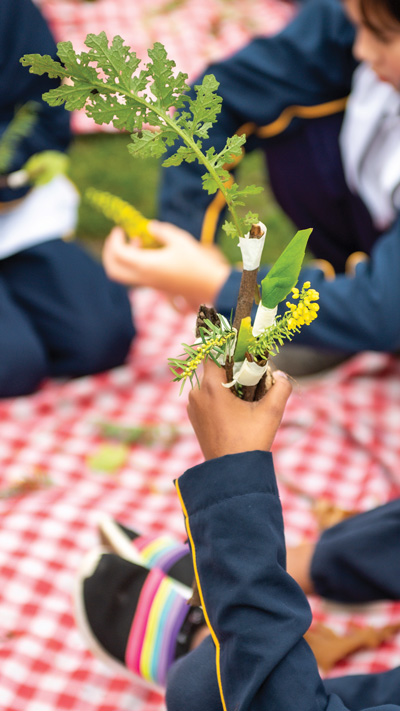
For our young explorers, this is a season of discovery: blindfolded scent trails that sharpen the senses, hapa zome prints (the magical art of textile or paper printing with plants and flowers) that capture fleeting blooms on cloth and paper and exciting stakeouts beside nesting boxes. And for those who feel overburdened, ten minutes spent watching harassed songbirds flitting back and forth to their chicks helps to put life in perspective.

The start of spring is unmistakable – a sharp jolt waking the forest from its winter slumber. Summer, by contrast, creeps in almost unnoticed. As the days lengthen and the soil warms, the pace of life in the forest slows from spring’s frenetic energy.

For the children, warmer days mean lazing in hammocks while listening to songbirds and building shelters to keep the sun off their heads. Summer is also the perfect time to bake bread over the fire. The heat in the air coaxes the dough to rise, and the scent of freshly baked bread drifting through the trees draws people into the fire circle. Crusty loaves of sourdough, pizzas, garlic-drenched dough balls and simple flat breads are each at their best when cooked over hot coals and eaten in the fresh air.

By now the cow parsley flowers have faded, leaving only the skeletal outline of their blooms – a delicate seed where each floret once was. These make wonderful, if fragile, hedgehog spines when pushed into clay models, a reminder of our favourite woodland visitors. As we begin to think about our summer holidays, these busy creatures are already preparing for their hibernation.

And so the seasons turn, each leaving its mark not only on the woodland but on the children who explore it. Just as a farmer’s year is measured by sowing and harvest, ours is shaped by saplings planted, berries gathered, songs sung around the fire and friendships forged beneath the trees. By the time the cycle brings us back to September, we are not the same as we were before: the forest has changed, the children have grown and together we have written another chapter in the story of this living classroom.

Please call 01273 592681 to find out more about what Shoreham College can offer you, or to arrange a personal visit at any time of the school year.
www.shorehamcollege.co.uk


donkey

Why experiences make the best Christmas gifts

By Education, environment, Family Farms, Forest School, Green
by Nicola Henderson
Godstone Farm

Every year, as Christmas approaches, many of us face the same dilemma: what to buy for our loved ones. Shops are overflowing with shiny new toys, gadgets and trinkets, each promising to be the ‘perfect gift’. But how often do those gifts gather dust on a shelf, or end up forgotten by January? Increasingly, in our busy lives people are realising that the most meaningful presents aren’t objects at all – they’re experiences where we can value time spent together.

Many visitor attractions see firsthand the joy that comes from shared moments and family adventures. Whether it’s watching a child’s face light up as they meet an animal up close, enjoying a day of discovery with grandparents, or creating a new festive tradition together, these are memories that last far longer than anything that comes wrapped in shiny paper. That’s why experience-based gifts – such as gift cards for days out, animal encounters, or tickets to special events – are becoming the new gold standard for Christmas giving.

Memories really can outlast material presents
Think back to your own childhood Christmases. Do you remember the toys you unwrapped each year? A few, maybe, but more likely, your fondest memories are of the moments spent with family, baking mince pies with mum, building a snowman with dad, or visiting a magical event together. That’s the beauty of gifting experiences, they create stories that can be retold, moments that can be treasured and photos that bring a smile for years to come.

A day out, for example, becomes so much more than simply ‘something to do’. It’s the delight of hand-feeding the goats, the fun of playing races in a soft play, the thrill of a tractor ride across the fields and the joy of simply being together away from everyday distractions. Experiences build connections, strengthen relationships and give families the most precious gift of all – time spent together.

Kinder to the environment
In today’s world, we’re all becoming more aware of the impact our choices have on the planet. Every year, millions of plastic toys and novelty gifts are bought, played with briefly, and eventually thrown away, many ending up in landfill. On top of that, the wrapping paper, packaging and batteries all add to the festive waste pile.

Choosing to give an experience instead is not only thoughtful, but also eco-friendly. A gift card, for example, can be tucked into a simple envelope – no need for excessive packaging, ribbons or plastic wrap. By gifting a day out or an event ticket, you’re giving joy without adding to the clutter of Christmas waste. It’s a more sustainable way to celebrate, one that aligns with the growing desire to protect our environment for the next generation – the very children we’re gifting to.

Flexibility for busy families
Another benefit of giving experiences is their flexibility. The festive season can often feel like a whirlwind of school plays, family visits and Christmas dinners. An experience doesn’t demand to be used immediately; instead, it gives families the freedom to plan a trip that suits them. Whether they fancy a winter adventure in January or a springtime visit to a farm, this type of gift is theirs to enjoy at the perfect time. There are so many experiences on offer in the UK, a spa day or driving experience might work for adults whilst days out are popular among children.

For grandparents, godparents or family friends looking to give something meaningful, this flexibility is invaluable. Rather than buying ‘just another toy’, they can give a promise of fun, adventure and quality time together.

Something different
Beyond general entry, experience-based gifts can be truly magical. Imagine the delight on a child’s face when they discover they’ve been gifted a behind the scenes experience, feeding the pigs, grooming a pony or learning more about the creatures they love. These encounters create unforgettable moments and often spark a lifelong interest in animals and nature. Places that offer a variety of different experiences will mean that all budgets can also be catered for.

Reduce stress and increase joy
There’s also a practical advantage to gifting experiences: it can make Christmas shopping less stressful! No more endless trawling through toy aisles, trying to guess which gadgets children already have, or worrying whether clothes will fit. An experience is always the right size, never goes out of fashion and won’t be forgotten after a week!

In fact, studies have shown that people feel happier when they spend money on experiences rather than material possessions. The anticipation of an upcoming day out provides joy before the event even begins, while the memories created extend the happiness long afterwards.

A Christmas that truly means something
At its heart, Christmas is about togetherness, joy and making memories. By choosing to give experiences rather than ‘things’, we can also stay truer to the spirit of the season.

So, this year, perhaps we should rethink our gift lists. Instead of filling stockings with ‘stuff’, why not give the people you love the chance to make memories that last a lifetime? After all, toys break, gadgets age and clothes go out of style – but the memory of time spent together will never fade.

Godstone Farm in Surrey offers enriching outdoor experiences all year round and welcomes a variety of baby animals each spring.
www.godstonefarm.co.uk

Forest-school

Why children need outdoor play – and simple ways to encourage it

By Early Years, Education, environment, Forest School, Wellbeing

by Dr John Allan,
Head of Impact and Breakthrough Learning at PGL Beyond

In a world dominated by screens, getting children outdoors has never been more urgent – or more important. Outdoor activity offers far more than just physical exercise: it nurtures resilience, builds confidence and develops a wide range of skills that can’t be replicated indoors.

Outdoor play provides conditions rarely found indoors. The unpredictability and multi-sensory nature of being outdoors challenges children to think creatively. Outdoor activities encourage children to explore, make decisions and adapt, building confidence and independence along the way. A child who is used to this is more likely to view setbacks in life as problems that can be solved, or even as stepping stones to growth.

Research shows that children who develop strong psychosocial skills early report better adult outcomes, including higher educational attainment, stronger employment prospects and improved mental health.

Learning new skills – whether physical, cognitive or social – is fundamental to healthy development. Outdoor experiences accelerate this process by fostering a balance of physical, social cognitive and emotional literacy at a time when brain development is most rapid.

Building resilience is central to this process. Psychosocial skills – such as self-awareness, empathy, creativity and adaptability – are established through varied, hands-on, practical experiences. Children who overcome physical obstacles can learn to ‘bounce beyond’ their original position, facing future challenges of all kinds with greater strength. This helps them to build the confidence and mental flexibility that supports both academic achievement and long-term wellbeing.

Getting children away from screens and embracing the outdoors
To inspire children to swap screens for fresh air, make outdoor activity accessible and enjoyable. Start small: set mini challenges such as a scavenger hunt or a timed bike ride. Lead by example – children are more likely to embrace the outdoors if parents value it too, whether through weekend walks, gardening or simply spending time outside together.

You can also weave outdoor experiences into daily routines; taking homework into the garden, organising play dates outdoors or using walks to school as opportunities to explore and chat. Consistency is key; when outdoor activity becomes a natural part of daily life, children see it as rewarding rather than a chore.

Five practical ways to encourage outdoor play
1. Choose a mix of activities
Outdoor play can come in many forms – climbing, cycling, splashing in puddles or exploring woodlands. Progressive exposure to uncertainty is not only healthy but essential for wellbeing. Parents can help by choosing a mix of activities that are both challenging and fun, such as adventure playgrounds or family walks.

2. Don’t let a little rain dampen the fun
The British weather is famously unpredictable, but outdoor play in the rain is just as rewarding. With waterproof clothing and a sense of adventure, children can thrive in wet conditions too.

3. Set smart boundaries on screen time
Today’s young people are predicted to spend the equivalent of 25 years of their lives looking at screens! Every hour sat staring at screens is an hour that could be spent outdoors, exploring, moving or simply playing. Instead, parents can set simple boundaries: no phones at mealtimes, less screen time before bed and encouragement to swap virtual play for real-world adventures.

4. Make movement part of everyday
For children aged five to 17, at least 60 minutes of moderate or vigorous activity daily is recommended. Bike rides, swimming or simply walking to school all count. These habits boost fitness, reduce anxiety and set the foundation for healthier adult lifestyles.

5. Let them learn by doing
For older children especially, independence is vital. Allowing them the freedom to wobble, stumble, fall and get back up teaches resilience. Over-protection, by contrast, can limit their ability to cope with setbacks. Activities that carry both risk and reward – such as trail walking – help young people practise bouncing back.

Children need more than exercise – they need experiences that challenge, inspire and prepare them for the future. Outdoor activity provides stronger physical health, confidence, self-esteem and resilience. Only the unpredictability and vitality of the outdoors offers the mix of skills young people need to thrive in today’s fast-changing world.

Dr John Allan is a leading academic in Sports Pedagogy, Psychology and Adventure Education.

ocean fishtank scene

Nurturing creativity

By Early Years, environment, Forest School, Green, Mental health
by Karen Borley
Senior Education Advisor, N Family Club

The magic of the atelier and self-expression in the Early Years

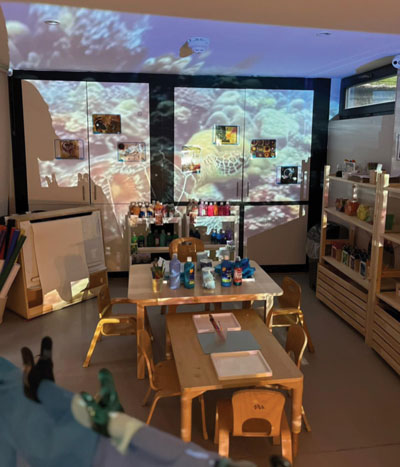
In their early years, children establish the foundations of how they view the world, relate to others and express themselves. One way to support this development is through the use of an atelier, which is a dedicated space for self-expression. Inspired by the Reggio Emilia approach to early childhood education, the atelier is a vibrant, ever-evolving environment where children of all ages can make sense of their world through art, play and sensory discovery.

The atelier concept comes from the Reggio Emilia approach, a renowned educational philosophy that places high value on children’s natural creativity. Reggio educators refer to the variety of ways that children interpret the world as the ‘hundred languages of children’ with the environment as the ‘third teacher’. Aligning with the Early Years Foundation Stage’s (EYFS) Expressive Arts and Design area, an atelier can facilitate the ‘hundred languages’ through 2D and 3D art, clay modelling, transient art, photography, music and sound, amongst other experiences. Children are free to experiment, to combine different mediums, to revisit ideas and to create without the pressure of a ‘right’ answer. Essentially, the journey matters as much as the end result.

When set up thoughtfully, as a dedicated room or as a part of the main family room, the atelier should invite exploration, curiosity and wonder in children of all ages. Experiences and materials can be adapted to suit a child’s stage of development – whether it’s a toddler squishing clay between their fingers or a preschooler constructing a 3D sculpture with the same materials, the atelier should welcome all forms of expression and creativity. For babies, an atelier experience might be about sensory exploration – watching light and shadow, listening to soft music or touching different textures. For toddlers, it could be about mark-making, experimenting with colour, or stacking and building. Older children may work on more complex projects involving design, sculpture and collaboration. Every child has the opportunity to develop confidence in their ideas, to try new techniques, and to build something uniquely theirs.

In the atelier, children can be introduced to a diverse range of artists whose work sparks curiosity and wonder. Artists such as Joan Miró, Jackson Pollock, Henry Moore and Yayoi Kusama can be explored. For example, a child might respond to Kusama’s dots with their own vibrant pattern work. These experiences help children see themselves as artists, too. They learn that art is not about perfection but about expression – finding their voice, rhythm and mark in the world.

The atelier is also a space for project work – an opportunity for deeper, shared discovery. Children can return to their creations over days or even weeks, adding layers of thought, materials and meaning. This ongoing process demonstrates to children that their ideas matter and deserve both time and attention. Educators should play a key role here, introducing new materials and techniques, asking thoughtful questions and helping children to connect their experiences to broader ideas. Older children can be provided with the opportunity to collaborate with one another by discussing plans and building together, and these early experiences of teamwork and communication lay strong foundations for emotional and social development.

An important aspect of the atelier approach is documentation. Children’s creations should not just be displayed, but also celebrated. Photos, notes and collections of work allow children to revisit past experiences, reflect on their process and share their stories with peers and their families, supporting a sense of ownership and pride. By giving children the freedom and tools to express themselves, we help nurture confident thinkers, communicators and lifelong learners. In the safe, inspiring space of the atelier, each child is invited to tell their story in their own unique way. For families, knowing that such a space exists in their child’s nursery can offer reassurance that their child is being seen, heard and valued every day.

Founded in 2017, N Family Club set out to rethink Early Years education – developing a progressive curriculum, building a sector-leading team culture, and a world class service that adds real value for families. A proud B Corp, N Family Club were rated the highest quality nursery group in the UK by Nursery World in 2022 & 2023 and were accredited as a Great Place to Work in 2024. www.nfamilyclub.com

Pop outside and let the play begin

By Childcare and Nannying, Education, environment, family, Forest School, Green

by Sylvia Roberts and Rachel Humphrey
Little Earthworms Children’s Nursery and Pre-school

The importance of children playing outside is essential to their development – countless studies over the years have shown the benefits on children’s, physical, mental and emotional wellbeing. Having worked with children in nurseries and as nannies since we were teenagers, Rachel and I are quick to spot when it’s time to get outside!

When we opened our nursery 15 years ago, one of our top priorities was having a good-sized outside space so that all our children could benefit from being outside as much as possible throughout the year. Popping on a sun hat and exploring the outdoors in the warm sunshine or dashing outside to chase the snow, no matter the time of year, being outside improves us all.

Time outside in the sunny days has an immune boosting effect on our bodies, producing vitamin D, improving our cognitive performance, and boosting our serotonin levels to support our mental health. The benefits really are endless. The quote “There is no such thing as bad weather, only different kinds of good weather” has been said in many ways over the years and we really incorporate this sentiment at our little nursery, engraining it into all our daily lives.

There is nothing better on a rainy day than getting the waterproof clothing and a good pair of wellies on and going outside, jumping in puddles. Jumping, splashing and running are just a small part of being outside. At any time of year children are able to explore risk and help work together at tasks such as setting up a game or activity together, digging in the garden preparing the vegetable patches, or going on a hunt to find where the best snails, slugs and woodlice are hiding.

Children’s friendships and social interactions can change and be explored in new ways while being outside. Children gain new confidence alongside their peers while they push the boundaries of not only their physicality but also expanding their emotional intelligence along the way.

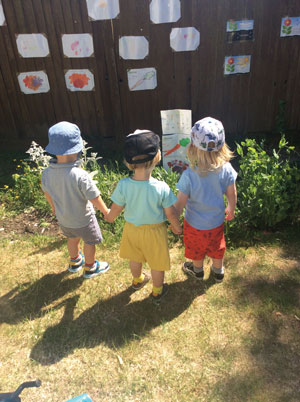
Children love being outside, as their young minds are naturally geared towards creativity, problem solving and role play games. Vivid imaginations can flourish with outside play, all of this being harnessed and strengthened with the use of the many natural resources available to them through the art of exploration.

Children of all ages benefit from the vast sensory experiences when outside; the squelching of mud, the crinkle of leaves, the smell of flowers and plants while watching birds or looking out for rainbows overhead. There are endless opportunities within the outside environment for children to expand their knowledge and develop through their play.

We are very passionate about every aspect of outdoor learning. Children thrive outside and often have a fantastically engaged learning experience when the learning environment is based in nature.

Having structured play and free play both inside and outside is essential for children to adapt and learn in their younger years. Playing and learning new skills during their early developmental years gives children the tools to grow and thrive. So many developmental aspects are pushed to engage and prosper when being outside.

Communication and language are expanded naturally when playing outside as children feel freer to engage in loud vocal play such as shouting and whooping. Language can develop through curiosity of a new environment and enthusiasm of sharing their new experiences as they adventure through new rich habitats.

Outside time can certainly be hard to come by when living in a city but at those times it becomes even more important to pop outside and let the play begin.

Living in Sussex, we are lucky that there are so many outside spaces and fantastic natural areas that, with adult support, children can explore and enrich their lives through. There are many parks, small green spaces, gardens, open fields, nature reserves and, of course, not forgetting the beautiful beaches. The joy of engaging with nature is limitless!

Being outside, children are engaged and full of life while gaining so much through the opportunity of developmental play. Children harness their natural environmental experiences, socialising, growing and learning about the outdoors, while engrossed in nature in a myriad of technicolour ways.

Does life really get any better?

Sylvia Roberts and Rachel Humphrey own Little Earthworms nursery and pre-school on Ditchling Road in Brighton. Having worked in childcare for more than 50 years between them, they have been running the nursery for 15 of those wonderfully enriching years! The nursery is a large open plan bungalow with a beautiful spacious garden for our chickens, vegetable patches and of course our pirate ship for many an adventure! Please call or email to come and have a look around. Tel: 01273 243182 Email: Little.earthworms2010@gmail.com


gardening for children

Involve children in gardening

By Education, environment, Forest School, fun for children, Gardening, Green
by Victoria Rumens
Studio Hummingbird

Cultivating minds and bodies

Gardening is a simple but powerful way to spend quality time with your children while supporting their mental and physical health. In today’s world, where screens often dominate our family life, introducing your little ones to gardening can be a breath of fresh air – literally. A well-designed garden isn’t just a patch of soil; it can be a place of discovery, creativity and joy for children, providing memories that stick with them for life.

Gardening: A calm oasis for young minds
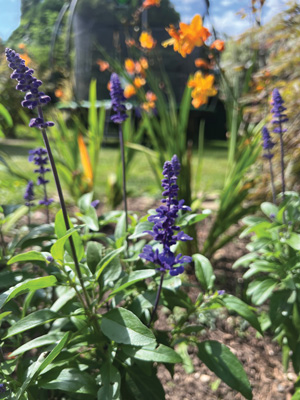
We all want our children to grow up happy and resilient, and spending time outdoors in the garden is a wonderful way to nurture that. Gardening combines physical activity with moments of quiet focus, creating a natural way to unwind. For children, the act of planting seeds or watering flowers can bring a sense of accomplishment and calm. Studies even show that green spaces help reduce stress, improve mood and boost concentration.

Gardening also teaches patience and persistence. Children learn to wait for seeds to sprout and flowers to bloom, showing them the rewards of time and care. For little ones struggling with anxiety or focus, repetitive, hands-on tasks like digging and planting can be especially grounding.

A natural workout
Pulling weeds, pushing wheelbarrows and digging soil are fantastic ways to keep children active and improve their coordination. These tasks also help develop fine and gross motor skills, which are essential in their early years.

Gardening can also spark an interest in healthy eating. When children grow their own vegetables or herbs, they’re far more likely to try them on their plates. Imagine the pride they’ll feel plucking a juicy tomato or picking fresh basil for the family dinner – it’s an experience that nurtures both body and soul.

Reconnecting with nature
Children are naturally curious about the natural world and a garden is the perfect place for them to explore it. Watching a bird build a nest in a birdhouse, noticing how bees buzz around flowers, or learning how compost helps plants grow can ignite a lifelong fascination with nature.

Step away from screens
Let’s face it – it’s tough to compete with the omnipresence of screens. But gardening offers something screens can’t – the joy of creating something real with their own hands. When children see their flowers bloom or vegetables grow, the sense of achievement is unmatched. This hands-on activity can naturally pull children away from devices, offering them a fulfilling and creative way to spend their time. As parents, we can make gardening a family affair. Whether it’s planting a bed of bright flowers or designing a vegetable patch together, these shared experiences build memories and strengthen bonds. Plus, you’ll enjoy the benefits of fresh air and sunshine alongside them.

Make gardening fun
If you’re wondering how to make gardening more exciting for children, here are a few tips to get started:
1. Pick child-friendly plants: Choose plants that grow quickly or are especially colourful and fun, like sunflowers, snapdragons or strawberries. Children love to see fast results and bright colours.
2. Add a playful touch: Create little paths or secret spots for children to explore, like stepping stones leading to a hidden patch of flowers or a ‘fairy garden’ corner.
3. Grow snacks: Edible plants like peas, carrots and cherry tomatoes are easy to grow and give children a tasty reward for their efforts.
4. Use child-sized tools: Smaller spades, gloves and watering cans make gardening more accessible and enjoyable for little ones.
5. Invite wildlife: Bird feeders, a bug hotel or even a small and safe water feature can turn the garden into an exciting habitat. Children will love spotting different creatures and learning about them.

Lifelong lessons in responsibility and growth
Gardening isn’t just about growing plants; it’s about growing life skills. When children take responsibility for watering plants or pulling weeds, they learn how small daily efforts lead to big results. They also see first-hand the importance of caring for living things, fostering empathy and compassion.

Beyond these practical skills, gardening encourages creativity. Whether it’s designing a flower bed or choosing what to plant, children have the chance to express themselves. These moments of decision-making and problem-solving can help build confidence that carries over into other areas of their lives.

The big picture: A healthier future
Introducing your children to gardening now can have a lasting impact. Early exposure to outdoor activities instils a love for fresh air and movement, setting the foundation for an active lifestyle. The connection they develop with nature may also inspire them to make eco-friendly choices as they grow up.

Gardening teaches children to appreciate the world around them and the effort it takes to sustain it. Whether they go on to grow their own gardens or simply carry an appreciation for nature, the seeds you plant today will shape the way they see the world tomorrow.

Victoria Rumens is passionate about promoting sustainability and creating gardens that support family wellbeing. As the owner of Studio Hummingbird with years of experience in designing gardens, she advocates for hands-on learning through nature-based activities.
For further details on Victoria’s work please visit www.studiohummingbird.com


creative learning

Nurturing creative learning

By children's health, Early Years, Education, family, Forest School, Playing, Relationships
by Sharon Mee
Artpod Brighton

Creativity is the spark that fuels curiosity, innovation, and self-expression. For children and young people, engaging in creative learning is more than just an enjoyable pastime – it’s a powerful way to develop essential skills, build confidence and navigate the world. We’re passionate about making creative opportunities accessible to everyone, empowering children and families to unlock their potential through the arts.

What is creative learning and why does it matter?
Creative learning is about fostering a child’s imagination and encouraging them to think critically, solve problems and express themselves in unique ways. Unlike traditional rote learning, which often focuses on memorising and repetition, creative learning emphasises exploration, experimentation and personal growth.

The benefits are wide-ranging:
• Boosted emotional wellbeing: Creative activities provide an outlet for children to process emotions and reduce stress.
• Enhanced problem-solving skills: By thinking outside the box, children learn to approach challenges with confidence and flexibility.
• Improved social connections: Collaborative projects foster teamwork, empathy and communication skills.
• Celebration of individual strengths: Creative learning recognises and nurtures each child’s unique talents and abilities, especially for neurodiverse learners.

For neurodiverse children, creativity can be transformative. It provides a way to express feelings and ideas that may be hard to verbalise, and it allows them to develop skills at their own pace in a supportive, flexible environment.

How parents can foster creative learning at home
Creative learning doesn’t have to be confined to schools or workshops. With a bit of imagination, parents can create a home environment where creativity flourishes.

Here are some tips to get started:
1. Provide open-ended materials
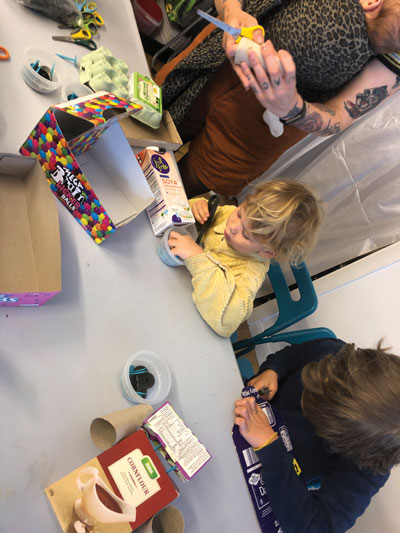
Stock up on versatile materials like paper, paints, cardboard, glue or even household items like pasta and fabric scraps. Open-ended resources encourage children to invent, design and build without strict instructions.
2. Encourage curiosity and questions
Instead of giving answers right away, ask them questions like, “What do you think would happen if…?” or “How might you solve this?” to inspire creative thinking and problem-solving.
3. Dedicate time for play
Unstructured play is a cornerstone of creativity. Set aside time where children can explore their interests, experiment and let their imaginations run wild.
4. Incorporate creativity into everyday activities
Turn daily routines into creative opportunities – designing patterns while setting the table, inventing bedtime stories together or cooking meals as a collaborative ‘art project’.
5. Celebrate effort, not perfection
Encourage children to take risks and try new things, emphasising that mistakes are part of the learning process. Celebrate the effort they put into their creations rather than focusing on the outcome.
6. Explore the arts together
Visit museums, attend performances or explore virtual art galleries. Experiencing creativity as a family can inspire children to pursue their own artistic interests.
7. Join workshops and community events
Look for local workshops or online classes to expand your child’s creative horizons.

Creative learning is a gift for life
In today’s fast-paced, tech-driven world, creative learning is more important than ever. It gives children a sense of agency, helping them navigate challenges and find joy in self-expression. Whether at home or in one of our workshops, nurturing creativity is a gift that lasts a lifetime.

Explore a world of imagination with Artpod. Visit Artpod’s website to discover workshops, events and resources that bring creative learning to life for your family. Together, we can inspire the next generation of thinkers, makers and dreamers. www.artpodbtn.com

lamb lying

Put a spring in your step

By Education, Family Farms, Forest School, Green
by Nicola Henderson
Godstone Farm

Spring is a season of renewal, vibrancy and life, offering the perfect opportunity to step outside and revel in the wonders of the natural world. A day outdoors in spring can provide numerous benefits, from enjoying the beauty of nature to boosting physical and mental wellbeing. In the UK, the changing landscape during this season is nothing short of magical, with blossoming flowers, lush green fields and the arrival of new life on farms. For families, especially those with children, spending time outdoors in spring can be an enriching and rejuvenating experience.

One of the most enchanting aspects of spring in the UK is the visible transformation of the environment. After the cold and often grey days of winter, the arrival of spring brings a burst of colour and activity. Trees begin to bud, flowers like daffodils, bluebells and tulips bloom in vibrant hues and wildlife emerges from its winter slumber. Parks, gardens and countryside trails become havens of beauty, offering a feast for the senses.

One of the highlights of spring is witnessing the birth of baby farm animals. Across the UK, farms open their gates to visitors, giving families a chance to see lambs frolicking in fields, calves taking their first steps and piglets nuzzling close to their mothers. These experiences not only delight children but also provide an opportunity to learn about the cycle of life and the care that goes into raising animals. Observing these scenes fosters a connection with nature and can leave lasting memories for both children and adults.

Physical activity is another key benefit of spending a day outdoors in spring. The milder temperatures and longer daylight hours make it an ideal time to engage in activities such as walking, cycling or playing sports. Exploring local parks, hiking trails or simply running around in open spaces can boost cardiovascular health, improve stamina and strengthen muscles. For children, outdoor play is essential for their physical development. Activities like climbing, skipping or playing ball games help improve coordination, balance and motor skills while allowing them to burn off energy in a fun and constructive way.

Beyond the physical advantages, spending time outdoors in spring has a profound impact on mental health and emotional wellbeing. The increase in natural sunlight helps regulate sleep patterns and boosts the production of serotonin, a hormone associated with happiness. The vibrant colours and dynamic scenery of spring are uplifting, offering a natural antidote to stress and anxiety. For children, the freedom to explore and interact with their surroundings nurtures curiosity and creativity.

One of the most remarkable aspects of spring is its ability to engage children in noticing the transition from winter. This shift is marked by the lengthening days, the warming air and the emergence of new life. Children can observe how trees that were bare during winter become adorned with fresh green leaves or how the once-frozen ground is now a carpet of wildflowers. These experiences provide valuable lessons about the changing seasons and the rhythms of nature. For young minds, this awareness can inspire a sense of stewardship for the planet and a deeper connection to the world around them. These shared activities strengthen relationships and provide a break from the distractions of screens and daily routines.

For parents, encouraging children to spend time outdoors in spring is an investment in their overall development. Outdoor play allows children to develop social skills through group activities and fosters resilience as they navigate challenges like climbing a tree or building a den. Moreover, unstructured play in natural settings stimulates imagination and problem-solving abilities, skills that are essential for their growth.

The benefits of springtime outdoor activities extend beyond children to adults as well. Gardening, for instance, is a therapeutic activity that promotes mindfulness and provides a sense of accomplishment. Walking or jogging amidst the beauty of nature can be a powerful stress reliever, helping to clear the mind and improve mood. Spring is a time to recharge and embrace the energy and vitality that the season brings.

In conclusion, a day outdoors in spring is an invitation to reconnect with nature, nurture physical health, and uplift the spirit. The unique characteristics of spring in the UK, from blooming flowers and baby animals to the gentle warmth of the sun, make it a season that beckons us to step outside. For children, the opportunity to play, explore and learn from the changing environment is invaluable, fostering growth, joy and a lifelong appreciation for the natural world.

As families venture outdoors this spring, they will find not only the beauty of the season but also the boundless benefits it brings to body, mind, and soul.

Godstone Farm in Surrey offers enriching outdoor experiences all year round and welcomes a variety of baby animals each spring. www.godstonefarm.co.uk

world

How to teach your children about the world around them – even when it’s doing its worst

By Early Years, environment, Forest School, Mental health, Relationships, Wellbeing
by Katie Harrison
Founder of Picture News

As our children grow, they become more aware of the world around them. Some events are sensitive and divisive, with global news often being unavoidable – including for children. Stories can be encountered online, on newspaper front pages, or via chatter in the playground. But what if the news didn’t have to be something to try to shield children from? As parents and carers, we can responsibly share current affairs with children, to equip them with tools to develop and learn from the world around them.

Make news discussions age-appropriate
Consider children’s age and developmental stage when planning your news discussions. You may wish to use visual content, including images and videos, but remember to vet these before sharing with children. For younger children, simplifying news events into relatable concepts, like being kind or unkind, fair or unfair can be effective. For older children, divulging more information can be appropriate. Reactions and understanding of news stories will differ for all children, but be confident that you know them best as you gauge how much information to share. News conversations can work well in the morning, to give children plenty of time to digest what’s happened, then reflect and share any questions or worries with you during the day.

Consider your role and influence
Be sure to observe and regulate your own reactions, language and behaviour when discussing news with children. As parents, we know children can be impressionable, and therefore may detect and emulate any fear or hatred they observe around them. We can responsibly ensure children mirror positive behaviour when discussing current topics. Try to maintain a healthy environment that is considerate and respectful. Think carefully about the language you use and try to stick to the facts. Be clear if parts of the discussion are your own thoughts, and be honest with children if you are unsure on a response to a question – you don’t have to know all of the answers! Instead, navigate the news together as events occur.

Help children work through their emotional responses
News stories can prompt emotional reactions for all of us. Some stories can dominate headlines and social media feeds or directly affect children, so it’s important to let them have emotional outlets in response. Children may bottle up how they’re feeling about events unfolding in the world, so making time to talk in a safe, familiar space can be of benefit. Give children a variety of tools to communicate how they feel; they might prefer to talk, write, or use creative approaches. You could use visual aids, discussions, post-it notes, emotion cards, smiley faces or art. Exploring how a news story makes your children feel can be a genuine opportunity to explore their understanding of emotions – what it means to feel an emotion, how emotions can change over time and how they manifest differently for everyone.

Support children to develop empathy
Current affairs contain a spectrum of opinions and experiences, which help children learn that we all hold different perspectives to be respected. This can support children in forging connections between themselves and others; by exploring other people’s experiences depicted in the news, children can build empathy, consider others, and practise relating to people. Such an awareness is a useful tool to help children become well-rounded, thoughtful citizens, who care about others.

Look for the positives together
Nestled within sensitive topics tend to be positive stories that follow. During times of hardship reflected in the news, we can often find examples of communities pulling together in response, which ultimately show our children lessons of morality, citizenship, and unity. So if you’re unsure how to approach a sensitive news topic with children, try sharing stories about more uplifting, responsive events that emerge. This helps you address heavier issues through an accessible, less unsettling lens. There are many positive acts that follow turbulent events we can share with children.

Inspire children to use their voice
Headlines are full of people using their voice to make a change – and children can do the same. Take the time to empower children to know that an awareness of what’s happening in the world can help them speak up as active citizens. The news is happening now, and with your support and guidance, children can act on their ideas and opinions. Whether it’s helping their community or writing letters, children can be encouraged to believe in their own ability to create positive change locally, nationally, or even globally.

There are many important lessons within news events that can help children grow and develop. Sharing the news with the younger generation comes with responsibility, but with the right tools and guidance, children can learn valuable lessons of citizenship, empathy and morality, whilst discovering the world they live in.

Katie Harrison is a former teacher and founder of Picture News, a supplier of teacher resources for creating engaging and exciting lessons about current affairs so children can learn about the world around them. For further information please visit www.picture-news.co.uk


forest school

Forest School- what is it all about and why is it so beneficial to children?

By Early Years, Education, environment, Forest School, Green

by Melanie Parr
Managing Director, Lymley Wood CIC

So many people are talking about Forest School at the moment, we thought it would be good idea to explain what it’s all about and why so many children benefit from a day out of the classroom, learning in nature. Forest School takes place in a woodland or natural environment and is aimed to support the development of a lifelong relationship between the learner and the natural world. Forest school is not just taking learning outside, it’s a unique and child centred way for children to learn using their innate curiosity about the natural world, animals and the joy of being allowed to get muddy!

The Forest School movement started in Denmark in the early 1950s as a result of a parent taking her own children and neighbours’ children to gather together in a nearby forest – an unofficial form of daycare which proved popular among other parents in the community. Arriving in the UK in 1993, today Forest School happens all around the world and in the UK has its own association (www.forestschoolassociation.org) that oversees the quality of provisions and provides training for Forest School leaders in order that the settings provide a well-planned, safe and inspiring curriculum for the children attending Forest Schools.

Forest School is a child-centred inspirational learning process, that offers opportunities for holistic growth through regular sessions. It supports play, exploration and supported risk taking. It develops confidence and self-esteem through learner inspired, hands-on experiences in a natural setting. This means that children attend regularly throughout the school year and the curriculum uses the changing seasons and the natural space to support learning. There is also a focus on helping children navigate the social and emotional aspects of learning and education, and for this reason, is a go to option for parents whose children may struggle at a regular school, or for those children who have special educational or additional needs.

Some schools, especially primary schools, have added Forest School to the timetable but nothing is quite the same as the children accessing a woodland space rather than a school field or small area in the school grounds. Forest School is not a ‘subject’. Rather, it’s that all subjects can be taught in a fun and meaningful way but outdoors, Forest School style, instead of in a classroom. If we want to achieve a holistic education that uses play and nature rather than prescribed separated ‘subjects’, then freedom to be allowed to learn at their own pace and guided by a child’s own natural curiosity is key. Maths outcomes can be achieved through counting dug up worms or collected leaves or acorns just as well as with traditional classroom resources. Art lessons using self-made natural dyes and paints, or by creating some ‘land art’ is a fun way to learn creativity. PE on a rope swing, tree climbing or an adventure playground in the trees is a great physical ‘lesson’. Learning history through digging in mud for ‘archaeological remains’ or making a traditional tool using stones and sticks – it really brings learning to life.

A quality Forest School provider will also support children to learn how to manage their own risk and understand their own physical abilities or limitations. This builds safety skills, resilience and a sense of achievement as the children have freedom to undertake personal and physical challenges in a way where they can make their own decisions and are not distracted by parents’ fear or safety concerns.

Sussex has some great Forest Schools and a setting such as Lymley Wood can also help with families who need to access funding for children who have an EHCP, as their Forest School is an alternative education provision.

If your children are home educated or on part-time timetables then looking at Forest Schools is a fabulous forest schoolingoption to engage them in their own education.

Mel Parr runs Lymley Wood CIC based near Five Ashes, in East Sussex. For further details please feel free to call 07951 257813 or visit www.lymleywood.co.uk