Category

Vision

Making the world more accessible – simple changes that help every child

By Early Years, Indepence, special educational needs, Vision

Every child experiences the world a little differently. Some notice sounds before sights, others need more time to process a busy room and some simply see things in a different way to those around them. While it’s easy to think of accessibility as something that only matters for a small number of families, many of the small changes that help children with sight loss actually make life easier, calmer and more inclusive for every child.

Organisations such as Blatchington Court Trust (BCT), which supports children and young people with sight loss and their families across Sussex, see this in practise every day: the adaptations that help one child thrive, often benefit the whole family or group around them.

Starting at home

Small adjustments around the house can make a big difference to a child’s confidence and independence. Using a dark plate on a light tablecloth, or vice versa, can help a child better distinguish their food, which is useful for children with sight loss but also for toddlers still developing their visual tracking skills.

Clear labelling on drawers, toy boxes and school bags, whether through bold print, symbols or textures, helps children find what they need without asking for help every time. Keeping shelves and walkways free from clutter reduces the risk of trips and bumps, and creates a calmer environment that benefits children with sight loss, autism, ADHD or simply those who are still learning to navigate their space safely. It might also prevent an afternoon in A&E!

Lighting matters too. Good, consistent lighting that avoids glare, harsh shadows or flickering can support a child with a visual impairment, but it also helps children with light sensitivity, migraines or other sensory sensitivities feel more comfortable at home.

Out and about

Narrating the world as you go, describing what you see on a walk, in the supermarket or at the park, helps a child with sight loss build a fuller picture of their surroundings. It’s a simple habit, but one that also supports early language development and vocabulary building in any young child.

When choosing places to visit, it’s worth looking out for venues offering tactile play equipment, quiet sessions or sensory-friendly hours. These features benefit children with sight loss, but are equally valuable for autistic children, anxious children or anyone who finds busy, unfamiliar environments overwhelming.

Giving children a little extra time to process new or unfamiliar environments, rather than rushing them along, is another small change that can ease anxiety for many children, not just those with a visual impairment.

Within the family

Family life often runs on routine, and predictable routines can be especially reassuring for a child with sight loss, helping them feel secure and in control of their day. Keeping mealtimes, bedtimes and daily rituals consistent, and talking through any changes in advance, benefits children with sight loss but also supports autistic children, who often find comfort and reassurance in familiar routines, as well as siblings and younger children who thrive on predictability too.

Involving siblings in small, everyday tasks, like describing a game as it’s being played, or taking turns to help set the table, builds understanding and teamwork naturally, without it feeling like a chore. Many families find that these small habits bring everyone closer together, rather than singling any one child out.

Supporting friendships and understanding

Accessibility isn’t only physical, it’s social too. Helping children understand and talk about differences in a natural, positive way encourages kindness and curiosity rather than awkwardness or exclusion. Giving a child with sight loss simple language to explain their own needs, such as “I see things a bit differently, can you describe that to me?”, builds confidence and helps friendships grow more easily.Encouraging clear verbal cues and turn-taking in group games ensures no child is left guessing what’s happening, making play more inclusive for everyone involved.

A change that benefits everyone

None of these adjustments are complicated or costly, but together they can transform a child’s everyday experience. What’s often overlooked is that changes made with one child in mind tend to ripple outwards, making homes, classrooms and communities more comfortable and inclusive for all children.

Blatchington Court Trust offers support and services – including activities, education advocacy, tech advice, family support, over 18 support and wellbeing support – across Sussex for children and young people aged under 30 with a visual impairment, and their families.

To find out more, visit: www.blatchingtoncourt.org.uk, call 01273 727 222 or find us on Facebook and Instagram.
A guide to your baby’s visual development

By children's health, Education, Safety, Vision

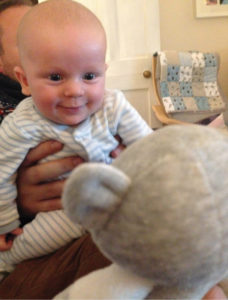
Once a baby is born they face a number of milestones, for example smiling for the first time and rolling over. We are told when their first tooth will appear and when they will have health visitor appointments but little is said about how their eyes develop and what their vision is like. At birth babies do not see as well as older children or adults. Their eyes and visual system aren’t fully developed, significant improvement occurs during the first few months of life.
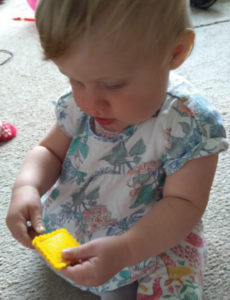
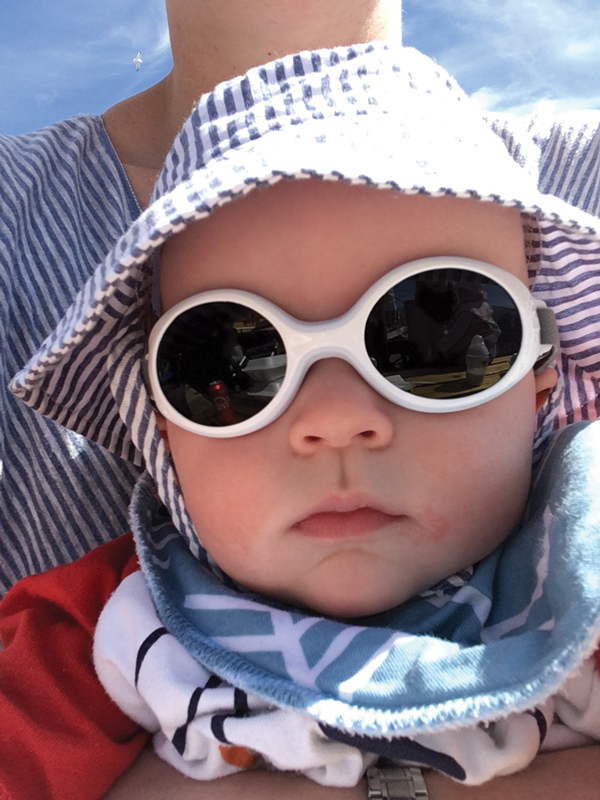
There are some milestones to watch out for in your child’s visual development. It is important to remember that not every child is the same and some may reach certain milestones at different ages. Babies born prematurely or with low birth weights are more likely to have vision problems. This is because their eyes miss out on the final stages of development towards the end of pregnancy.

Birth – 3 months:
Their vision is just starting to develop.
What to expect:
• Anything more than 20-30cm away from their face will just be a blur.
• Their world is black and white with shades of grey, as colour vision has not yet developed.
• They will only see large shapes, high contrast (big differences between light and dark) objects, bright lights and movement.
• They may only hold their gaze for a couple of seconds and will not be able to fixate with both eyes. It will be normal for their eyes to ‘wander’ at this age.

Things you can do:
• Develop that visual bond with them by trying to stay within 20-30cm when interacting with them – by
2 weeks they may start to recognise you. (Help them with this by not changing your appearance)
• Alternate sides when feeding to encourage equal visual development of both eyes.
• Use movements and bright contrasting colours (black, white and primary colours – reds, blues and yellows) in their room and with their toys to help stimulate their vision

3 – 6 months:
Depth and colour perception start to develop.
What to expect:
• They should start to watch and study their own hands as well as toys.
• They should begin to follow moving objects with their eyes and start to reach for things around them.
• Eye movement control and eye/body co-ordination skills steadily continue to improve – soon they can move their eyes without turning their head.

Things you can do:
• Help develop their eye tracking by talking to them as you walk around the room.
• Encourage visual development by frequently adding or changing and moving objects around their cot and room.
• Start to develop their visual memory by playing ‘peek-a-boo’ and similar games.
• Book their first eye examination at 6 months.

6 – 9 months:
What to expect:
• Their ability to hold attention increases.
• They should start to show interest in pictures, and recognise partially hidden objects.

Things you can do:
• Now is the time to start showing and reading simple books to them.
• Encourage the crawling phase – it helps develop better eye/hand co-ordination.
• Further develop their visual memory by playing ‘hide and seek’ with toys under a blanket then revealing them to them.

9-12 months:
What to expect:
• By 10 months of age, babies should be able to grasp objects with thumb and forefinger.
• They should be able to judge distances fairly well and throw things with some precision.

Things you can do:
• Play simple games like building blocks and rolling a ball back and forth. These help develop their grasp and also improves eye movement co-ordination and hand/eye co-ordination.

2 years onwards:
What to expect:
• Their eye/hand co-ordination and depth perception should be well-developed and their vision almost at adult levels.

Things you can do:
• We recommend that children should have their eyes examined annually.

NHS sight tests are FREE for children under 16

At all ages:
If you notice any of the following you should take your child to see a health professional as an evaluation is warranted as soon as possible.

• An opaque, white glow or white reflection in the pupil of an eye (the dark area in the centre of the eye.)
• A missing or altered ‘red eye’ reflection in photographs.
• Instances where the eyes do not appear to look in the same direction (a squint.)
• Watering, red,
sore or swollen eyes for no obvious reason.
• Drooping eyelids.
• A change in the colour of the iris (the coloured part of the eye) especially if only one area.
• Increasing sensitivity to light.
• You suspect that may be a deterioration in sight.

Please contact us if you have any concerns or questions. A PDF version of this is available upon request that can be added to your child’s
red book.

Barnard Associates is an established independent, Optometric providing clinical eye care, contact lenses and spectacle dispensing for over 30 years.
We recommend eye examinations for
all children from 6 months of age
or sooner if you have any concerns.
Our Optometrists specialise in
paediatric eye care ad have additional qualifications to provide visual assessments associated with dyslexia, dyspraxia, ADHD and learning difficulties – we welcome
any questions you may have
regarding your eye health.
Phone: 01273 77238
Email: reception@barnard-associates.co.uk


NHS sight tests are FREE for children under 16

Looking after your child’s eyes

By children's health, Education, Health, Safety, Vision


Francesca Andersson is an Optometrist at Barnard Optometrists in Hove. She has a two year old son and is passionate about children’s eye health and sharing information about good eye care. Currently one in five school age children have undiagnosed vision problems which could be interfering with their learning. Francesca would like to make sure parents have the correct information to protect their children’s eyes.

When should I take my child to the opticians?
The Association of Optometrists (AOP) recommend that all children should have a sight test around the age of three, but I recommend that children should have their first sight test at six months of age, or even as a newborn and especially if there are any concerns or family history of any eye conditions. This would enable us to pick up any eye conditions which can be treated earlier, particularly before they start school.

What happens during a sight test?
A sight test should be a good experience for a child; during the test we establish how well your child can see, if their two eyes co-ordinate well together and that there are no concerns with the health of their eyes.

Does my child need to know their letters?
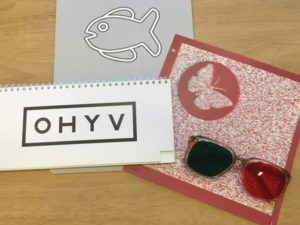
No, we have a range of vision tests we can use depending on the age of the child and how confident they are during the test. Some vision tests do not even require the child to talk at all, we just look at eye movements to determine whether or not they have seen the picture.

How much is a sight test?

Sight tests are free for children under 16 years of age and for anyone in full-time education under the age of 19.

How would I know if my child has a vision problem?
You may not! Sometimes there may not be any signs or symptoms that your child may be struggling with their vision as they themselves may not know that what they are experiencing isn’t normal. This is one of the major reasons that it is so important for them to have a sight test regularly. Some children will show signs of a problem.
For example:
• An eye turning in or out.
• Difficulty concentrating.
• Headaches.
• Sitting too close to the television.
• Frequent eye rubbing.

Why is it important for eye conditions to be picked up early?
Children’s vision continues to develop until they are around eight years old. This means we have until this age to correct their sight and any muscle weakness to allow the vision to develop normally. If left untreated it can lead to them having a lazy eye.

What should I look for when buying my child’s glasses?
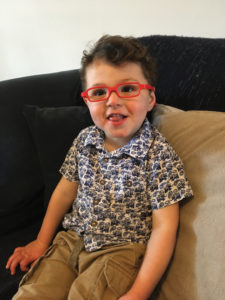
• A frame they like and are happy wearing.
• A good fitting frame that allows for growth.
• Soft plastic frames are advised for young children.
• A strap can be useful for active toddlers.

What can I do to protect my child’s eyes?
• Attend regular sight tests.
• Provide a healthy diet and plenty of water.
• Protect their eyes from the sun with a hat, suntan lotion on eyelids, good-quality sunglasses with UV protection and stop them looking in to the sun.
• Spend plenty of time outdoors – research shows playing outside for two hours is ideal for healthy eyes.

Can digital screens harm my child’s eyes?
Research shows that prolonged screen time can increase the progression of myopia (short-sightedness) so screen time must be balanced with time outdoors. There is no scientific evidence to show that blue light from screens can damage eyes but it can lead to poorer sleep if used before bed. Make sure digital devices are turned off at least an hour before bed.

If you have any concerns or questions please contact us and we will be pleased to advise you.


Barnard Associates is an established independent, Optometric practice providing clinical eye care, contact lenses and spectacle dispensing
for over 30 years.
Our Optometrists specialise in paediatric eye care and have additional qualifications to provide visual assessments associated with dyslexia, dyspraxia, ADHD and learning difficulties – we welcome any questions you may have regarding your eye health.
Phone: 01273 772 318
Email: reception@barnardassociates.co.uk