
Category

Theatre

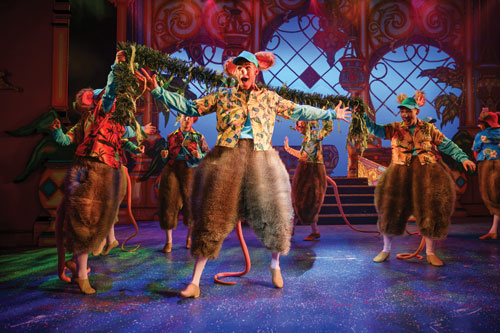
dicvk whittington actor

Is live theatre the key to empathy and academic achievement in children?

By Christmas, dance & Art, family, Music and singing, Party, Theatre

by Summer Jeavons
Yvonne Arnaud Theatre

During the past few years countless children have missed out on trips to the theatre – whether with their family or on school trips – due to the Covid-19 pandemic. Many things have changed during that time, but can we afford to let children and young people miss out on the experience of seeing live theatre? Dr Natasha Kirkham, a professor in Developmental Psychology at Birkbeck University doesn’t think so. She conducted a study in 2017 which that found taking children to see theatre can significantly positively affect their academic performance as well as allowing them to develop their social, emotional and cognitive skills.

In terms of the benefits of theatre on academic achievement and comprehension of set texts, seeing a play live in the theatre rather than on a screen has been found to improve children’s academic performance and engagement with set texts, as well as allowing them to achieve a deeper understanding and appreciation of the material. A two-year study conducted by the Brookings Institute found that increases in arts learning, such as engagement with theatre, significantly affect students’ school engagement, university aspirations and their likelihood of drawing on works of art as a means of empathising with others.

Exposing children and young people to theatre was also found to be a powerful tool for facilitating their self-efficacy (an individual’s belief in their capacity to act in the ways necessary to reach a specific goal) to promote positive social change, improving their ability to discuss complex and difficult subjects as well as developing their empathy.
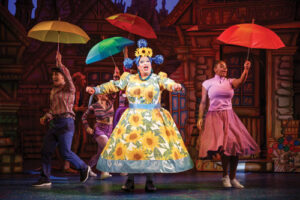
Children’s empathy and emotional intelligence are developed through everyday interaction but they are also nurtured by music, books, and in particular, watching live theatre performances. When watching characters interact on stage, we as the audience connect with them and experience what they are thinking and feeling as if we were thinking or feeling it ourselves – we are practicing how to understand others. Having a safe space to explore difficult emotions is essential to strengthening empathetic muscles and live theatre provides the perfect platform for this. Bill English, founder of the San Francisco Playhouse, states that: “Theatre is like a gym for empathy. It’s where we go to build up the muscles of compassion, to practice listening and understanding and engaging with people that are not just like ourselves. We practice sitting down, paying attention and learning from other people’s actions. We practice caring.”

Theatre nowadays is more accessible to children and young people than ever. With shows to cater for all ages – from theatre designed for babies and toddlers, to stage adaptations of the nation’s favourite children’s books – the world of the stage is increasingly one that children and young people are welcomed into and inspired by. For older children and teenagers, theatre can start to rationalise and provide context to the complex world around them, often representing their own experiences and allowing them to feel heard and that their voices have value. At a time when they are likely to be struggling to establish their identity, theatre can be absolutely invaluable.

Taking your family to the theatre can be a fantastic way of making lasting memories and spending real quality time together. For children (and grownups!) going to see a play feels like something special, something out of the ordinary. Whether it’s the grandeur of the building itself, finding your red velvet seats or begging for a tub of ice cream in the intermission, the experience of going to the theatre is something unique before the play has even begun.
And when it comes to Christmas, there’s nothing quite as magical as taking the kids along to see a festive pantomime. Local pantos have become an institution for many families, coming along every year for adventures with all the sparkles, songs and slapstick silliness you could ask for with everyone from children to grandparents in tow! At a time when everyone is being brought together, there’s nothing quite like a panto to get the whole family humming festive tunes and full of cheer ready for the big day. With true love, a comedy dame, a grand adventure, spectacular dance routines and a heart-warming moral at the core of the story, there’s something for everyone.

Whatever age your kids are, there is always something valuable to be found from seeing theatre. Whether it’s engaging their imaginations and allowing them to dream, opening their minds to others’ perspectives or helping them to engage with and enjoy the texts they are studying at school, the experience of seeing live theatre is unequalled.

The magic of pantomime is something the whole family can enjoy and at the Yvonne Arnaud Theatre it’s always wonderful to see multi-generational families in the audience. The theatre has lots of upcoming family shows, including festive panto Jack and the Beanstalk! www.yvonne-arnaud.co.uk
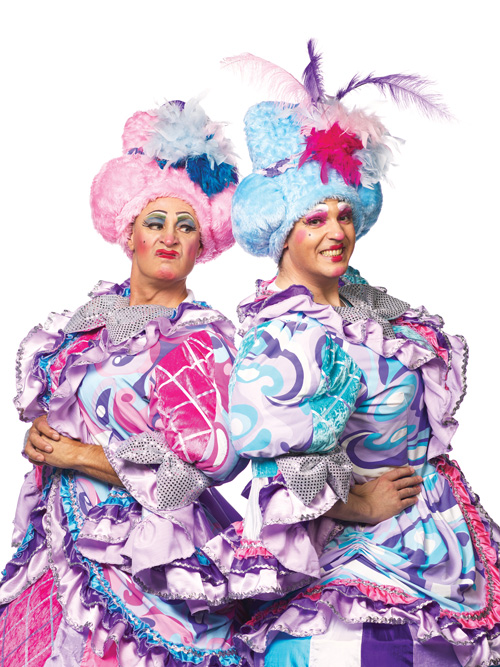
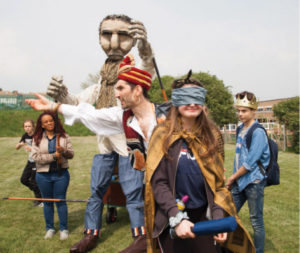


ugly sisters

The power of panto!

By Christmas, Comedy, dance & Art, family, fun for children, Theatre

by The Capitol, Horsham
images by Toby Phillips Photography

For many children the only time of year they will visit their local theatre is to see a pantomime, often as a school trip, so it’s important their experience is a good one and one where some lifetime memories will be made.

Can you cast your mind back and remember the first ever pantomime you saw?

The magic of live theatre is as salient for children as it’s ever been, providing time away from screens, mobile devices and their day-to-day world into a place which is new and exciting, lots of fun and encourages imagination.

Pantomime provides a chance for children to come together with all generations of their families to see a live show which will make everyone laugh, sing along and feel happy.

The word ‘pantomime’ comes from the Greek word ‘pantomimos’, which meant a dancer who acted all the roles in the story. Pantomime, as a type of theatre, originates from ‘Commedia dell’Arte’, a 16th-century Italian entertainment which used dance, music, tumbling, acrobatics and featured a cast of mischievous characters including a Harlequin, a mute, quick-witted rascal who carried a magic bat, wore a mask and dressed in clothes made of patches.

Until 1843, theatre licensing restricted the use of spoken word in pantomime. The Theatres Act lifted the restriction, allowing any theatre without a royal patent to produce a play with dialogue.

Today the basis of a good pantomime has a storyline of good versus evil often derived from a fairy tale or nursery story. It includes colourful costumes, dancing, topical jokes with good measures of slapstick comedy, special effects and, of course, lots of audience participation.

Audience participation is important as it offers the chance for children to interact with the cast and the rest of the audience who are encouraged to boo the baddie, argue with the Dame and warn the Principal Boy the villain is near them by shouting out “He’s behind you!”

From daylight into darkness through the entrance doors, a theatre provides a sensory experience – the background music in the foyer, the smell of popcorn and pyrotechnics, the velvety feel of the theatre seats, the excitement building up to the curtain rise, flashing lights, glittery scenery and a tasty ice cream during the interval.

It’s a chance for children to see scenes brought to life with magical characters, fairies, heroes, heroines, eccentric costumes and to see things they would normally only read about in books or see in films.

Studies have proven that people who visit theatres as children are more likely to book theatre tickets throughout their adult lives broadening their cultural outlook.

In theatre and drama classes, pantomime can help develop nonverbal communication, concentration and the ability to put action and thought together. Pantomime can be incorporated in most lesson plans to encourage the students to engage in some fun and learn at the same time.

The theatre is a powerful space and can have a massive impact on a younger audience. Some children are completely overwhelmed by it all but others become curious and want answers to lots of questions: “How can I get up there to sing and dance?” “How do those lights work?” “Where does the sound come from?” “How did the baddie just ‘disappear’ off stage?”

A visit to the theatre can often spark an interest which leads to a hobby or even a pathway to a career. Drama generally builds confidence and helps concentration, develops language, communication skills, coordination and emotional intelligence helping children to understand the world around them.

With theatres being closed for such a long time during the COVID pandemic, it made many of us realise how much we missed it when it was swiped from our day-to-day lives.

Matthew Effemey, Venue and Operations Manager at The Capitol, Horsham where Cinderella will run from 8-31 December said “It’s a great responsibility to introduce the joy of pantomime to a younger audience at an impressionable age, so a good theatre must ensure that the overall experience is one to remember.”

Cinderella will run from 8th -31st December at The Capitol, Horsham www.thecapitolhorsham.com


Art saves lives

By dance & Art, Education, family, fun for children, Mental health, Music and singing, Playing, reading, Relationships, Theatre
by Eleanor Costello
Brighton Dome and Brighton Festival

Young people face new challenges every day. From navigating the complexities of an ever-changing Internet culture to fighting for their future in an era of climate crisis. Art provides opportunities for everyone to make sense of the world, to test our boundaries and let our imagination thrive. Children benefit from having the opportunity to read books, go to theatre shows and to make their own art.

The acclaimed poet and Brighton Festival 2020 Guest Director, Lemn Sissay said; “Art saves lives, it literally saves lives. Art is how we translate the human spirit. That’s why you have art and religions. That’s why people sing. That’s why we read poems at funerals and weddings, we need some bridge between the spiritual, the physical, the past, the present, the future.”

Through events like Brighton Festival, young people can explore, discover and participate in the arts. For 30 years the Children’s Parade has officially marked the start of Brighton Festival, with over 5,000 participants, including 3,473 school children, stepping into show stopping costumes they have designed and made themselves. Around 10,000 people come along to see the parade and be part of the largest annual children’s event in the UK. The parade is a unique event produced by community arts organisation, Same Sky, which offers thousands of young people the chance to come together in creations they’ve designed around a central theme, giving them a sense of belonging. In 2020, the Children’s Parade theme is Nature’s Marvels, offering a platform for participants to think more about the world and environment around them.


Stories fire the imagination, invite us to empathise with and understand others, give children the creativity needed to face the world and even the tools to change it. Young City Reads is an annual Brighton Festival and Collected Works CIC reading project. A book is selected for primary school children in Brighton & Hove, Sussex and beyond to read and discuss, culminating in a final event with the book’s author at the Festival in May. In 2019, over 3,000 pupils took part in free weekly activities. For 2020, the chosen book is Malamander by Thomas Taylor, featuring a daring duo Herbert Lemon and Violet Parma who team up to solve the mystery of a legendary sea-monster. This is a chance for schools across the county to foster a love of reading in young people and give support to teaching staff to think outside the box with their curriculum.

Hilary Cooke, Brighton Festival Children’s Literature Producer says; “Children’s book events are an opportunity to turn the private activity of reading into a shared experience. Being in a room with a new (or favourite) author and a group of young readers is quite magical, with laughter, imagination and surprise. Illustrators drawing live on stage create another layer of creativity that is beautiful to watch (and possibly my favourite thing).” Due East, Hangleton and Knoll Project and the community steering committees enable local residents to make their vision come to life in Our Place, a Brighton Festival event that has been running for three years. Pop up performances take place across Hangleton and East Brighton with a community event in each area. Seeing arts and culture being celebrated and given a platform in their own neighbourhood opens the door for young people to think differently about the places they live in.

Brighton Festival offers opportunities for young people in Brighton and beyond to experience groundbreaking, original and spectacular performances by international artists. Australian company, Gravity & Other Myths bring a new jaw-dropping circus show bound to blow the minds of aspiring acrobats, Drag Queen Story Time gives children the opportunity to be who they want to be with a LGBTQ friendly storytelling, and hilarious theatre show Slime allows two to five year olds to squish and squelch their way through a tale about a slug and caterpillar.

May is a time of spectacular celebration across the county, with Brighton Fringe, The Great Escape, Artist Open Studios and Charleston Festival in addition to Brighton Festival’s jam-packed programme.

Supporting the next generation of art-goers is integral to Brighton Festival’s spirit and this year’s programme aims to bring a variety of events for children and young people – from infants to Instagrammers. Children of all ages can discover, create and participate in the arts, giving them unexpected and enriching experiences that can be shared with their friends or family. Many events are free, others starting as low as £5 and there are often family offers so the whole clan can come along.

Head to www.brightonfestival.org today to find out what’s happening at Brighton Festival from 2nd to 24th May 2020.

theatre boy popcorn

Enjoy the show!

By dance & Art, family, Music and singing, parties, Playing, Theatre, Uncategorized

We are lucky enough to have some fantastic theatres in the county and it is important to support local theatres if we want to keep them around. Some of our theatres have some wonderful shows on for children over the next few months so it’s a great time to visit them.

Seeing a live show is an escape from daily life for a couple of hours – whatever your age. Children can fully immerse themselves in what they are seeing on stage. Apart from the pure enjoyment of seeing a show there are many other benefits of taking your children to see a show.

Seeing a live performance encourages children to be more empathetic and to put themselves in the shoes of others. They can imagine how it will feel to have the family of the boy on stage, or what it feels like to be a soldier, or even to live as a refugee. Theatres encourage you to step into the shoes of a character – building empathy, understanding and inclusivity.

Many of today’s theatre shows stem from books. For children who have read the books, there’s nothing quite like watching their favourite characters come to life. It’s also a great way to expose children who haven’t read the books to some fantastic and imaginative literature.

Lots of new shows that are aimed at children tackle issues that children many find hard to talk about such as mental health, friendship, sense of belonging, bullying and family breakdowns. You will be amazed at some of the conversations that seeing a show can prompt. Taking children to the theatre can give parents a way to explore difficult themes together and a way to begin those vital conversations.

For little ones, theatre is simply a lot of fun. There’s so much to watch, sing along to and laugh along with. Even if children are too young to understand verbal dialogue they will still be stimulated by the visual side of the show and shows that are aimed at toddlers will be deliberately short and more interactive with lots to keep young children stimulated.

Some parents find taking their children to the theatre a daunting experience; will they be able to sit still long enough? Will they be quiet and what happens if they need the toilet during the show? When theatres put on shows for children, they realise that you can’t predict
how your child will behave and are far more accepting of the odd interruption from a child who needs the toilet or who can’t manage to sit down for that long.

Shows for children usually have age recommendations. These aren’t set in stone and act as a guide for how old audience members should be. These recommendations act much like certificates for films, but also give you a sense of whether your child will understand the plot of the show.

Get children excited about going to the show in advance and talk to them about the kind of behaviour that is expected. Make sure you arrive in plenty of time for the inevitable toilet queues and to get settled comfortably in your seats.

Many theatres now offer relaxed performances for children with autism who may find a show too overwhelming. During these performances, the house lights often stay up, loud noises are made quieter and there’s sometimes a chill out area to sit in if children find it too much to take in.

A trip to the theatre should be accessible to all, and theatres are working hard to make theatres welcoming and enticing for children. A theatre show provides an escape for all ages and you get to sit back while someone else is in charge of the entertainment!

Encouraging play

By dance & Art, Education, family, fun for children, play, Relationships, Sport, Theatre, Uncategorized
by Claire Russell
founder of PlayHOORAY!

Have you ever thought about how you can better encourage your child to play more effectively? Now, we don’t all live in an ideal world, our homes have to work for many different things, as well as look nice, but there are a few simple tricks we can apply to create a more playful home.

• Turn off the TV and keep distractions to a minimum when your child is playing.

• Keep resources to hand and ensure your child knows where they are, helping them to become independent and not rely on you to find the answers.

• Teach your child how to do an activity first. Don’t assume they know how to take on the role of a shopkeeper despite the numerous times they’ve been to the supermarket with you!

• Go with the flow. If you set up an activity for your little one, but they do something totally different to what you’d intended, that is absolutely fine. Support them and encourage them to follow
their own initiative!

• If they have enjoyed playing with a particular activity try leaving it out for them to access when they want for at least a week. If you don’t like the mess, perhaps you can throw a tea towel over it?

• Praise your child for their play, the way they play and what they are doing, reassuring your child and showing them how much you value their play. After all, it is supporting their development!

• Try not to interrupt your child when they are focusing, if it can wait then let it. Young children can only concentrate for small amounts of time, so you’ll probably only be waiting for a few minutes anyway!

But what exactly should you be doing when your child is playing?
In reality, there are some days when you want your little one to play to occupy themselves so that you can take a breather because, let’s face it, it’s exhausting being a parent and its important to prioritise looking after yourself! And there are those days when you have a list as long as your arm and you just need five minutes to get jobs done or make dinner. And that’s fine too, honestly it is. We all do it! But then there are days when you do have time, you do have a flicker of energy and you have the headspace to support your child as they play – great! When that occurs, there are many things you can do that will support their development:

• Sit by your child, giving them a sense of security, reassuring them that you’re in sight while showing them that you value their play.

• If they invite you to play with them, copy them. Don’t take charge, just do what they do and let them take the lead.They will love it!

• When you feel you can, talk about what you are doing. You might feel a bit silly doing it but you are teaching your child how to play. Use words they may recognise but introduce new vocabulary too. Tell them what you like, dislike, your favourites and give reasons. Your child may offer their opinion or they may not. There’s no pressure!

• As your child plays, as long as you don’t think it will break their concentration, comment on what they’re doing. Suggest a few things you like about their playing, for example: “I like the way you are stacking the bricks to make a tall tower. I like the way you are trying to get that to stick. I can see you are persevering.”

These show your child that you value what they are doing. Your child may choose to tell you about their play and may begin running their own commentary.

These are just a few ideas you can implement to encourage play. You don’t have to do them all, try a few and see if it makes a difference.

Happy playing!

Mum to one and Early Years Specialist, Claire Russell is founder of playHOORAY! and the designer of playPROMPTS activity cards designed to equip parents with realistic, fuss-free play ideas. For further information please visit www.playhooray.co.uk

Live is best

By dance & Art, fun for children, Music and singing, Theatre

With the summer holidays around the corner, there is a bit more time to treat children to a trip to see a live performance at your local theatre. Younger children will enjoy a show during the day, and you can take older children in the evening without worrying so much about getting them to bed on time.

Many theatres have more shows on for children during the school holidays and may also run workshops for those who want to get more involved.

Live theatre can be a magical and memorable experience but recent research by Birbeck, University of London, has also shown that taking youngsters to watch a theatre performance could provide a host of developmental benefits, including improved emotional intelligence and opportunities to discuss difficult subjects.

It is now widely accepted that play-acting and role-play is a fundamental part of development, allowing children to engage in different personalities, work their way through complex social relationships and navigate emotional issues. Watching a live performance can offer some of the same benefits. Many of the shows aimed at children have an under-lying moral message and subjects such as love, friendship and bullying are often explored in a fun and safe environment, which can bring about unexpected but important conversations once the show has finished.

Going to the theatre as a family is also a great bonding experience. Parents don’t have to worry about entertaining their children (it’s being done for them on the stage) and everyone can relax, sit back and enjoy the show together. There are all sorts of shows on at local theatres during the summer. Some shows are for the very young and are short and interactive to keep little ones engaged, while others are full length plays aimed at older children. Many shows are now based on children’s favourite books such as The Very Hungry Caterpillar or books by David Walliams or Jacqueline Wilson. There are also live performances and sing-a-longs of films such as Frozen or children’s favourite television shows. These can be a good first introduction to the theatre for young children as they will be very familiar with the story and characters.

In order to get the most out of any show, get children excited and looking forward to the show in advance. If the show you are going to has a soundtrack, you could listen to it in advance. This is a great way to get children familiar with the show without overloading them with too much information. If you know the basics of the story, you could tell it at bedtime the night before so children will know what to expect, but family-friendly shows are normally easy to understand.

Going to see a live performance is a truly memorable experience and it is a wonderful way to spark a child’s imagination – you never know where it may lead them!

Kids Week in the West End

Kids Week in London is a wonderful opportunity to see a West End show.
The price of West End theatre shows puts it out of reach for many people, but Kids Week makes it far more affordable and is a way of encouraging families to go to the theatre.

A child aged 16 or under can go free to any participating show when accompanied by an adult paying full price, and you can buy up to two extra children’s tickets at half price. And there are no booking or postage fees to pay! It has proved so popular that it is no longer just on for a week, but for the whole of August.

Tickets are now on sale. The top shows sell out very quickly, but you can normally pick up tickets for the lesser known shows fairly easily and perhaps see something that you may not normally go to.

For further details go to www.officiallondontheatre.com/kids-week

Come and have a laugh – feel like you again…

By Comedy, Theatre
by Alyssa Kyria (aka The Funny Mummy)
comic and co-founder of Bring Your Own Baby Comedy

I was too scared to leave the house when my daughter Lola was tiny. I would breastfeed for hours and she’d still be hungry. I felt judged when I got out a bottle, and once my nipple shields flew across a restaurant when I was trying (and failing) to feed her! I was worried that I wouldn’t be able to change her, feed her, or park the buggy, so a lot of the time I stayed home by myself.

Once Lola was a bit older I set up Bring Your Own Baby Comedy with my friend Carly. We wanted to create a place that I really needed when Lola was tiny, so we started lunchtime comedy clubs where you can bring your baby along. Somewhere I could have breastfed uncovered if I wanted to (I was always hiding under a huge poncho) or whip out a bottle to feed my baby without being judged. The day my nipple shields flew across a restaurant (a bit like Julia Robert’s snail in the scene in Pretty Woman) really was not my finest moment! We wanted somewhere everything that a parent trying to keep a tiny human alive needs: buggy parking, toys, soft flooring and a helping hand. But most importantly, somewhere we can go to laugh and not have to ‘wind the bobbin up’ (and wind it back again). A place we can feel like ourselves again.

If you would like to laugh and feel like you again (while being able to do whatever you need to look after your baby) come and see us.

We provide the best comedy in the UK at daytime shows for parents and their babies. When I became a mum, I found that I was ‘mumsied’ a lot – so we didn’t want to do that – our comics use adult content as the show is for the parents. I, personally, was about to jump out of a window if I had to sing ‘Wheels on the bus’ while sitting cross-legged with a group of exhausted and fake smiley mums one more time! So nursery rhymes are banned.

If you fancy a bit of a break from the standard baby group, then come and see us and have a laugh. Our shows are monthly on a Tuesday at midday at the Komedia, Brighton. Tickets are £11 in advance (babies get the laughs for free!) Please note we have a 12 month recommended age limit for our little laughers, as our comics perform their usual material.

www.byobcomedy.com