
by Richard Wilson, Buzz Active
For parents, teachers and youth leaders seeking to enrich educational experiences, outdoor learning offers a powerful pedagogical approach that extends beyond the traditional classroom. As education increasingly values resilience, character and life skills, outdoor activity centres work regularly with groups to develop these attributes through engaging, adventure-based experiences.
The evidence base: Why outdoor learning matters
The benefits of outdoor learning are well established in research. A major review of 150 studies found strong evidence that well-designed, planned and taught outdoor learning experiences provide significant added value to classroom education, supporting development across cognitive, affective, and social domains (Rickinson et al., 2004).
More recent reviews confirm these findings. Research published in the Journal of Adventure Education and Outdoor Learning shows that most forms of outdoor learning positively affect young people, particularly when programmes are sustained and include preparation and follow-up (Fiennes et al., 2015). Outdoor adventure learning has been shown to improve attitudes, self-perception, interpersonal skills and social effectiveness.
The six foundations of character development
Activities are intentionally designed to develop six key character attributes that underpin personal growth and long-term success. These closely align with capabilities widely recognised as essential for thriving in the 21st century.
1. Confidence
Outdoor activities encourage young people to step beyond their comfort zones and recognise their own capabilities. Achievements such as mastering sailing skills or completing a climb, build self-belief. The Educational Endowment Foundation reports that outdoor adventure learning can positively influence self-efficacy and motivation, with potential transfer to improved classroom engagement.
2. Teamwork
Outdoor settings naturally foster collaboration. From canoeing to leadership challenges, success depends on communication and cooperation. Research shows that collaborative outdoor tasks strengthen interpersonal skills and social interaction, helping young people work more effectively with peers and adults.
3. Communication
Clear communication is essential outdoors, whether giving instructions on the water, problem-solving as a group, or maintaining safety during climbing activities. These experiences develop listening and expressive skills that transfer directly to academic, social and workplace contexts.
4. Resilience
Outdoor pursuits involve challenge and occasional failure. Persisting with windsurfing or completing a high ropes course teaches determination and perseverance. Research indicates that overcoming outdoor challenges strengthens resilience and adaptability – skills that remain valuable throughout life.
5. Creativity
Outdoor environments demand flexible and innovative thinking. From navigating an orienteering course to adapting paddle sport strategies in changing conditions, participants use creativity to solve problems. Studies suggest that engagement with nature enhances creative and critical thinking, fostering imagination and innovation.
6. Independence
Outdoor learning offers rare opportunities for genuine autonomy. Taking responsibility for a sailing dinghy or choosing a climbing route teaches decision-making, risk awareness and accountability. For many young people, especially those with limited access to such experiences, this development of independence is particularly powerful.
The RYA OnBoard Programme: Evidence in action
The Royal Yachting Association’s OnBoard programme provides strong evidence of outdoor learning’s impact. Research by the Institute of Education at University College London studied 371 young people aged eight to 17 from schools and sailing clubs.
The study, Children and Sailing, found that OnBoard effectively develops the six character attributes of confidence, communication, teamwork, determination, creativity and independence.
Key findings included:
• Almost all participants reported enjoyment, fun, and a sense of freedom.
• Increased confidence, relaxation, and peer support.
• Significant contributions to personal and social development, including maturity and responsibility.
• A positive impact on social equity by providing unique opportunities for young people from disadvantaged backgrounds.
As RYA OnBoard Operations Officer Hannah Cockle explains, being on the water creates safe but challenging situations that support the development of crucial character attributes for life success.
Translating research into practice
These principles should be embedded in all provisions with each activity delivered with intentional learning outcomes and facilitated reflection:
• Sailing and windsurfing: Confidence through skill
mastery, teamwork through coordination and independence through helming.
• Paddle sports: Determination through physical challenge, communication through synchronisation and creativity through route planning.
• Team leadership games: Explicit development of teamwork, problem-solving and communication.
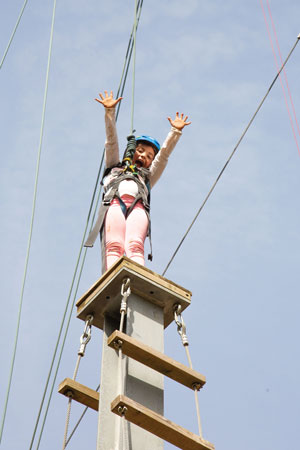
• Climbing and high ropes: Confidence, persistence and personal responsibility.
• Target sports: Concentration, confidence through improvement, and independent self-assessment.
• Forest or beach school activities: Creativity, exploration of the natural world, appreciation and education of the environment, connection to nature and development of practical skills.
Qualified instructors ensure that activities become meaningful learning experiences rather than simple recreation.
Making outdoor learning accessible
High-quality outdoor learning has the potential to level the playing field. Research shows that many young people – particularly those from disadvantaged backgrounds – have limited access to nature and adventure. Outdoor programmes provide experiences that build resilience, motivation and self-confidence, helping shape more positive life trajectories.
Practical considerations for educators
Research highlights several factors that maximise impact:
• Duration: Sustained or longer-term programmes deliver greater benefits than one-off visits.
• Preparation and follow-up: Intentional reflection helps transfer learning to other contexts.
• Safety and support: Qualified providers balance challenge and safety.
• Inclusive design: Effective programmes ensure accessibility and success for all participants.
The lasting impact
The benefits of outdoor learning extend well beyond the activity itself. Educators report improved concentration, behaviour and engagement upon students’ return to school. More importantly, the character attributes developed – confidence, teamwork, communication, resilience, creativity and independence – become lasting assets for education, employment and personal life.
As one OnBoard participant reflected: “This week, I did not just learn how to sail, I learnt self-belief and bravery.”
Outdoor learning is not simply enrichment – it is an essential educational approach. By embedding character development through well-designed experiences, providers complement classroom learning while equipping young people for modern life.
The evidence is clear: outdoor learning works. It engages, builds character and creates lasting positive impact. In a world of growing pressure and uncertainty, investing in outdoor learning is a real investment in young people’s future.
Buzz Active, Royal Parade Eastbourne, Bushy Wood Scout Activity Centre and Seven Sisters Country Park.
info@buzzactive.org.uk www.buzzactive.org.uk