

Category

Home educating

fun food for kids

From beige to brave

By Food & Eating, fun for children, Home educating
by Samantha Forrest
nutritionist and founder of Fussy Food Plates

Building food confidence in children through sensory play and visual tools

Many parents worry when their child seems stuck eating only beige foods like toast, pasta, crackers or chicken nuggets. While it can feel frustrating, this behaviour is common and often has less to do with fussy behaviour and more to do with how children process the world around them.

As a qualified nutritionist and mother of three, I’ve worked with lots of families who are exhausted from mealtime battles. They want to encourage healthy eating but feel like nothing works. What many do not realise is that the key to change often lies not in what’s on the plate but in how children are supported to explore food on their own terms.

Beige foods are predictable. They usually have a soft texture, mild flavour and a familiar appearance. For many children, especially those with sensory sensitivities, predictability feels safe. Bright colours, mixed textures or strong smells can be overwhelming. For a child who is already anxious or sensitive, even a small change to their usual food can trigger a complete refusal.

Children who are considered fussy eaters are often simply children with heightened sensory responses. Understanding this is the first step in helping them move from beige to brave.

The goal in these situations is not immediate variety, it is building food confidence. A child who feels relaxed, curious and in control around food is far more likely to try new things over time. Confidence comes before acceptance. That confidence is built through play, exposure and removing pressure from the eating experience.

Sensory food play allows children to interact with food using all of their senses, not just taste. This might include touching, smelling, listening, squashing or simply observing. The key is removing any expectation to eat. When the pressure is off, the nervous system remains calm. Calm children are curious and curiosity is where progress begins.

You do not need complicated activities to get started. Simple ideas can work beautifully. Try offering food builders like stackable cubes of cheese or cucumber. Present dips in a tray with familiar foods and let your child play. Invite them to create food faces or pictures on their plate. Make it fun. Let them squish, lick, roll or even mash their way to familiarity. Remember that touching and smelling count as progress.

Visual tools can also play an important role. Children feel safer when they can clearly see what is on offer. Fun plates, separate food items and consistent routines can help reduce anxiety. When foods are not mixed or hidden, children feel more in control.

You can also build food confidence away from the table. Get children involved in shopping, washing vegetables or helping with food prep. Read books that feature food. Watch age-appropriate cooking clips together. Every exposure counts, even when no eating happens.

One of the most common questions I am asked is how to get children to just try a bite. It is a natural instinct for parents to want to nudge their children forward. However, pressure often backfires. When a child feels forced to eat, their stress response is triggered. This shuts down curiosity and makes future progress harder.

Instead, shift the language. Try saying “You don’t have to eat it” or “You can explore it with your hands today”. Give them space to come to the food on their terms. Over time, this builds trust and, with trust, comes progress.

It is important to remember that every child’s timeline is different. For some, progress may look like tasting a new food within a few days. For others, it might take weeks of touching and smelling before they feel safe enough to take a bite. Both are valid.

From beige to brave is not a sprint. It is a gentle, supportive journey that prioritises confidence over control. By creating a safe and playful food environment, we help our children develop a healthier relationship with food. This is not about forcing broccoli. It is about helping them feel calm, curious and in charge.

When we stop focusing on what children eat in the moment and instead focus on helping them feel good around food, change begins. It may be slow, it may be messy, but it is always possible.

Samantha Forrest is a qualified nutritionist and founder of Fussy Food Plates, supporting families to reduce mealtime stress and build food confidence. For more information please visit www.fussyfoodplates.com
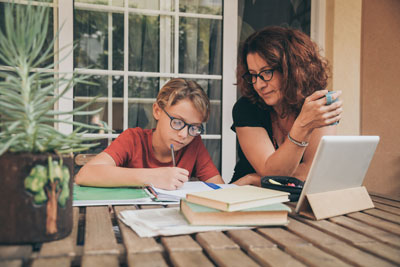

 

home educating

A beginner’s guide to home education Getting started with confidence

By Education, Home educating
by Emma Chessell
Mum and home educator

Home education is on the rise globally, with more families than ever choosing to take learning into their own hands. From the US to the UK, numbers have grown steadily in recent years, accelerated by the pandemic, but continuing as parents recognise the flexibility, freedom, and personalised learning it offers.

For centuries, families were the architects of their children’s education. Parents decided what, when and how their children learned. School as we know it is a relatively recent social construct. For most of human history, formal schooling didn’t exist, yet people thrived, became literate, passed on knowledge to develop skills for life. Today, home education offers a viable, enriching alternative that puts families back in control.

Why home educate?
Home education allows for tailored, enriched experiences that keep curiosity alive instead of being dulled by a one-size-fits-all curriculum. Real education comes from doing, questioning, exploring and creating, not just memorising facts.

History proves the power of home-schooling. Thomas Edison, Agatha Christie, Albert Einstein, Nelson Mandela and Beatrix Potter to name only a few were all educated outside the traditional classroom. Their achievements show that freedom in learning can cultivate extraordinary potential.

And I know this first-hand. I was home educated myself, and today my children are the second generation in our family to learn this way. Far from holding me back, it gave me the independence and resilience to succeed, in college and in my career as a HR Business Partner. It also gave me the courage to step away from other social norms, to carve my own path, and to become a multiple business owner – proof that home education can nurture not just academic success, but the mindset to thrive in an ever-changing world.

The legal landscape
In England, home education is not only legal, it’s the default. Parents are responsible for ensuring their child receives an education and sending them to school is only one way of meeting that duty. You don’t need to be a teacher, follow the national curriculum, or seek formal approval. What you do need is the willingness to invest time, creativity and care into shaping your child’s learning journey.

Socialisation: Busting the myth
One of the biggest misconceptions is that home-educated children miss out socially. When in reality, they are often more immersed in society than their schooled peers. Home-educated children are out in the community daily at clubs, workshops, libraries, museums and parks interacting with people of all ages.

In Sussex, the home education community is thriving. Facebook groups are full of meet-ups and opportunities, from Forest School and science workshops to music, drama, swimming and sports to name only a few examples. With home education on the rise many venues have now seen a need to accommodate home educators and as such now offer dedicated home education sessions and discounted rates.

These children aren’t hidden away; they are growing up confident and comfortable in the real world.

How to get started
If you’re considering home education, here are some first steps to consider:
1. Build community and connect. Join local and national Facebook groups for advice, events and support.
2. Explore resources.
• BBC Bitesize – free online lessons covering the national curriculum.
• Twinkl – downloadable worksheets, activities and unit studies.
• The Artful Parent – ideas for art and creativity at home.
• Your local library and museums – often run free or low-cost educational activities.
• Don’t forget simple resources too: kitchen scales for maths, nature walks for science, board games for strategy and literacy.
3. Choose your approach. Some families prefer structure, others embrace ‘unschooling’. Most fall somewhere in between. There’s no right or wrong, only what works for your child.
4. Keep light records. Not legally required, but helpful for tracking progress and boosting confidence.
5. Start simple. Reading together, nature walks, messy play, arts and crafts, dance or following your child’s current obsession are excellent ways to begin.

What are the costs of home education
You do not have any obligatory purchases, what you spend is entirely up to you and what you can afford for your family. Don’t rush in and buy lots of resources, take time to observe how your child likes to learn and what you think would fit their needs best. Home education is only as expensive as you want it to be. There are so many free and low-cost resources available and lots of attractions now offer home education rates. Many museums are free, and if your budget allows, a National Trust membership is a brilliant investment. Websites like The School Trip are also a great place to find discounted entry and home education days. Over the past year alone, we’ve enjoyed home education rates at Winchester Science Centre, Amberley Museum and Marwell Zoo and for educational trips to London for special events and workshops. You really can spend as much or as little as your budget allows.

Building confidence
The biggest hurdle for many parents is trusting themselves. We’ve been conditioned to believe education can only happen in classrooms, yet for most of history, it was parents who passed on knowledge and skills. You don’t need to know everything, you just need the willingness to learn alongside your child.

Yes, sacrifices are required, but the rewards are priceless: time with your children, the freedom to explore their interests and the joy of watching their individuality flourish.

Home education isn’t just an alternative to school; it’s a chance to re-imagine learning altogether. It allows children to grow curious, creative and confident, prepared for a world where adaptability matters more than test scores.

Whether you’re just beginning to explore or already leaning towards taking the leap, remember you don’t have to have it all figured out. What matters most is creating an environment where your child feels safe, inspired and free to learn in their own way.

It’s also important to remember, you’re not your child’s teacher, you’re their facilitator. Your role is to encourage them, provide opportunities, create the right environment and connect them with the resources that will help their learning flourish.

Education should ignite curiosity, not suppress it. By reclaiming learning, we empower our children to thrive, not just in school years, but for life.

Useful resources to tap into for support:
Education Otherwise. Education is compulsory – school is optional. Education Otherwise is a charity across England and Wales that promotes and supports the right of a parent or guardian to home educate their child.
HEFA. A peer to peer support group run by experienced home educators. They offer support based on the EHE (Elective Home Education) guidelines – Home Education For All (HEFA) UK on Facebook
Stark Raving Dad. Both the blog and podcast are excellent for building confidence and trusting the journey – Stark Raving Dad // Life Without School.

Books
The Element and You, Your Child and School by Sir Ken Robinson
Unschooled by Kerry Mcdonald
Cleverlands by Lucy Crehan insights in to how the top performing countries in education are managing education.

Educational trip ideas, workshops and resources
If you type in Home Educator Days Sussex, you will soon see there are many home education events taking place throughout the year, at a variety of different places, such as Winchester Science Museum, Godstone Farm, Amberly Museum, Arundel Wetlands and Marwell Zoo to name a few – you can approach venues directly and ask for a home educators rate.

Lastly, I am hugely passionate about home education and the benefits it has on our children, and families on the whole, and love to connect and support others who are looking to embrace this joy filled path. Therefore, I would be more than happy to give my time should ABC readers want to explore this on a deeper level. It was through other home educators giving me their time and sharing their experiences (both parents and now adult children), that gave me the confidence and courage to pursue this path with my own children and I am now in a position to pass this on. You can contact me by email: mylittlecountrylifeuk@gmail.com